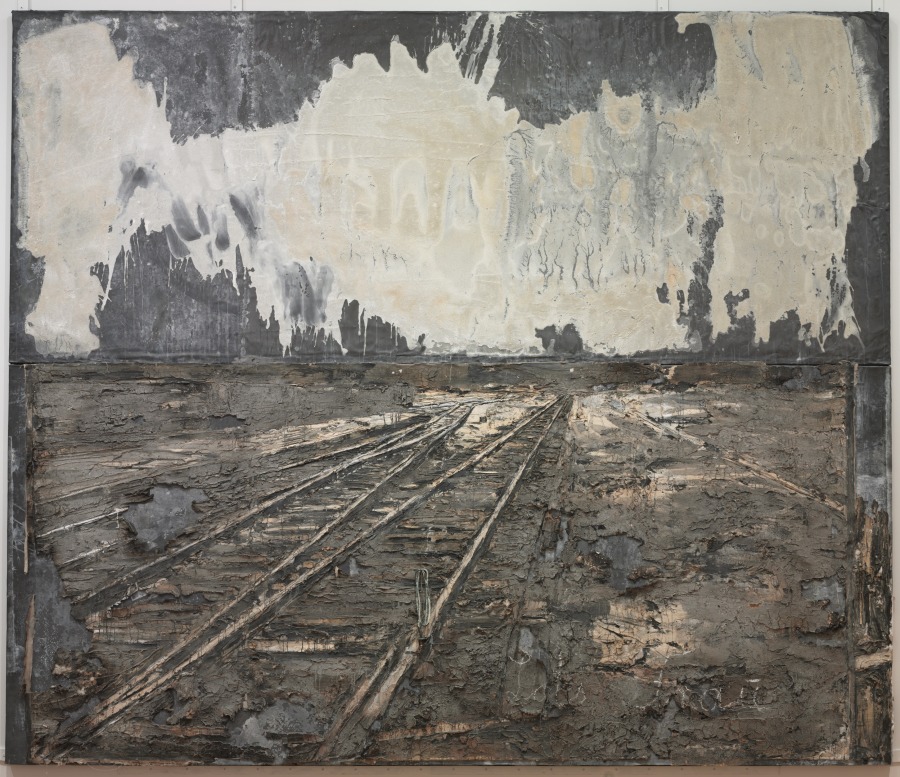
Lot's Wife
Kan det ses?
Ja, udstillet nu
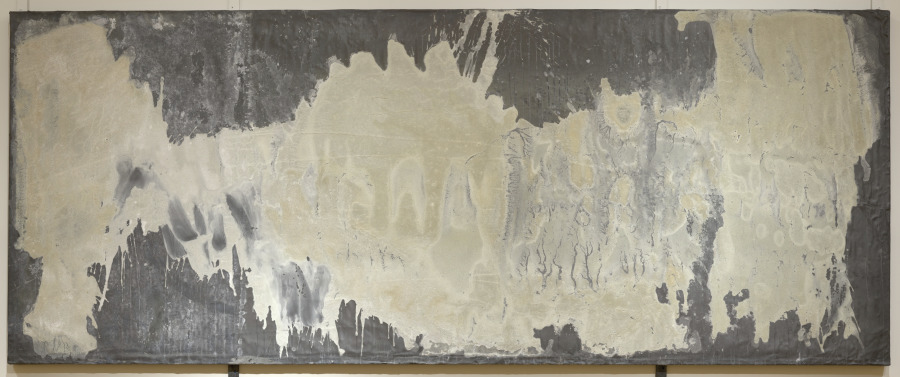
Hvor er »Lot's Wife« i dag? The Cleveland Museum of Art, 229B Contemporary, Cleveland. Ja, udstillet nu. Kontrolleret 29. september 2026.

Udstillet for publikum.
- Kontrolleret
- Uændret siden
- Kilde
- Museet
Om maleriet
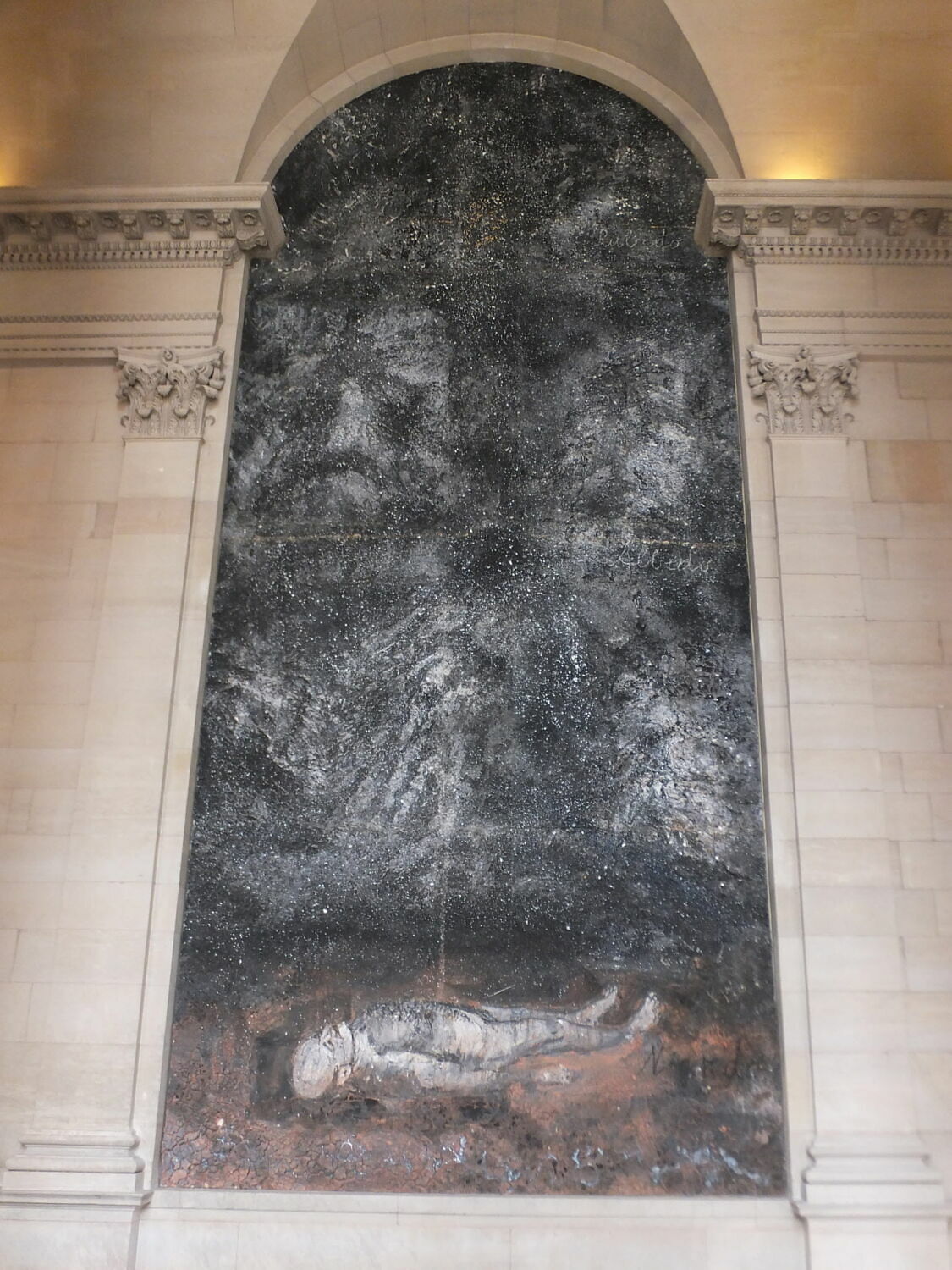
Born in the final year of World War II, Anselm Kiefer addresses the history and legacy of the Third Reich in his native Germany. "We see railway tracks anywhere and think about Auschwitz," the artist said soon after painting Lot's Wife. "It will remain that way in the long run." The drama of the railway tracks dissecting a barren landscape is heightened by the work's surface, dense with gesture and a range of materials, including salt. Referring to the fate of Lot's wife in the Book of Genesis—who was turned to a pillar of salt when she looked back at the destruction of Sodom—Kiefer frames a historical narrative within a biblical one.
The Cleveland Museum of Art
Oplysninger
- Inventarnummer
- 1990.8
I kataloget
Kilder
- The Cleveland Museum of Art
- Billede: The Cleveland Museum of Art — © Anselm Kiefer
Imens i livet hos Anselm Kiefer
Hele livet1980s
Kabbalah, alchemy and lead
In the 1980s Kiefer studied the Kabbalah and Kabbalists such as Robert Fludd. Lead, which became his chief material, first attracted him when he had to repair ageing pipes in the first house he owned; later he discovered its connection with alchemy. Extended journeys to the US and the Middle East also influenced his work.
1987
Exhibition at the Art Institute of Chicago
The Art Institute of Chicago organised a comprehensive solo exhibition of Kiefer's work.
12. juni 1987 – 20. september 1987
Exhibition: documenta 8
1988
Turns a brick factory in Höpfingen into an artwork
Kiefer's studio moved from the attic of the former school in Hornbach to a factory building in nearby Buchen; in 1988 he transformed a former brick factory in Höpfingen into an extensive artwork with numerous installations and sculptures.
1990 · Udmærkelse
Goslarer Kaiserring
1991
Leaves Germany to travel the world
In 1991, after twenty years of work in the Odenwald, Kiefer left Germany to travel the world — to India, Mexico, Japan, Thailand, Indonesia, Australia and the United States.