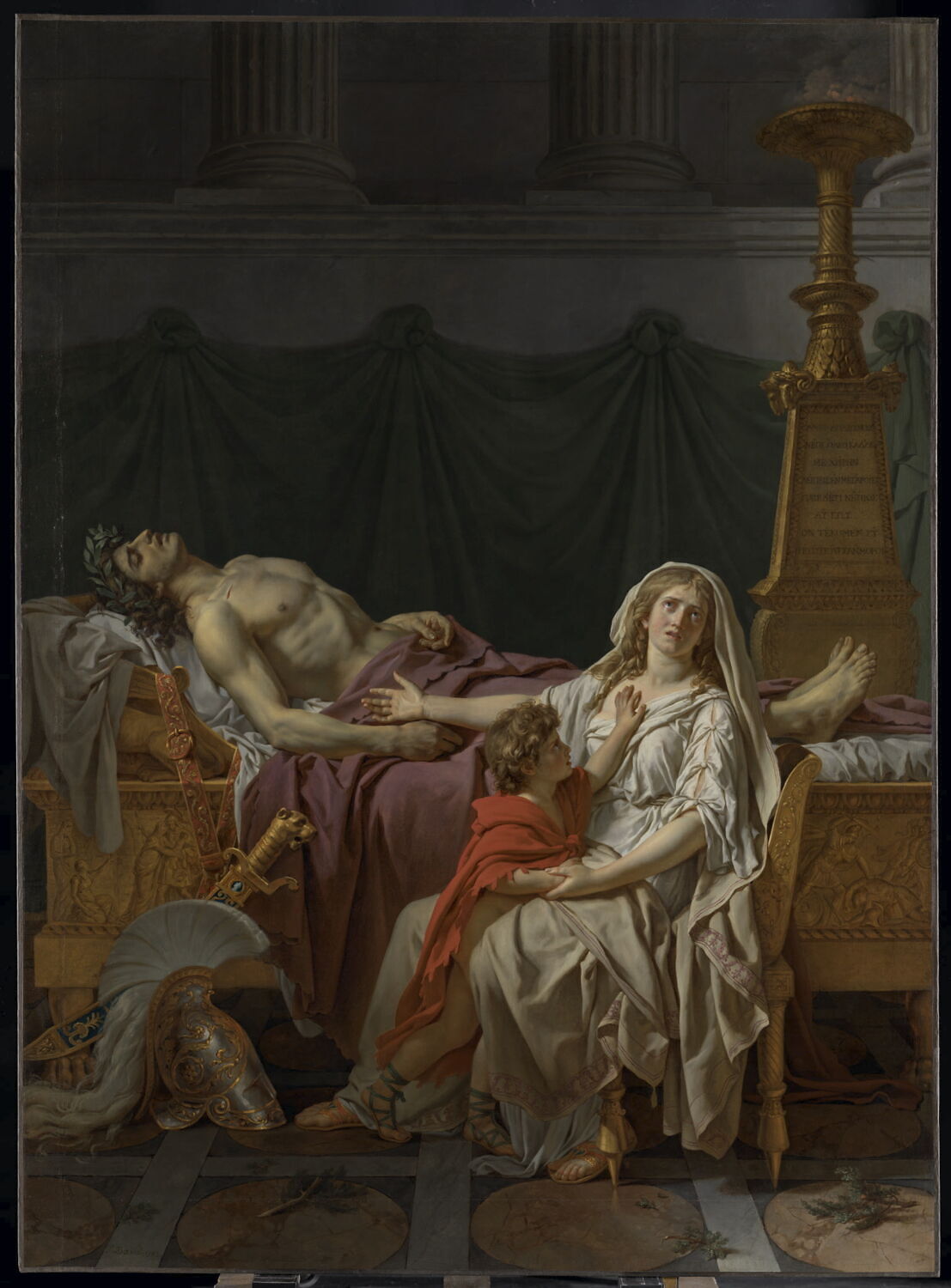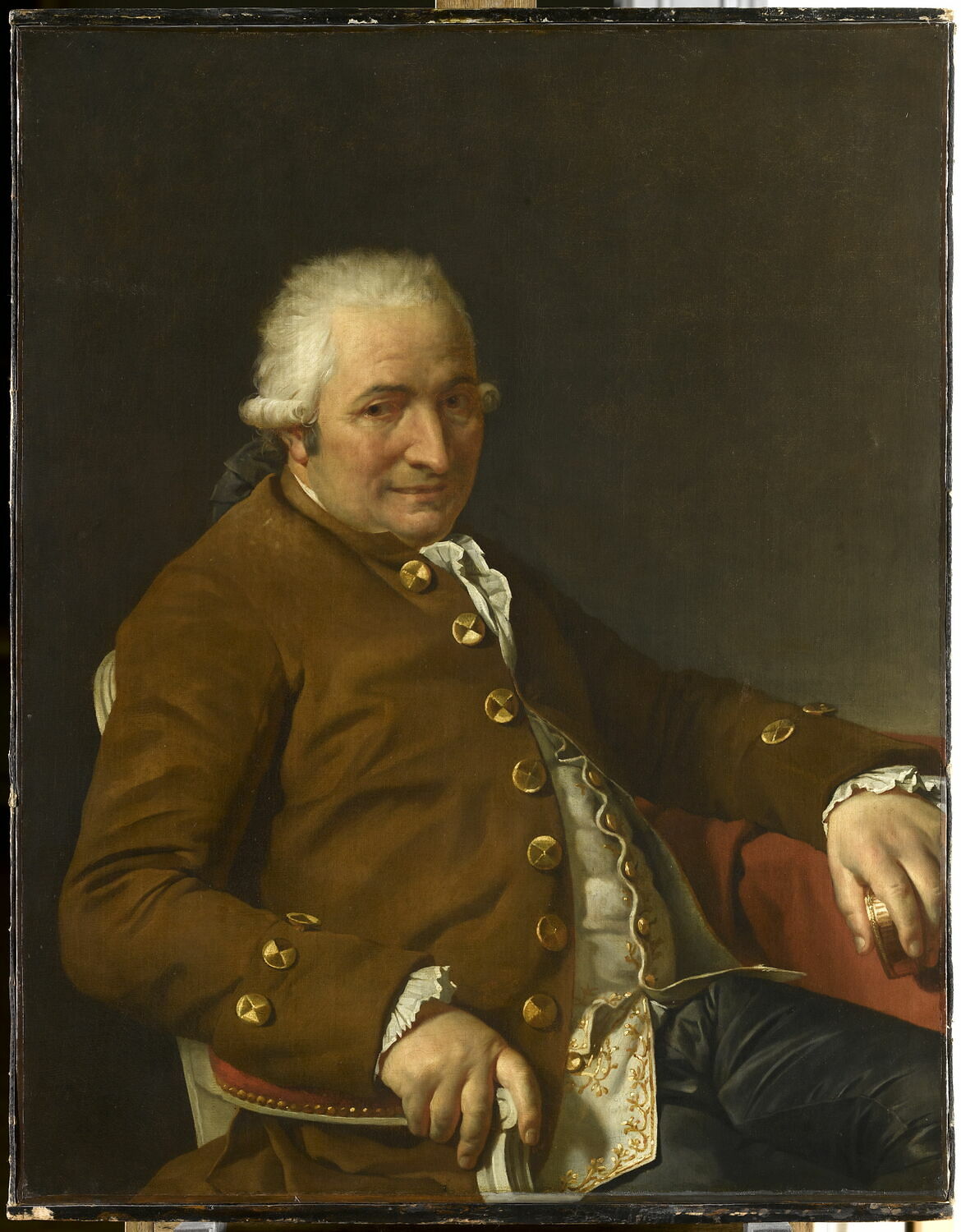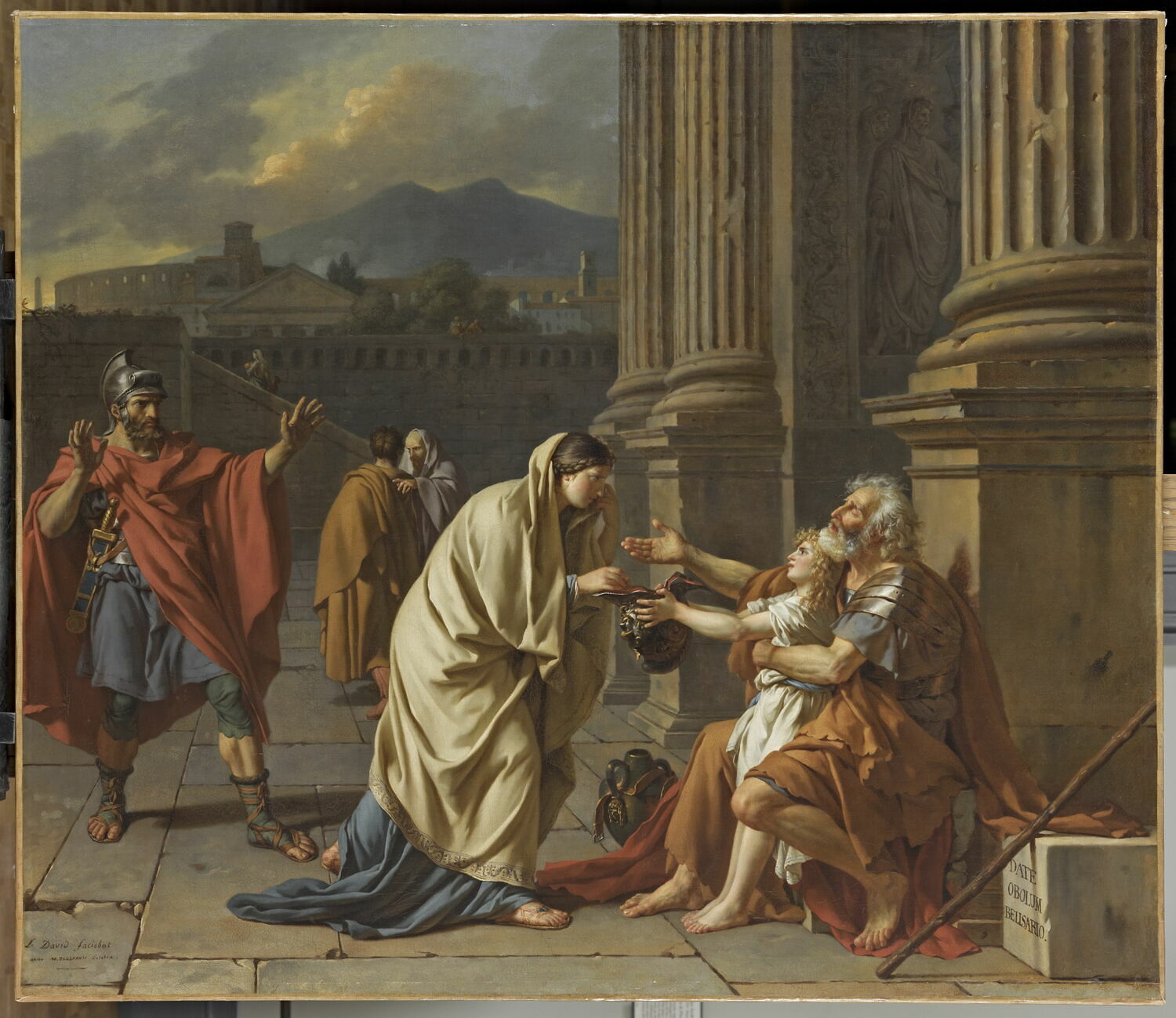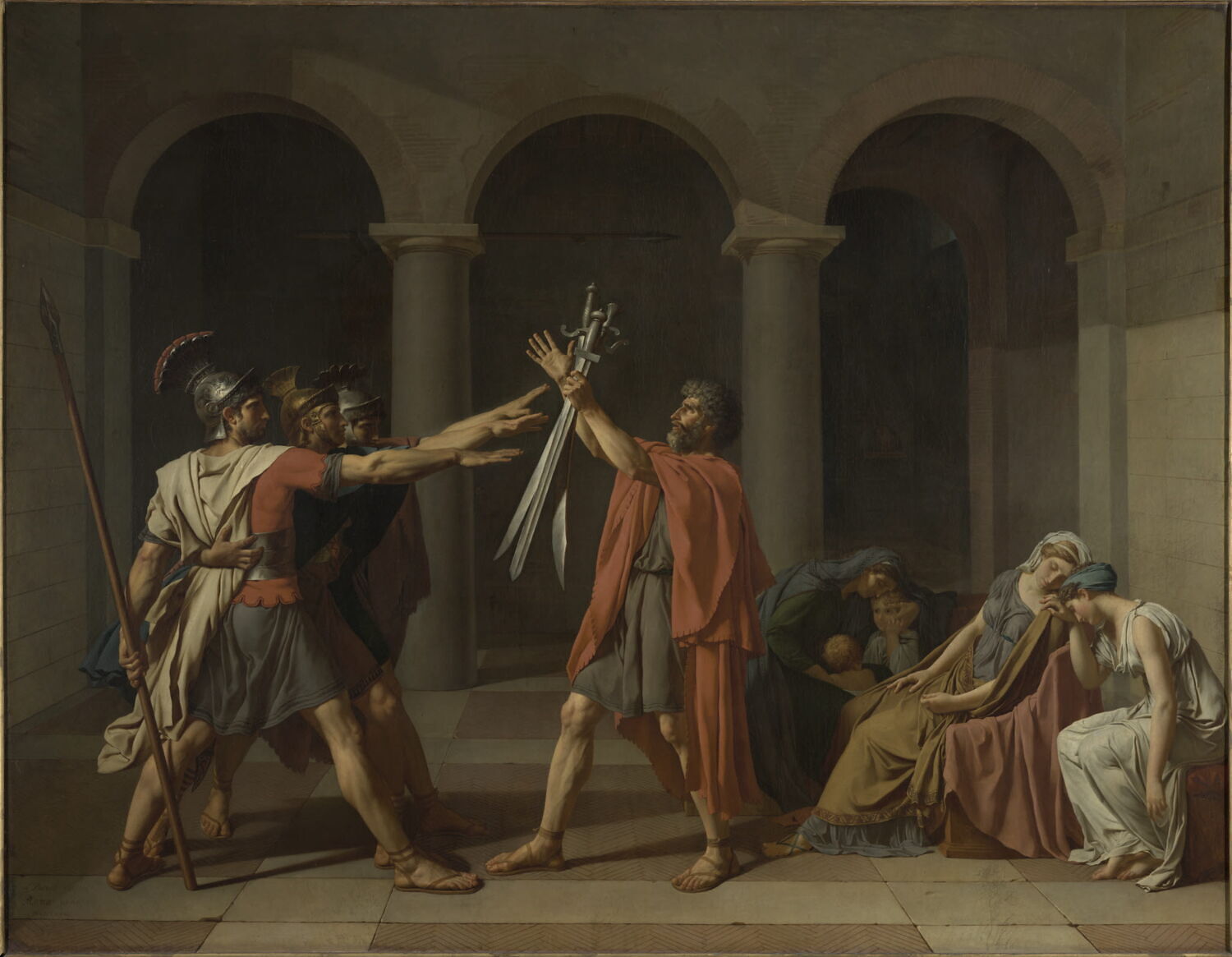
 Jacques-Louis DavidFrankrig, 1748–1825
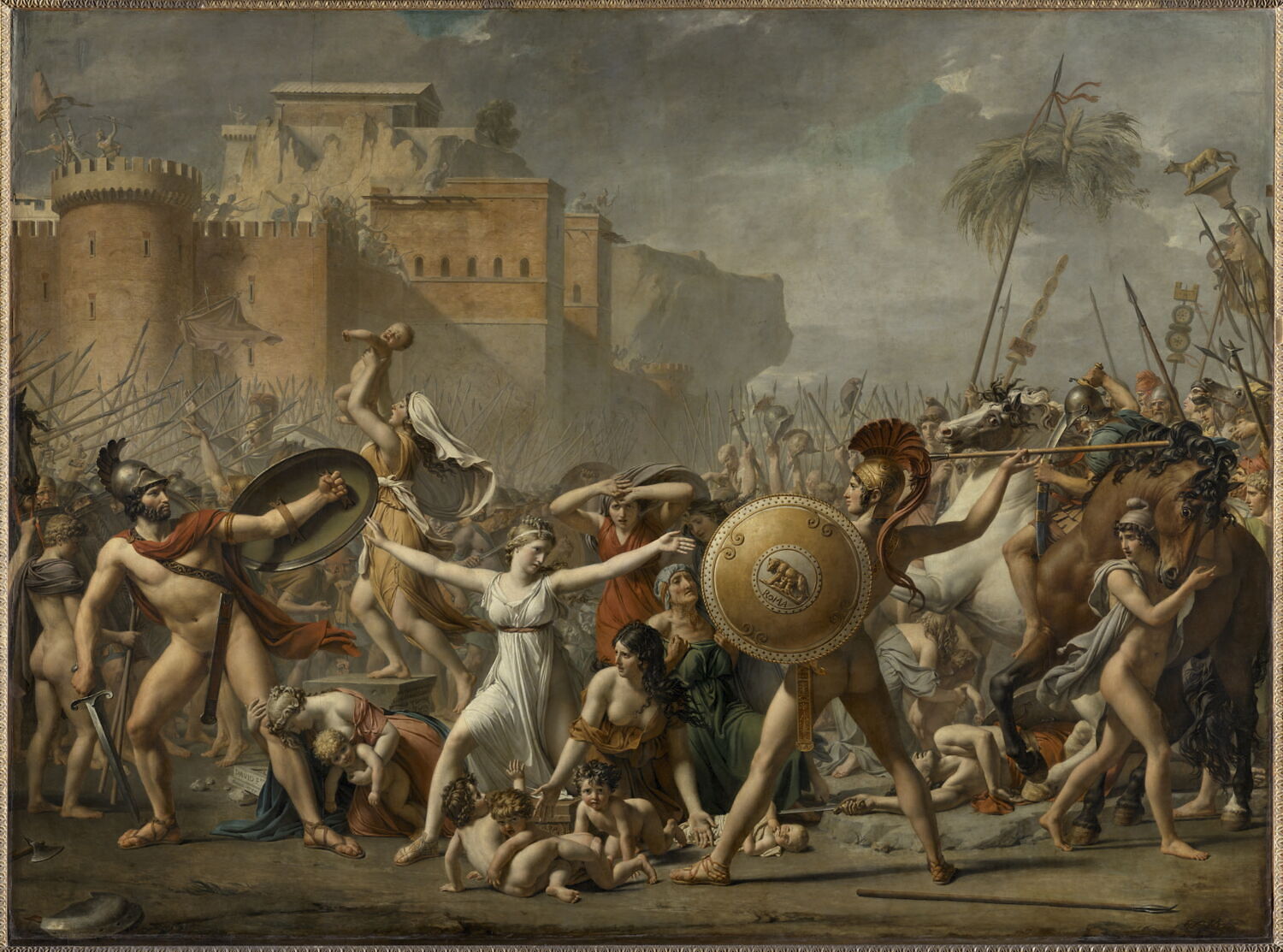
Les Sabines
Må man se det?
Ja, det tager imod

Udstillet for publikum. Hvem der står inde for det, står nedenfor.
- Kontrolleret
- Uændret siden
- Kilde
- Museets egne samlingsdata
About the painting
The Intervention of the Sabine Women (French: Les Sabines) is a 1799 painting by the French painter Jacques-Louis David, showing a legendary episode following the abduction of the Sabine women by the founding generation of Rome.
Work on the painting commenced in 1796, after his estranged wife visited him in jail. He conceived the idea of telling the story, to honour his wife, with the theme being love prevailing over conflict and the protection of children. The painting was also seen as a plea for the people to reunite after the bloodshed of the revolution. Its realization took him nearly four years.
Oplysninger
- Inventarnummer
- INV 3691
I kataloget
Kilder
- Louvre: the museum's own open data · hentet for 10 dage siden
- Billede: Louvre — © 2025 GrandPalaisRmn (musée du Louvre) / Chan-Liat/Rabeau
Imens i livet hos Jacques-Louis David
Hele livet5. maj 1789 – 9. november 1799
Took part in: French Revolution
1797
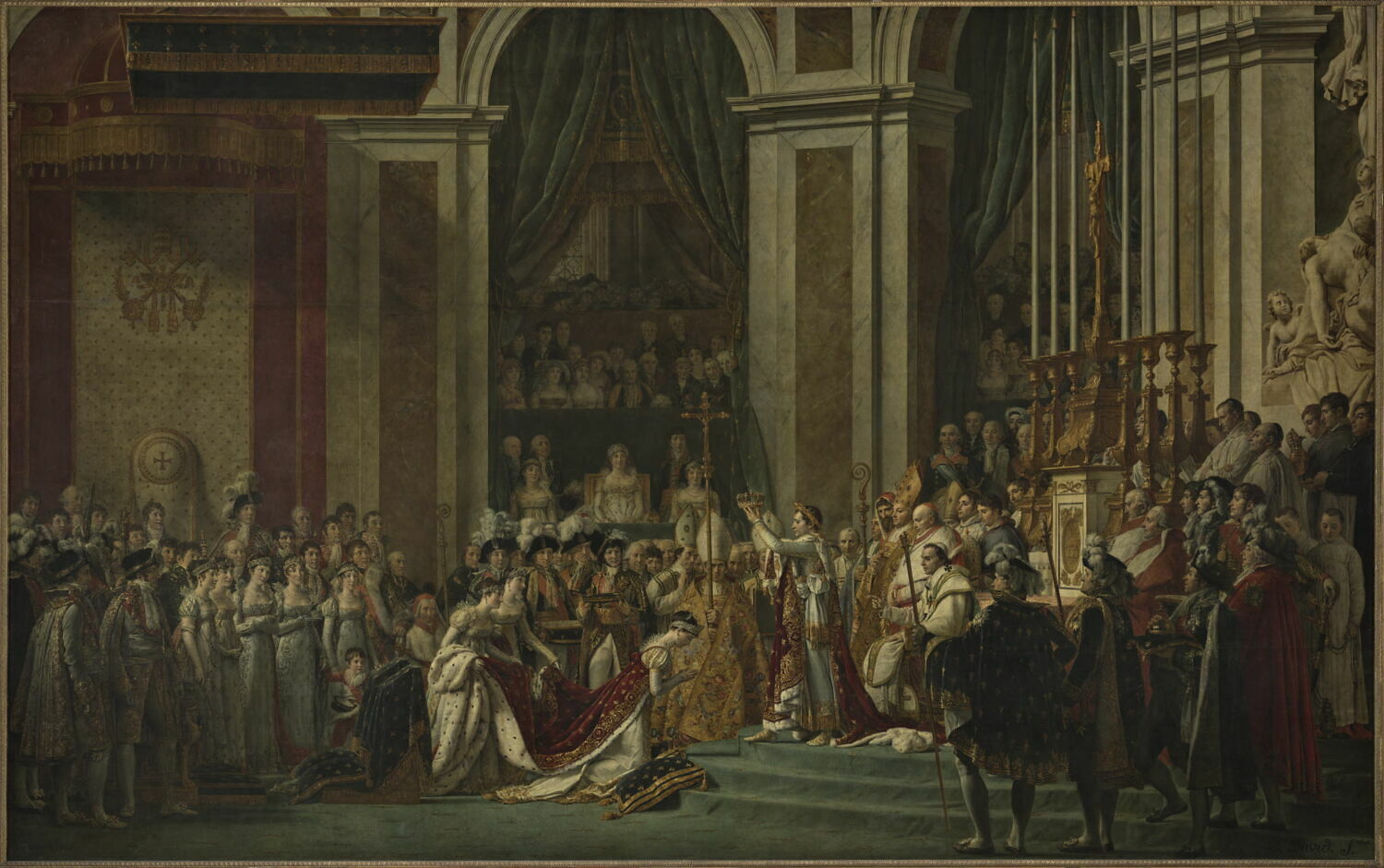
Meets Bonaparte and sketches his portrait
Struck by Bonaparte’s classical features, he secured a sitting from the busy, impatient general and sketched his face; the full composition of Napoleon holding the peace treaty with Austria remained unfinished.
1798
Declines to accompany Bonaparte to Egypt
Bonaparte asked David to accompany him to Egypt; David refused, seemingly unwilling to give up the comfort, safety and peace of mind he had won over the years, and Dominique Vivant Denon went instead.
1800
“The Sabine Women” shown with a mirror and a pamphlet
The painting was shown at the Palais du Luxembourg and then at the Salon in the Louvre; David had a large mirror hung before it so that visitors saw themselves against the battle, and each visitor was handed a pamphlet explaining his intention. The showing became a political event.
7 February 1800
Declines the post of “painter of the government”
Bonaparte named David “painter of the government” by special decree, but the artist, defending his independence, declined the post.