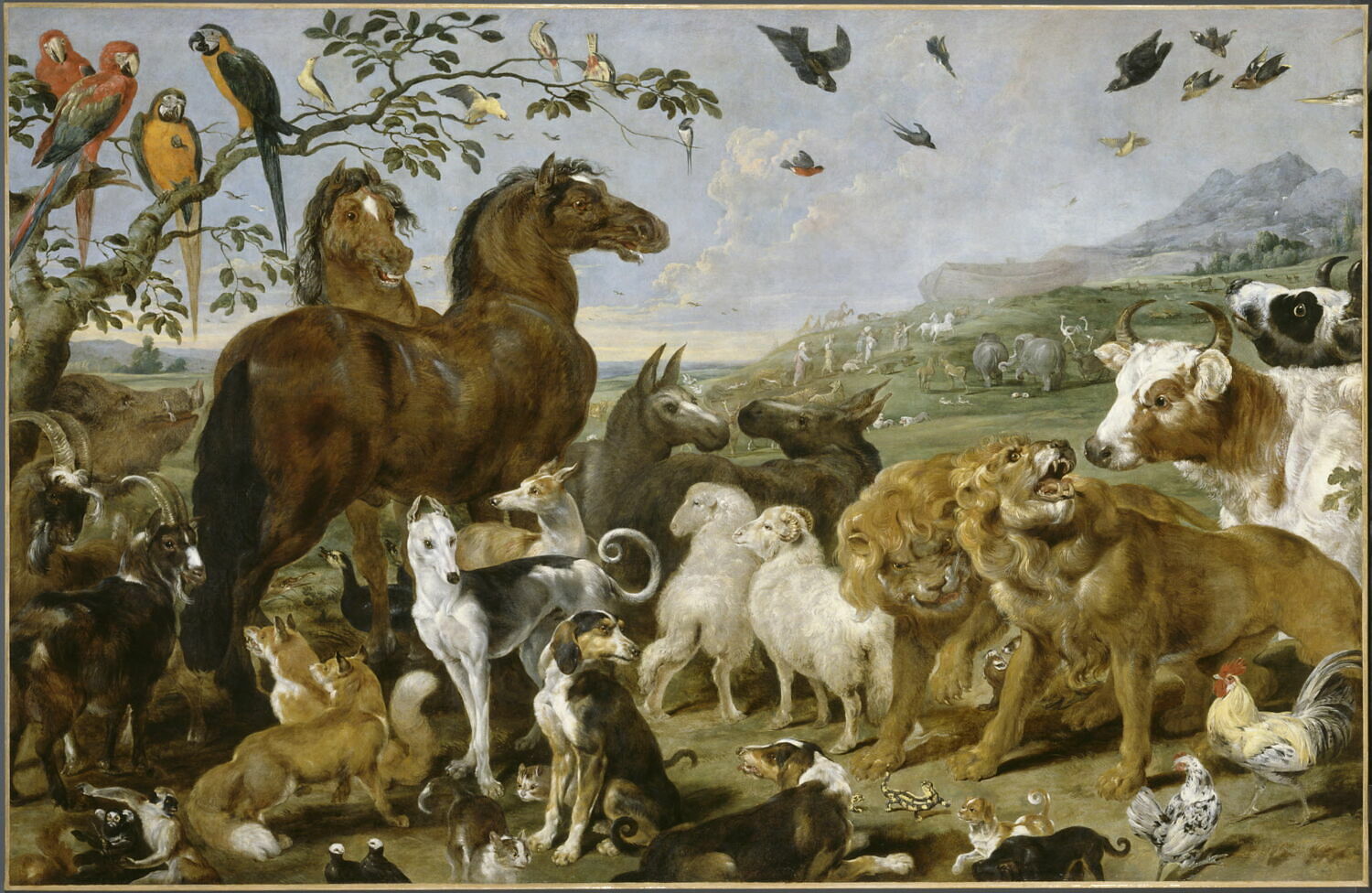
Jacques JordaensFlandern, 1593–1678
Le Jugement dernier
Kan det ses?
Ja, udstillet nu
Hvor er »Le Jugement dernier« i dag? Louvre, Salle 800, Aile Richelieu, Niveau 2, Paris. Ja, udstillet nu. Kontrolleret 26. september 2026.

Lukket· åbner kl. 9.00
Udstillet for publikum.
- Kontrolleret
- Uændret siden
- Kilde
- Museet
Oplysninger
- Inventarnummer
- INV 1403
I kataloget
Kilder
- Louvre
- Billede: Louvre — © 1993 GrandPalaisRmn (musée du Louvre) / René-Gabriel Ojéda
Imens i livet hos Jacques Jordaens
Hele livet1621–1667
His workshop: fifteen pupils in the guild records
Between 1621 and 1667 the guild registered fifteen pupils with Jordaens (the best known being Jan Boeckhorst), and six more are named in court documents; his son Jacob and his cousin Arnoldus also trained with him. His fame drew foreigners: after 1642 the Polish painter Aleksander Jan Tricius became his pupil, and in 1645 Queen Christina of Sweden meant to send her protégé Georg Waldau, but the threat of war in Flanders prevented it.
1651
Amalia van Solms's commission for the Orange Hall
The widow of Stadtholder Frederick Henry of Orange invited artists to decorate the Huis ten Bosch in The Hague; for its Orange Hall Jordaens painted the large allegory “The Triumph of Frederick Henry”, celebrating the prince's military successes. Other accounts date the commission for the hall to 1645.
1651–1658
Fined for “heretical” writings
The schout (chief law officer) of Antwerp fined Jordaens 200 pounds and 15 shillings for his “scandalous”, that is heretical, writings (other accounts give 1651–1659 and speak of “heretical” works). As a famous master he was tolerated as long as he did not speak openly on matters of faith.
1652
Etchings after his paintings, dated 1652
Seven etchings after Jordaens's paintings, among them “Mercury and Argus”, bear only the inscription “Iac. Iordaens inventor 1652”, with no engraver's name; some historians took them for the painter's own work, but they are now more likely attributed to Remoldus Eynhoudt, who had trained under the same master. They were probably made on Jordaens's initiative.
1652–1678
Late years: a grey-blue palette
In the final years of his career his creative powers declined: he abandoned vibrant colours for a grey-blue palette with dull brown accents and applied paint so thinly that the canvas showed through. The exceptions were the religious paintings made after his conversion to Protestantism and the Cupid and Psyche series for his own house.