 Nicolas PoussinFrankrig, 1594–1665
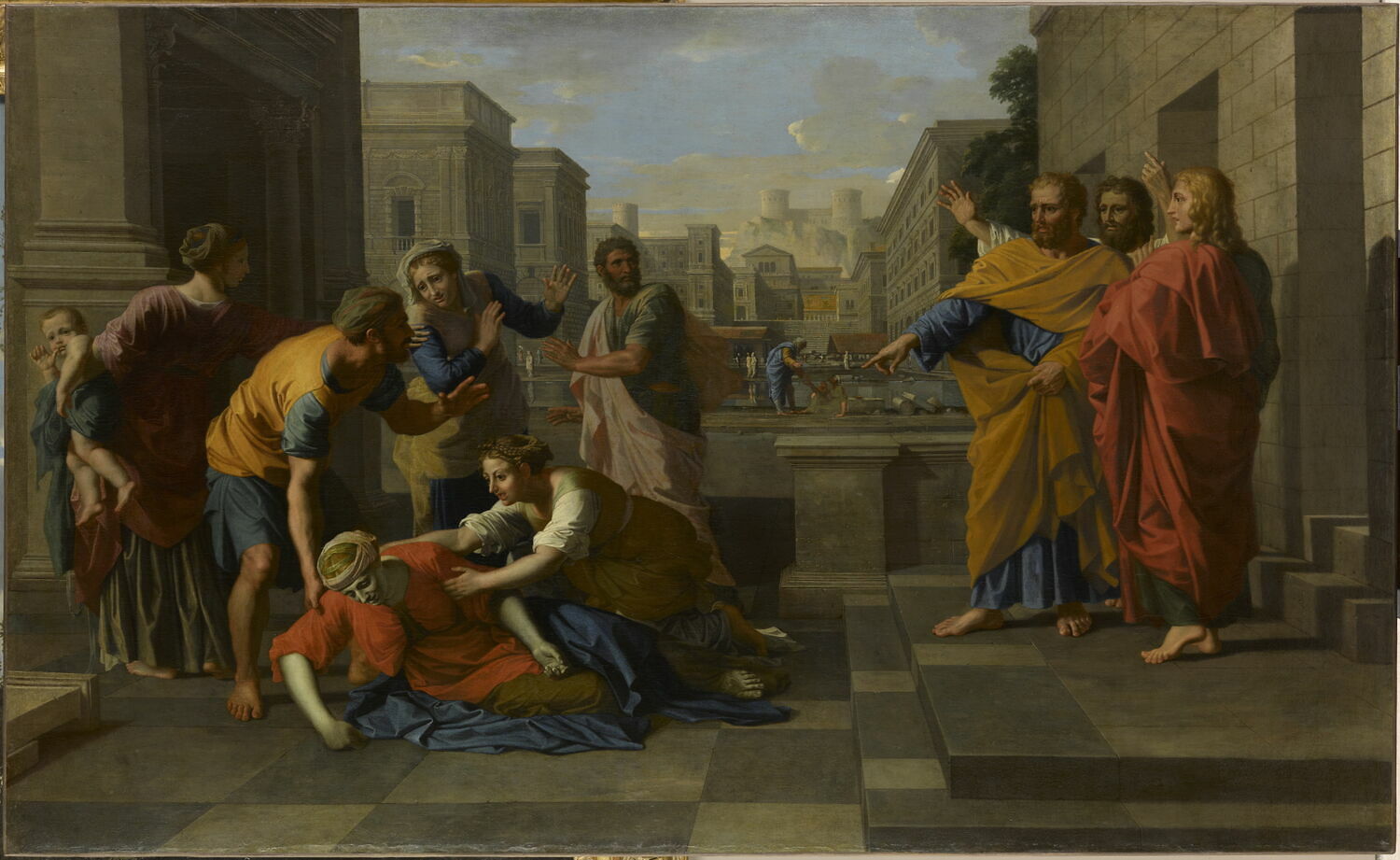
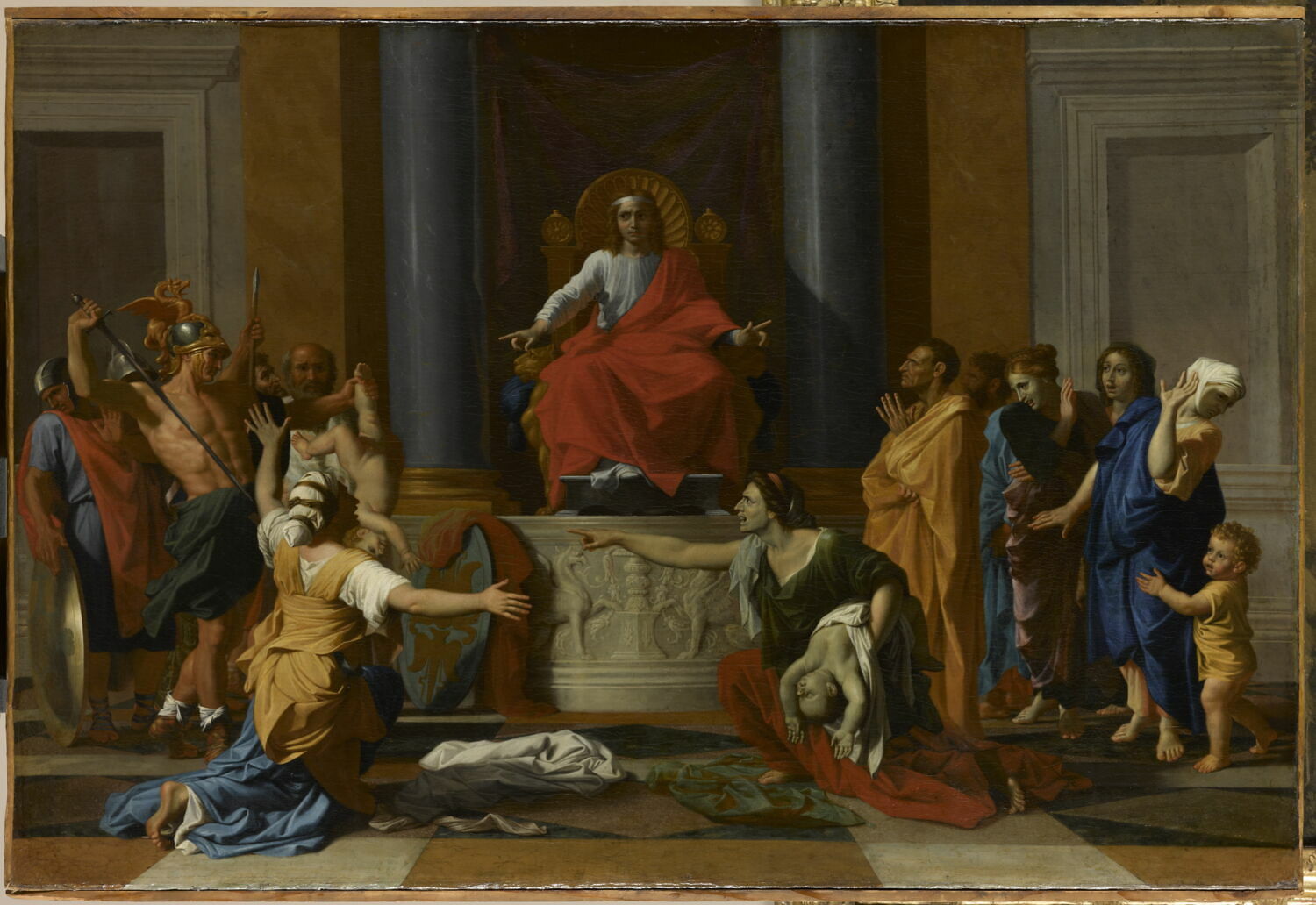
Le Jugement de Salomon
Kan det ses?
Ja, udstillet nu
Hvor er »Le Jugement de Salomon« i dag? Louvre, Salle 826, Aile Richelieu, Niveau 2, Paris. Ja, udstillet nu. Kontrolleret 26. september 2026.

Åbent nu· til kl. 21.00
Udstillet for publikum.
- Kontrolleret
- Uændret siden
- Kilde
- Museet
Om maleriet
The Judgement of Solomon is an oil on canvas painting of the judgement of Solomon by the French artist Poussin, from 1649. Produced during his 1647-1649 stay in Rome, it is now in the Louvre, in Paris. It measures 101 by 150 cm. Art historians largely consider it as one of the artist masterpieces, in the art of the 17th century French School and French art as a whole. Several engravings were produced of the work.
It was commissioned by Jean Pointel, a banker from Lyon and a close friend and faithful patron of Poussin, and sent to him to display in Paris during the following months. After Pointel's death, the work passed to the financier Nicolas du Plessis-Rambouillet, then the Procureur Général to the Parliament of Paris Achille III de Harlay, and then to Charles-Antoine Hérault, a painter and a member of the Académie française. Hérault sold the work to Louis XIV in 1685 for 5000 livres.
Læs videre
The French royal collection initially hung it in a cabinet in the surintendance des Bâtiments, before moving it to the château de Versailles around 1710, before being seen in the salon of the directeur des Bâtiments du roi in 1784. In 1792–1793, in accordance with the principles of the Decree of 2 November 1789, the painting was seized by the revolutionary state and moved to the Louvre as one of the works displayed there when it first opened as a public museum on 10 August 1793.
Oplysninger
- Inventarnummer
- INV 7277
I kataloget
Kilder
- Louvre
- Billede: Louvre — © 2011 GrandPalaisRmn (musée du Louvre) / Stéphane Maréchalle
Imens i livet hos Nicolas Poussin
Hele livet1641–1665
Post: Premier peintre du Roi
1647
André Félibien becomes friend and pupil
In 1647 André Félibien, secretary of the French embassy in Rome, became a friend and painting student of Poussin; later he wrote one of the first biographies of the artist.
after 1650
A trembling hand: his health declines
After 1650 Poussin’s health declined and a tremor in his hand grew worse — evidence of it is visible in his late drawings.