 Sebastiano del PiomboItalien, 1485–1547
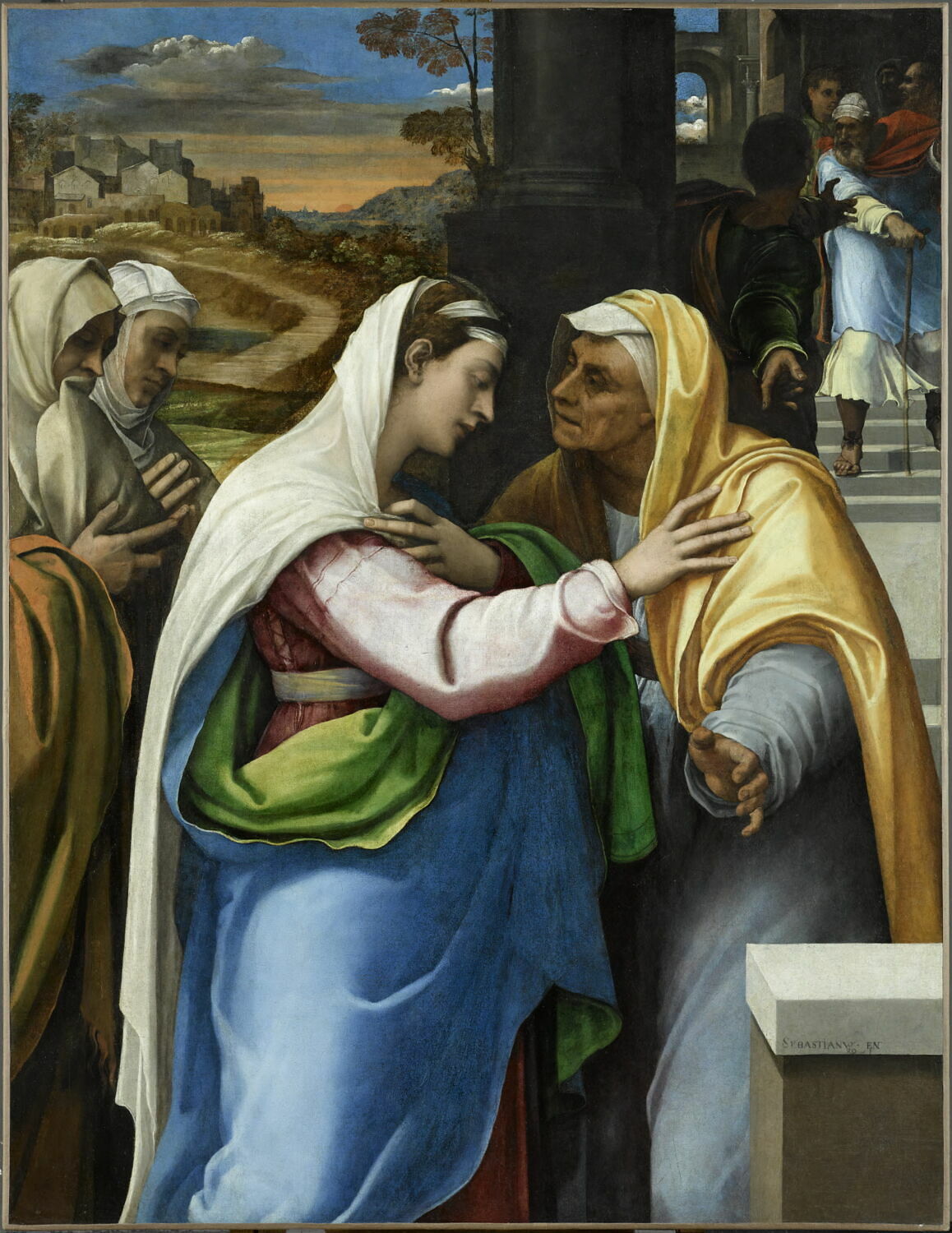
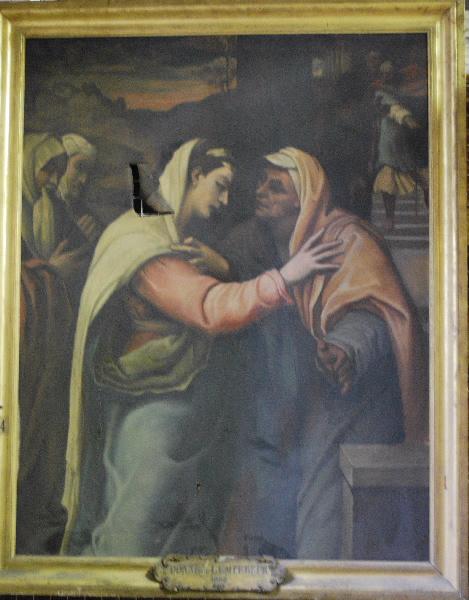
La Visitation
Kan det ses?
Ukendt
Hvor er »La Visitation« i dag? Samling: Musée Rolin, Autun. Ukendt.
Autun, Frankrig
Ejeren er kendt; om værket er udstillet i dag, vides ikke.
- Uændret siden
- Kilde
- Museet
Oplysninger
- Inventarnummer
- H.V. 84 ; 357 (Inventaire Louvre) ; FH868-287 (Inventaire FNAC)
Hvad det viser
I kataloget
Kilder
- Musée Rolin
- Billede: Musée Rolin — © Claudine Massard; Ministère de la Culture (France), base Joconde
Imens i livet hos Sebastiano del Piombo
Hele livet1519
Michelangelo becomes godfather to his son Luciano
Michelangelo stands godfather to Sebastiano's first son, Luciano; from then on Sebastiano addresses his letters to “my dearest compare” (godfather).
1520
“Lazarus” and “Transfiguration” hung together in the Vatican
Right after Raphael's death the two paintings destined for Narbonne are hung side by side in the Vatican; both are praised, but Raphael's is generally preferred.
1520
Michelangelo's letter to Cardinal Bibbiena
Sebastiano asks Michelangelo to recommend him to Cardinal Bibbiena, a close friend of Pope Leo X; the letter arrives a month later in such flippant terms that, in Sebastiano's words, it becomes practically the only topic of conversation at the Palace. It wins no commissions.
1520
Raphael's death and the struggle for the Sala dei Pontefici
Raphael dies on 6 April; on the 12th Sebastiano tells Michelangelo, hoping to win the commission for the Sala dei Pontefici in the Vatican, but is thwarted by Raphael's workshop, which has the master's drawings, and by Michelangelo's inability to help, since the pope has told him to work only on the tomb of Julius II. Sebastiano remains Rome's leading painter.
1520s
Portraits instead of big church commissions
In the 1520s Sebastiano mostly avoids very large church commissions and concentrates on portraits, where he has a considerable reputation, and on religious easel paintings such as the “Visitation” made for France (1518–19, now in the Louvre).
1523
His patron becomes Pope Clement VII
Cardinal Giulio de' Medici, who commissioned the “Raising of Lazarus”, becomes Pope Clement VII; Sebastiano joins Vatican court life and paints several portraits of the pope and other works for him.