 Nicolas PoussinFrankrig, 1594–1665
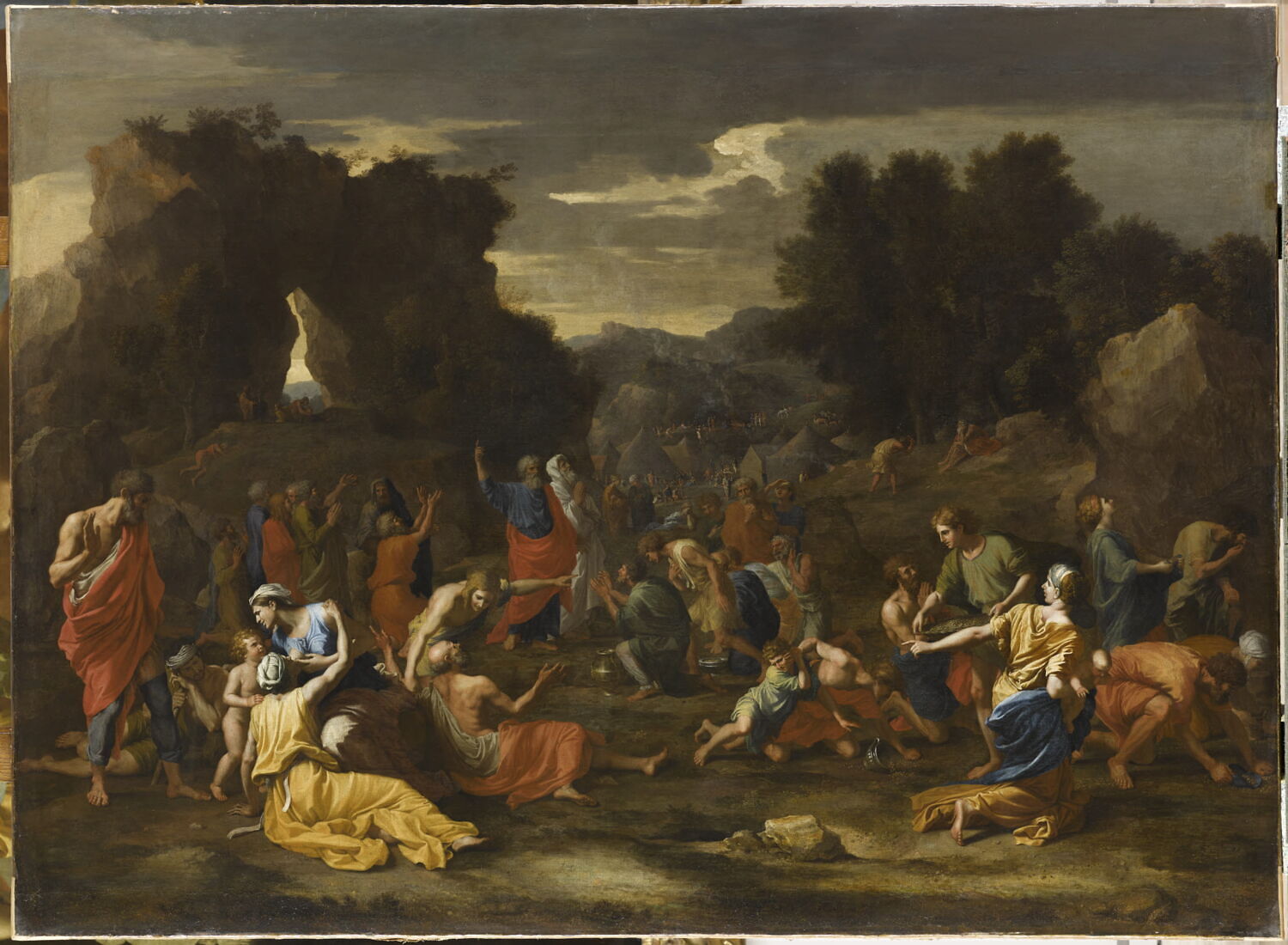
La Manne
Må man se det?
Ja, det tager imod

Louvre
Sal825, Aile Richelieu, Niveau 2Paris, Frankrig
Udstillet for publikum. Hvem der står inde for det, står nedenfor.
- Kontrolleret
- for 8 dage siden
- Uændret siden
- 26. sep. 2026
- Kilde
- Museets egne samlingsdata
About the painting
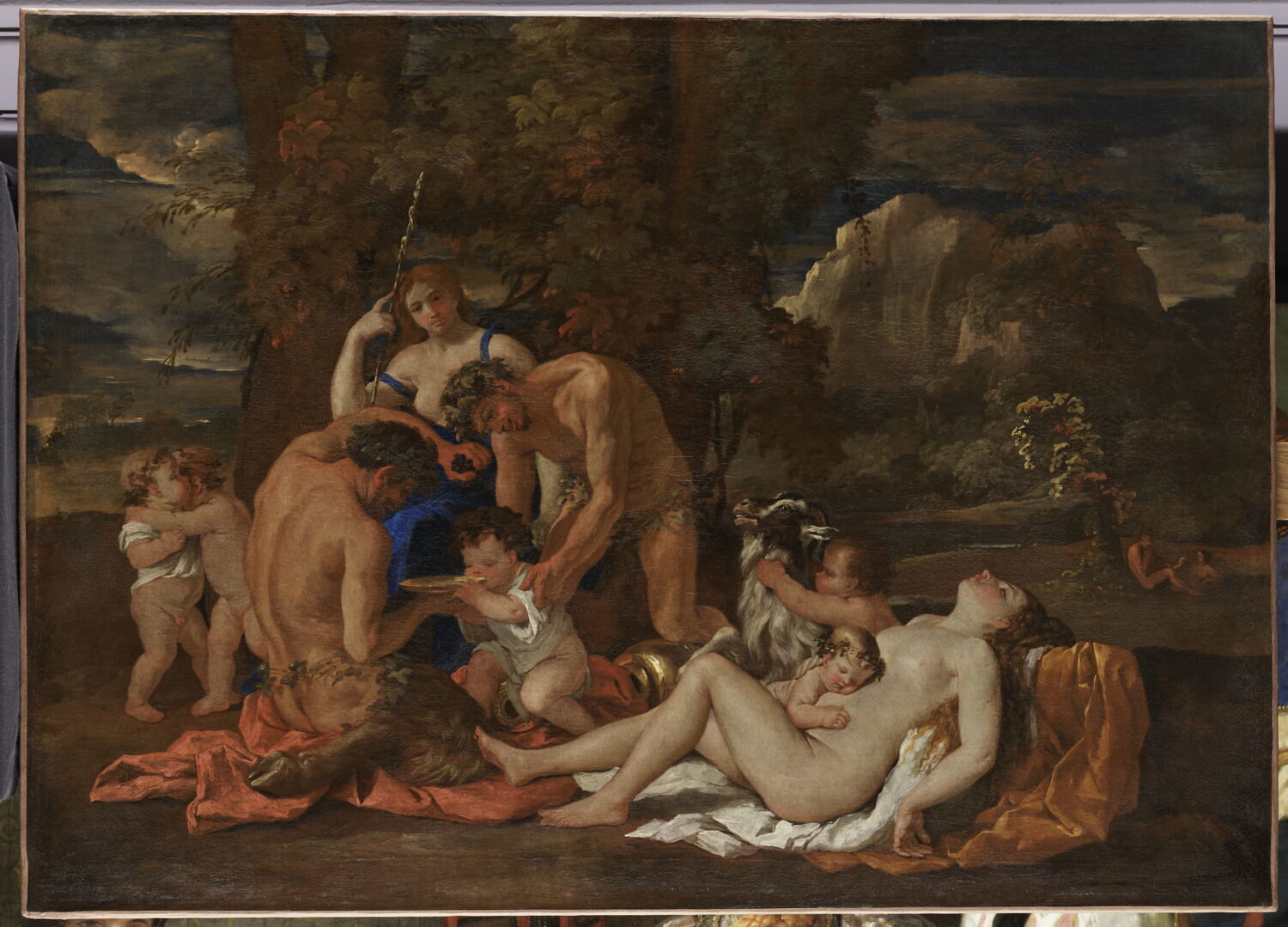
The Manna (French: La Manne), formerly titled The Israelites Gathering Manna in the Desert (Les Israélites recueillant la manne dans le désert), is an oil painting by Poussin, dated to 1638 or 1639, which is now in the Louvre, in Paris. The work is regarded as one of Poussin's most ambitious.
Oplysninger
- Inventarnummer
- INV 7275
Kilder
- Louvre: the museum's own open data · hentet for 8 dage siden
- Billede: Louvre — © 2014 GrandPalaisRmn (musée du Louvre) / Mathieu Rabeau
Imens i livet hos Nicolas Poussin
Hele livet1630s
Cassiano dal Pozzo — his chief patron
Poussin’s flowering coincided with his complete abandonment of church commissions: he gathered a circle of patrons around him but strove for independence, accepting commissions from connoisseurs without binding himself to any of them permanently. The most important was Cassiano dal Pozzo; in the surviving correspondence the relationship comes close to servitude, although the painter did not live in his house.
1630s
Brother-in-law Gaspard Dughet — his first pupil
After the wedding Poussin went on living in the house on the Via Paolina; with him lived Anne-Marie’s brother Gaspard Dughet, the future well-known landscape painter, and from 1636 his younger brother Jean. Poussin became Gaspard’s first teacher, and Gaspard later took his surname; the marriage seems to have been a happy one, but childless.
December 1640
December 1640: Poussin returns to Paris
François Sublet de Noyers, Superintendent of the King’s Buildings, whose invitations Poussin had declined, sent his cousins Roland and Paul Fréart to Rome, offering the title of First Painter to the King and a substantial residence at the Tuileries. Poussin yielded, and in December 1640 he was back in Paris.
1641
An avalanche of royal commissions
In Paris he was swamped with commissions: “The Institution of the Eucharist” for the chapel of the château of Saint-Germain-en-Laye, “The Miracle of St Francis Xavier” for the Jesuit novitiate, ceilings and vaults for the Grande Galerie of the Louvre, an allegory for Richelieu’s study, designs for tapestries and title pages for the royal printing house. For a man accustomed to working slowly and carefully it was too much.
1641–1642
Vouet’s partisans reproach his Christ with resembling Jupiter
The partisans of Simon Vouet, Poussin’s old friend, also criticised his Christ in the sky in “The Miracle of St Francis Xavier”: too much pride, resembling Jupiter more than a God of Mercy. Poussin answered that he could not and should not imagine a Christ looking like a gentle father — when he was on earth among men, it was difficult to look him in the face.
1641–1665
Post: Premier peintre du Roi