René MagritteBelgien, 1898–1967
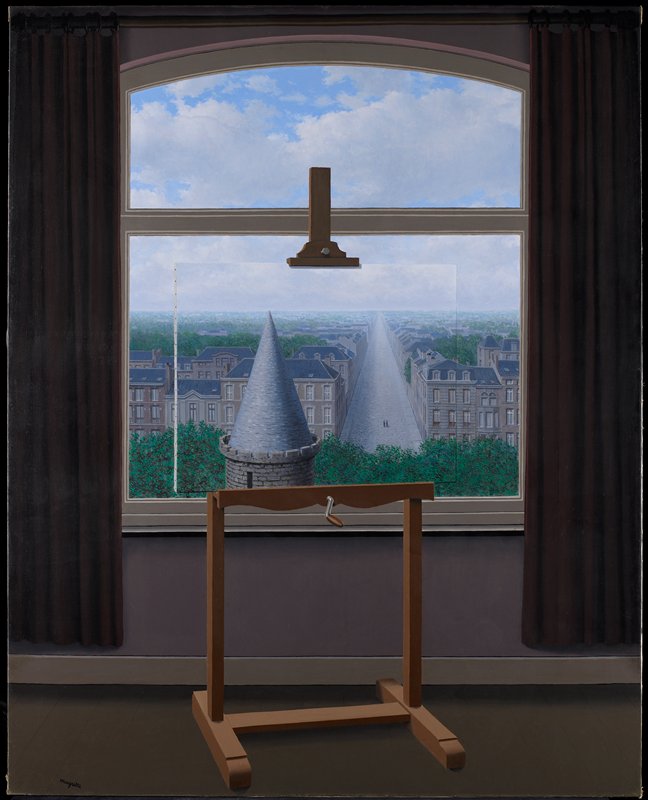
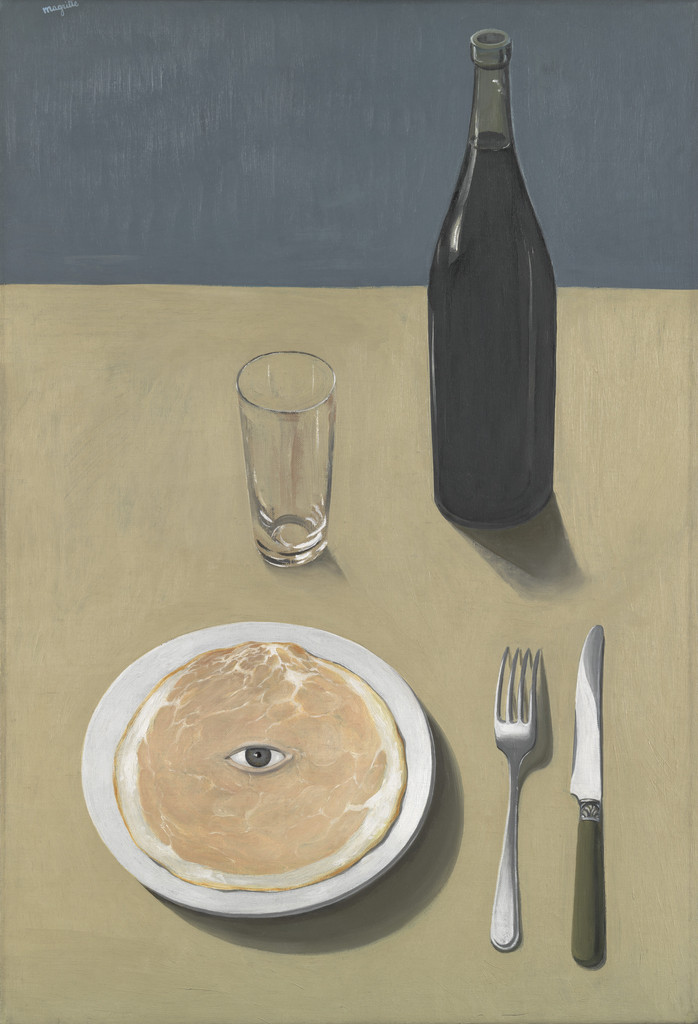
La condition humaine
Kan det ses?
Ja, udstillet nu
Hvor er »La condition humaine« i dag? National Gallery of Art, Sal 415B · Østbygningen, øverste etage, Washington, D.C. Ja, udstillet nu. Kontrolleret 29. september 2026.

Lukket· åbner i morgen kl. 10.00
Udstillet for publikum.
- Kontrolleret
- Uændret siden
- Kilde
- Museet
Oplysninger
- Inventarnummer
- 1987.55.1
Hvad det viser
I kataloget
Kilder
- National Gallery of Art
- Billede: National Gallery of Art — © the artist or rights holder
Imens i livet hos René Magritte
Hele livet1930–1932
No exhibitions, no sales: a stipend from Claude Spaak
Between 1930 and 1932 Magritte had no exhibitions and sold no work; he was supported by a monthly stipend arranged by the Belgian playwright Claude Spaak.
1930s
The patronage of Edward James
The British Surrealist patron Edward James let Magritte stay rent-free in his London home, where he studied architecture and painted; James is depicted in two paintings of 1937, “The Pleasure Principle” and “Not to Be Reproduced”.
1930–1954 · Bopæl
René Magritte House
1932
Joins the Communist Party of Belgium
Holding left-wing views, he apparently joined the party twice before the war — in 1932 and 1936 — and left both times over disputes about the role of art in propaganda: party members criticised “The Red Model” for misrepresenting communists and rejected his poster designs for the textile workers’ centre.
1934
Alice Lorge buys “Black Magic”
Suzanne Spaak’s sister Alice Lorge bought “La Magie noire” — the first of a series of eleven paintings showing Georgette Berger in a classical nude pose; Claude Spaak commissioned portraits of his wife and children from Magritte.
1934–1937
Film posters under the pseudonym Emair
From 1934 to 1937 he drew film posters under the pseudonym Emair for the German sound-film distributor Tobis Klangfilm; seven of them are preserved in the Leuven City Archive.