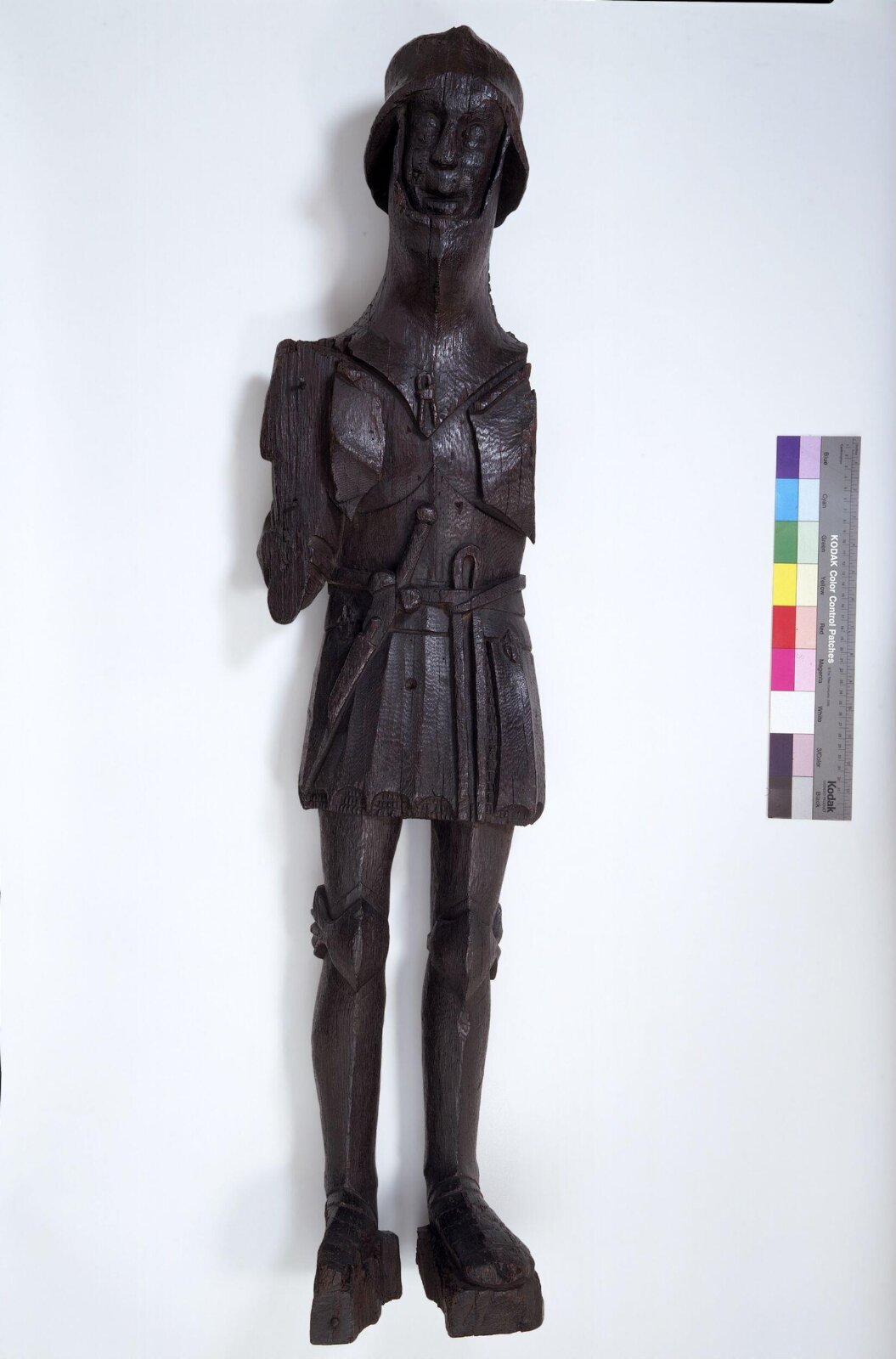
Knight or soldier in armour
Må man se det?
Ja, det tager imod

Victoria and Albert Museum
London, Storbritannien
SalMedieval & Renaissance, Room 10a, The Françoise and Georges Selz Gallery
Udstillet for publikum. Hvem der står inde for det, står nedenfor.
- Kontrolleret
- Uændret siden
- Kilde
- Museet
Om skulpturen
This unique oak figure represents a knight, one of three ranks of the retinue of a noble family. With two companion sculptures representing a squire and a man-at-arms, this figure would have been placed high on a screen in a great hall, still an important focus of noble living in this period. Linked to Kirkoswald Castle and Naworth Castle in Cumbria, they may once have held flags displaying heraldic devices of the Dacre family who owned both residences.
Læs videre
In medieval English figurative sculpture arms and armour denoted chivalrous rank and at least esquire status: the bulk of English knights were drawn from the squirearchy, families influential and important in their own county or shire, but not necessarily of enormous consequence at a national level. Entitlement to knighthood was by wealth; in the 15th century an income of £40 enetitled a man to become a knight. Arms and armour were very expensive, and came to imply by their presence in art noble status.
Victoria and Albert Museum
Oplysninger
- Inventarnummer
- A.11-2001
Hvad det viser
I kataloget
Kilder
- Victoria and Albert Museum
- Billede: Victoria and Albert Museum — © Victoria and Albert Museum, London