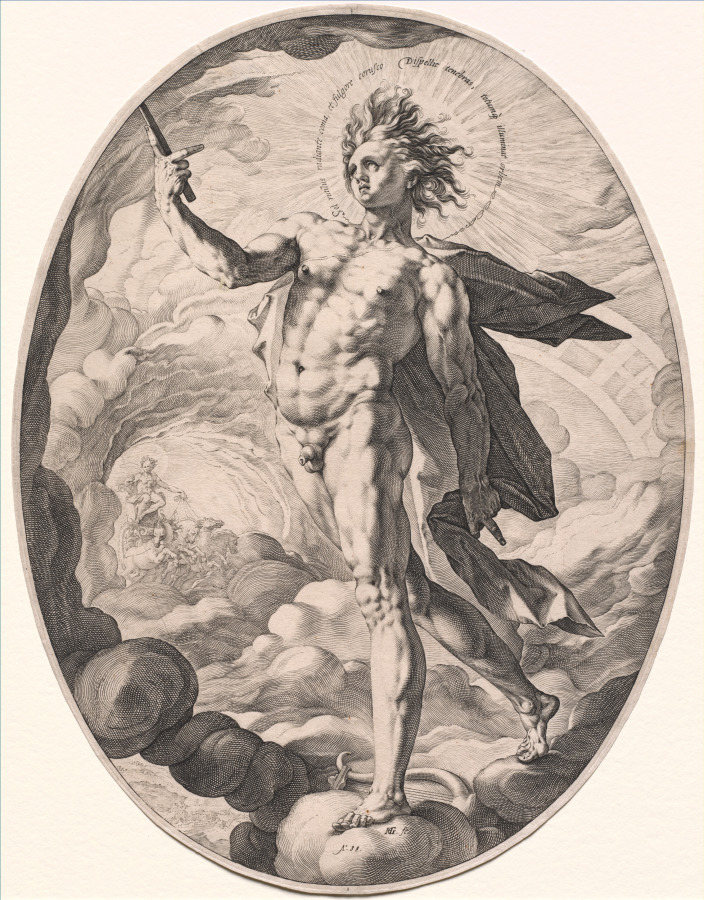
Hendrick GoltziusHolland, 1558–1617
Juda en Tamar
Må man se det?
Ukendt

Amsterdam, Holland
Ejeren er kendt; om værket er udstillet i dag, vides ikke.
- Kilde
- Museet
Om værket
Med museets ord — på nederlandsk
Ronde voorstelling van Juda en Tamar. Tamar zit op de voorgrond naast een boom, gekleed als een courtisane. Op de achtergrond rechts zijn Tamar en Juda samen te zien. Met verwijzing naar de bijbeltekst in Gen:38. Gereconstrueerd uit twee fragmenten.
Rijksmuseum Amsterdam
Oplysninger
- Inventarnummer
- NG-2011-40-4
Hvad det viser
I kataloget
Kilder
- Rijksmuseum Amsterdam
- Billede: Rijksmuseum Amsterdam — public domain
Imens i livet hos Hendrick Goltzius
Hele livet1579
Marriage to a wealthy widow
At 21 he married a wealthy widow considerably older than himself. The "unequal marriage" gave him economic independence: he bought a house, opened his own engraving workshop, and two years later took on two apprentices.
c. 1584
Meeting Karel van Mander
He met the painter and his future biographer Karel van Mander, a refugee from Flanders, who introduced him to the drawings of Bartholomeus Spranger, then working in Prague for Rudolf II. Spranger's works exerted a significant influence on Goltzius's art.
1587
Founding of the Haarlem Academy
Together with Cornelis van Haarlem and Karel van Mander he founded an academy of art in Haarlem, later known as the Haarlem Mannerist Academy (some sources give 1583 or 1600). There, for the first time in the Netherlands, systematic study of anatomy and drawing from the nude model were introduced.
1590
Departure for Italy
He fled from his wife and, despite his illnesses, set out for Italy — via Hamburg and Munich to Venice, Bologna and Florence. Part of the way he traveled on foot, passing himself off as a commoner, "partly out of a love of mystification."
1591
Eight months in Rome
He arrived in Rome in January 1591 and stayed eight months (with a brief sojourn in Naples). He discovered Raphael, was especially impressed by Michelangelo and Giambologna, and studied art from classical sculpture to the masters of the Renaissance.
1591
Return to Haarlem with a collection of drawings
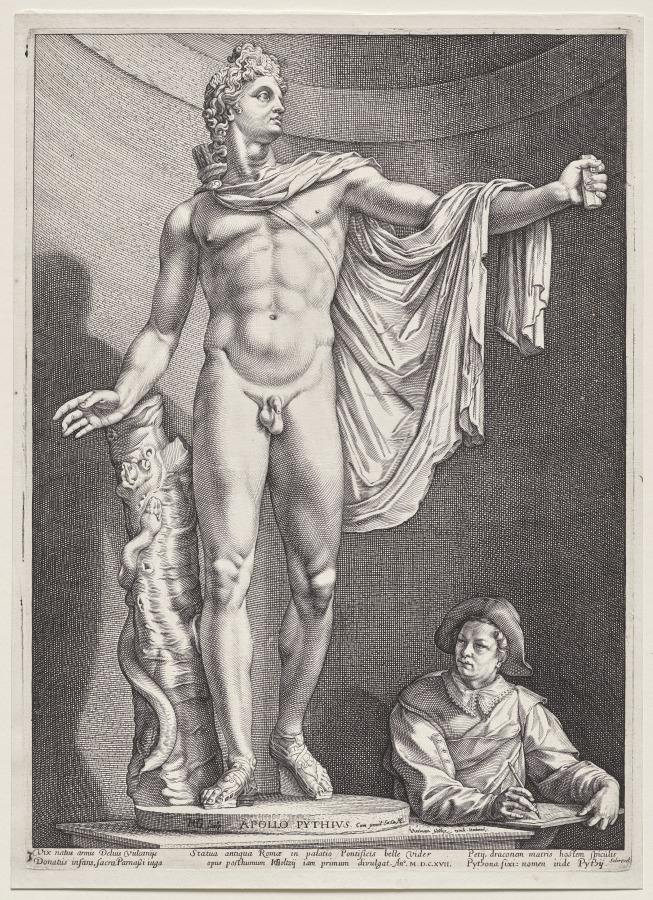
He returned to Haarlem, bringing from Italy a large collection of drawings that he used for the rest of his life; from the Roman material three engravings of classical statues are known, including the Farnese Hercules.