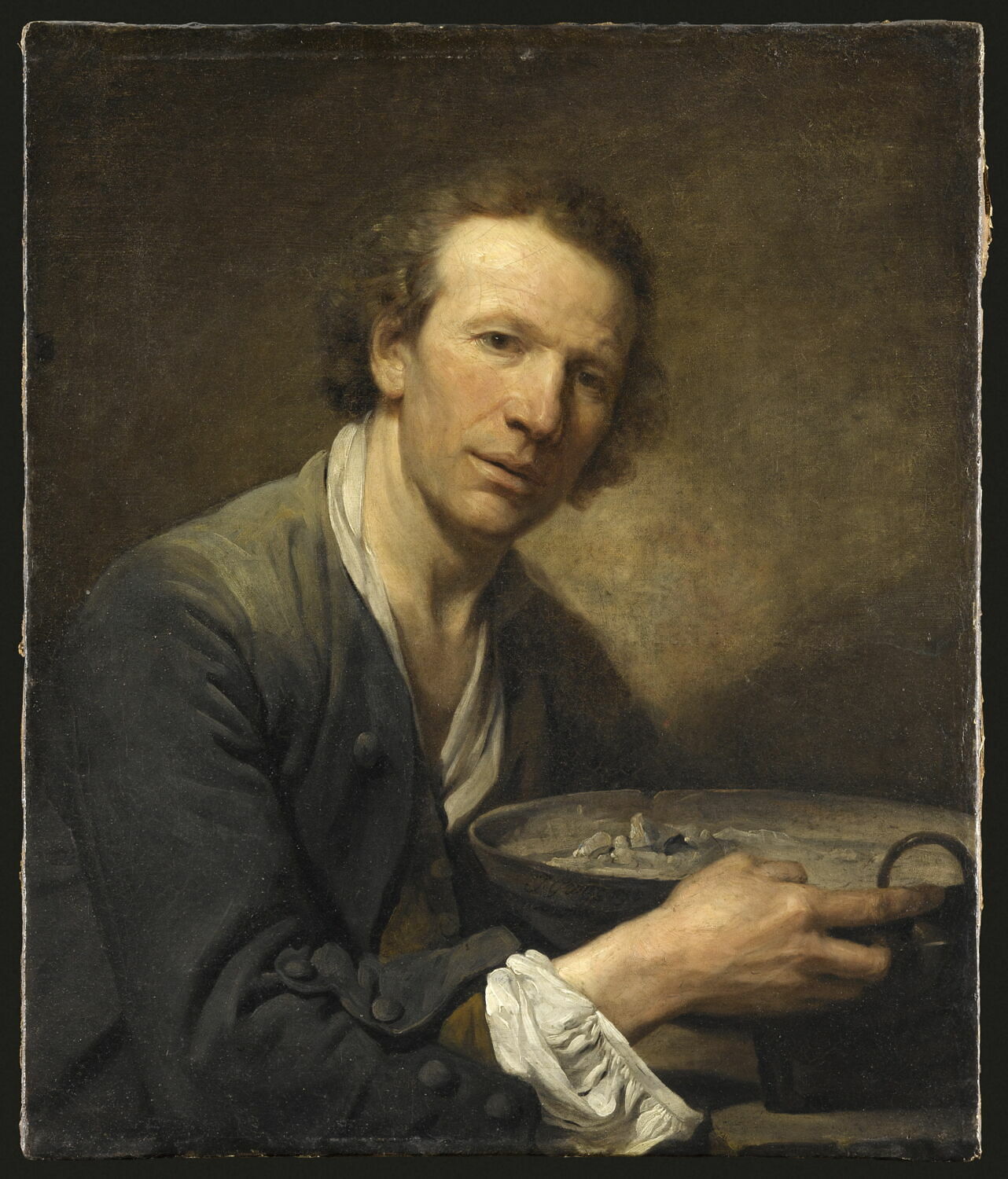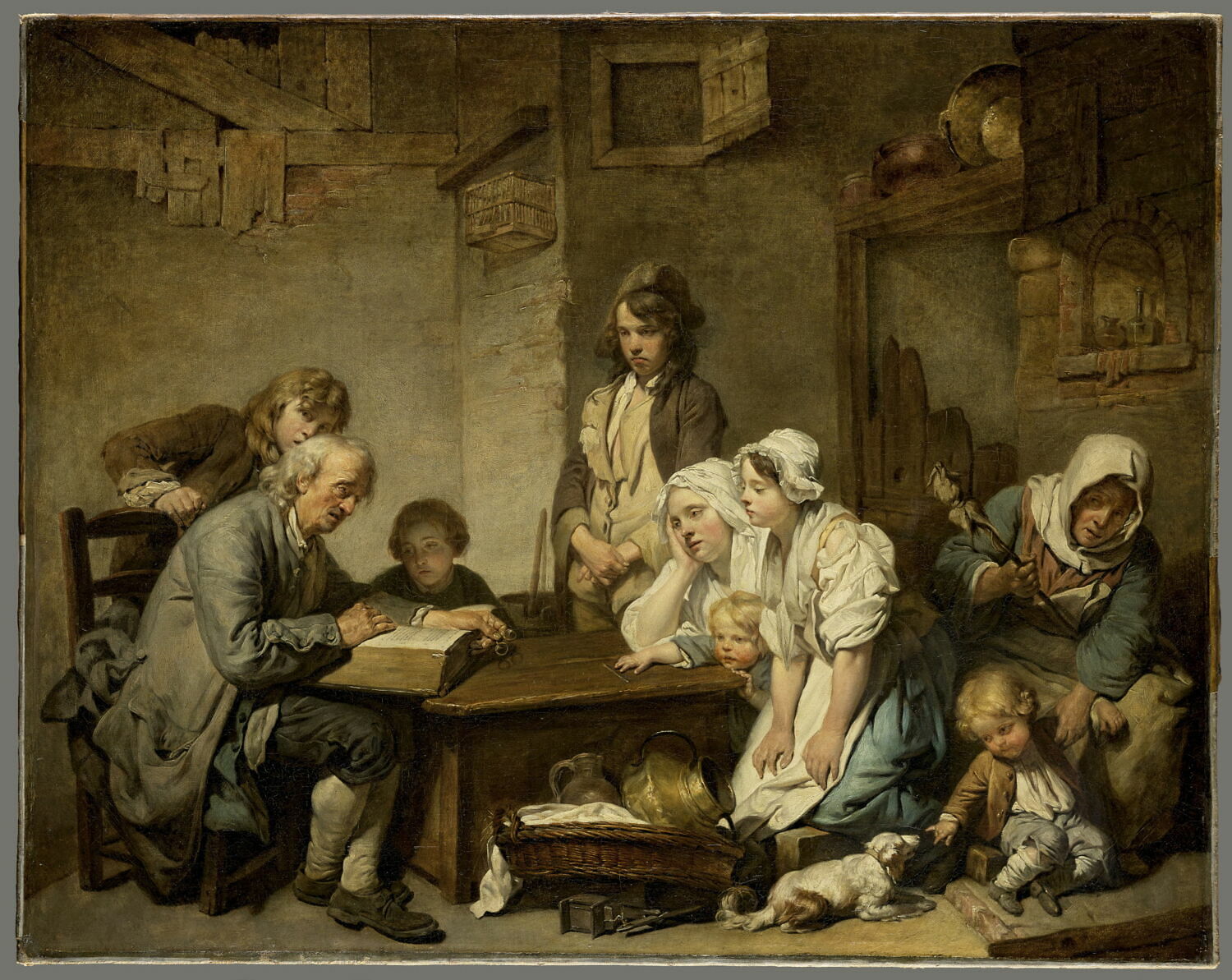
 Jean Baptiste GreuzeFrankrig, 1725–1805
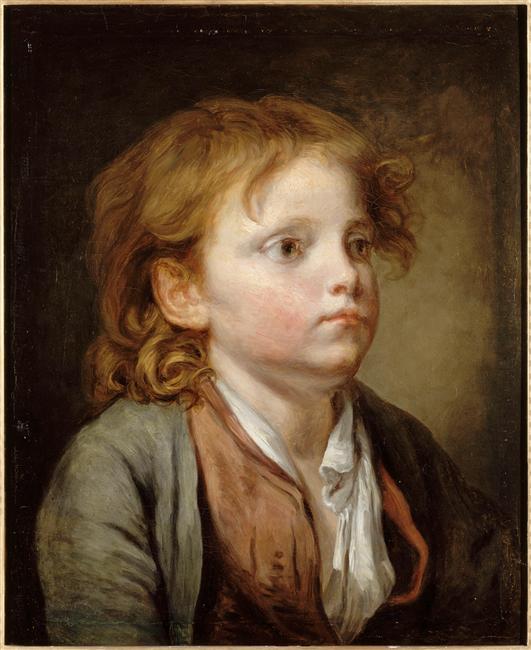
Jeune garçon
Kan det ses?
Ukendt
Hvor er »Jeune garçon« i dag? Samling: Musée Condé, Chantilly. Ukendt.
Chantilly, Frankrig
Ejeren er kendt; om værket er udstillet i dag, vides ikke.
- Uændret siden
- Kilde
- Museet
Oplysninger
- Inventarnummer
- PE 392
Hvad det viser
I kataloget
Kilder
- Musée Condé
- Billede: Musée Condé — © Réunion des musées nationaux - utilisation soumise à autorisation; Ministère de la Culture (France), base Joconde
Imens i livet hos Jean Baptiste Greuze
Hele livet1750
Follows Grandon to Paris
Greuze’s father opposed his becoming a painter, but the Lyon portraitist Charles Grandon persuaded him to give way, and the youth became Grandon’s pupil in Lyon; in 1750 he follows his teacher to Paris. At the Royal Academy he studies under Charles-Joseph Natoire, but the two do not get on.
1755
The Deceived Blind Man brings him into the Academy
Greuze exhibits The Deceived Blind Man; presented by the sculptor Pigalle, he is immediately accepted by the Academy as an agréé. He also enjoys the support of the well-known connoisseur La Live de Jully, brother-in-law of Madame d’Épinay.
1755–1757
To Italy with Abbé Gougenot
Towards the close of 1755 Greuze leaves for Italy with Abbé Louis Gougenot, a student of mythology and allegory whom the Academy elected an honorary member during the journey; he undertook it probably to silence those who taxed him with ignorance of great models of style. The trip did more harm than good: the Italian subjects that made up all his contributions to the Salon of 1757 showed he had been put on a false track, and he soon returned to the source of his first inspiration.
1763
The Paralytic and the triumph of the Salon of 1763
Greuze exhibits at the Salons of 1759, 1761 and 1763 with growing success; the high point is The Paralytic (1763), which immediately wins unheard-of fame. The painting is bought by Empress Catherine II on the recommendation of Diderot, one of its most passionate admirers.
1765
The Salon of 1765: thirteen paintings and the height of his fame
At the Salon Greuze is represented by thirteen works, among them Young Girl Weeping for Her Dead Bird, The Good Mother, The Bad Son Punished and The Father’s Curse (the last two now in the Louvre); this is the zenith of his fame. He continues his series of pictures on upbringing and the relations between fathers and children, one of the great questions of the Enlightenment.
1769
Admitted to the Academy only as a genre painter
Wishing to be received as a history painter, Greuze presents the canvas Septimius Severus and Caracalla, exhibited beside his portrait of Jeaurat and the Little Girl with a Black Dog, and suffers a clear fiasco. The Academy accepts him, but only as a genre painter; the director says it respects his former excellent works but has “shut her eyes” to this unworthy canvas.