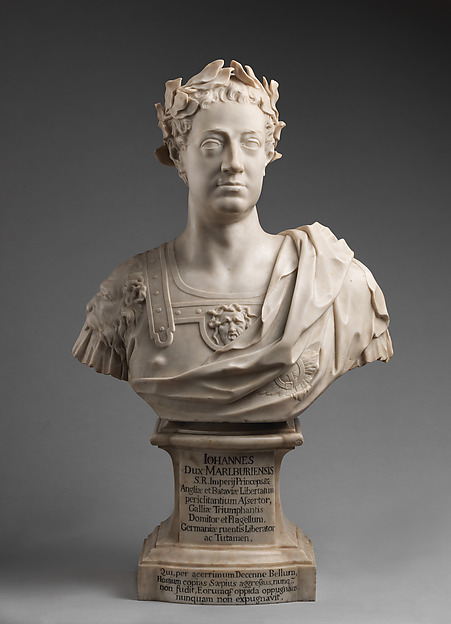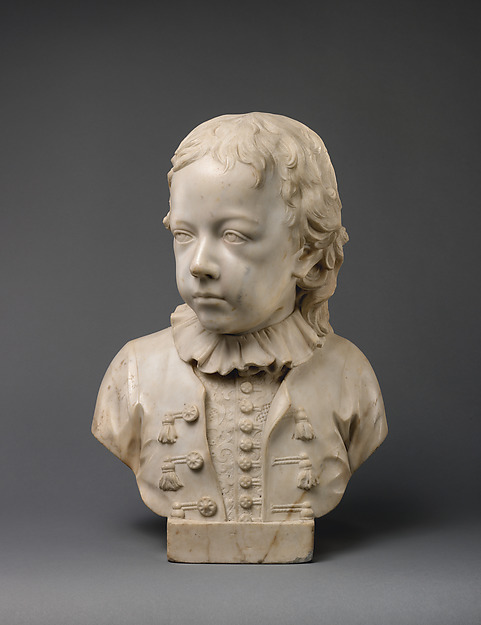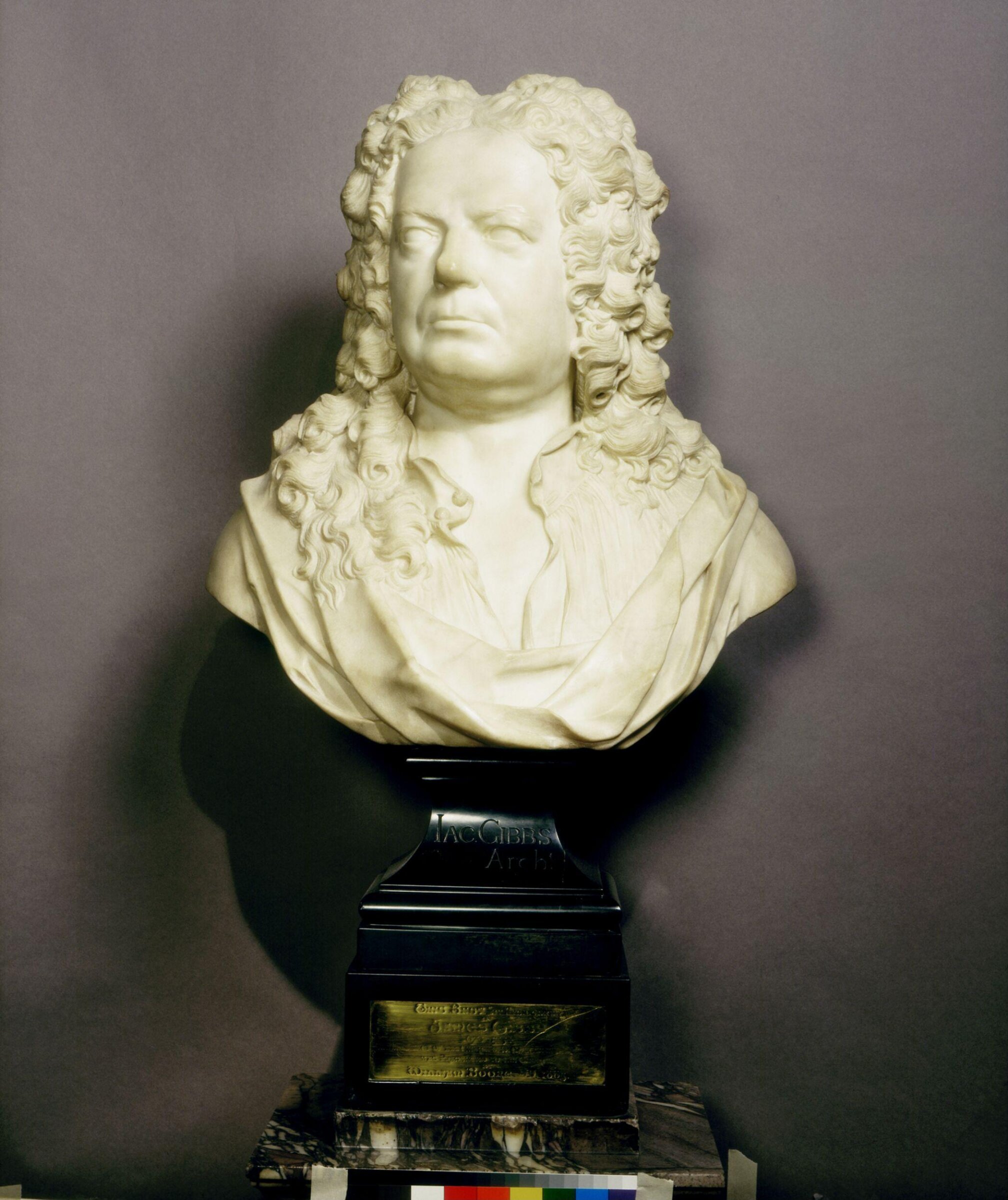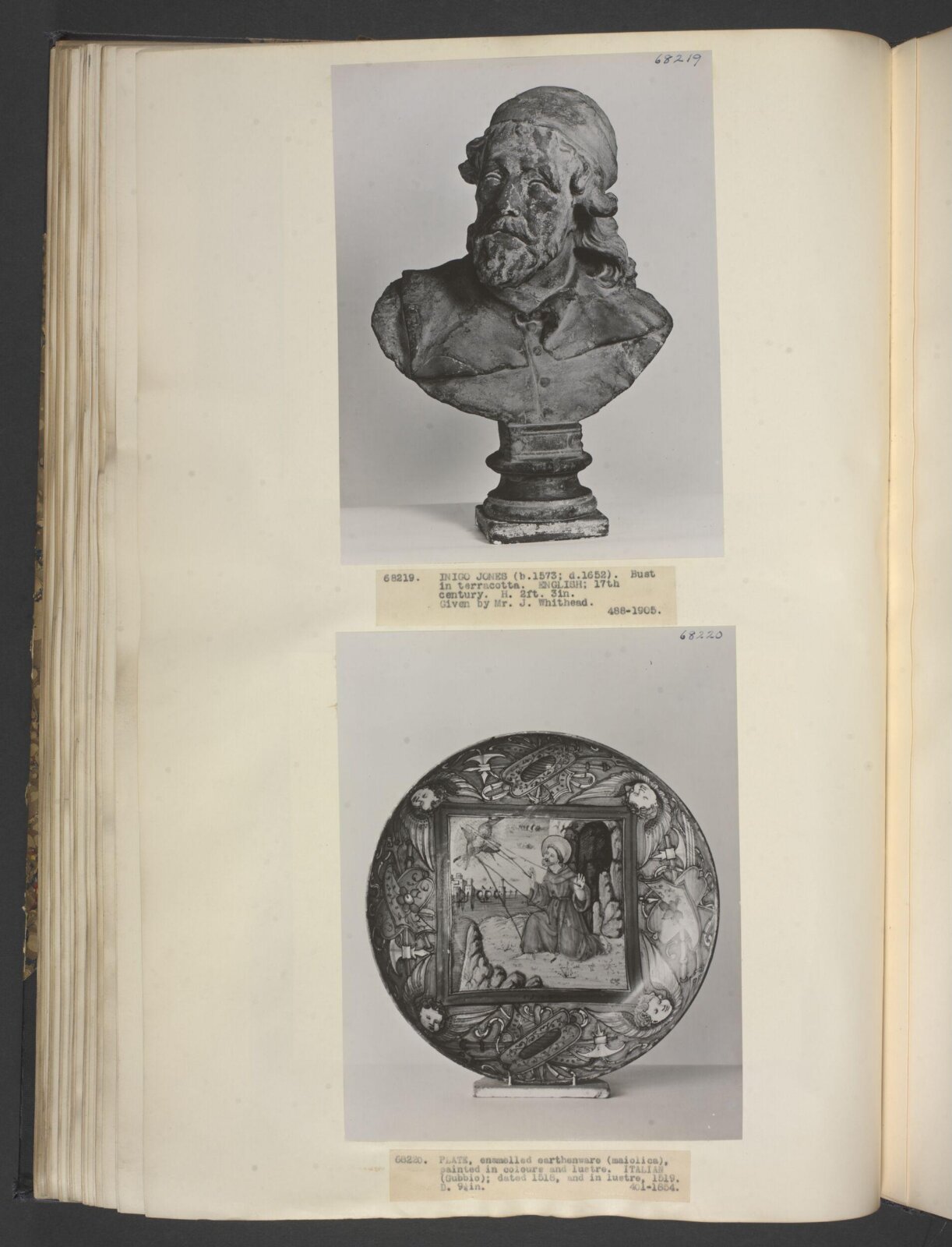
 John Michael RysbrackFlandern, 1694–1770
Inigo Jones
Må man se det?
Tager ikke imod for tiden

Victoria and Albert Museum
London, Storbritannien
Det hører til samlingen, men er ikke udstillet for tiden.
- Kontrolleret
- Uændret siden
- Kilde
- Museets egne samlingsdata
About the sculpture
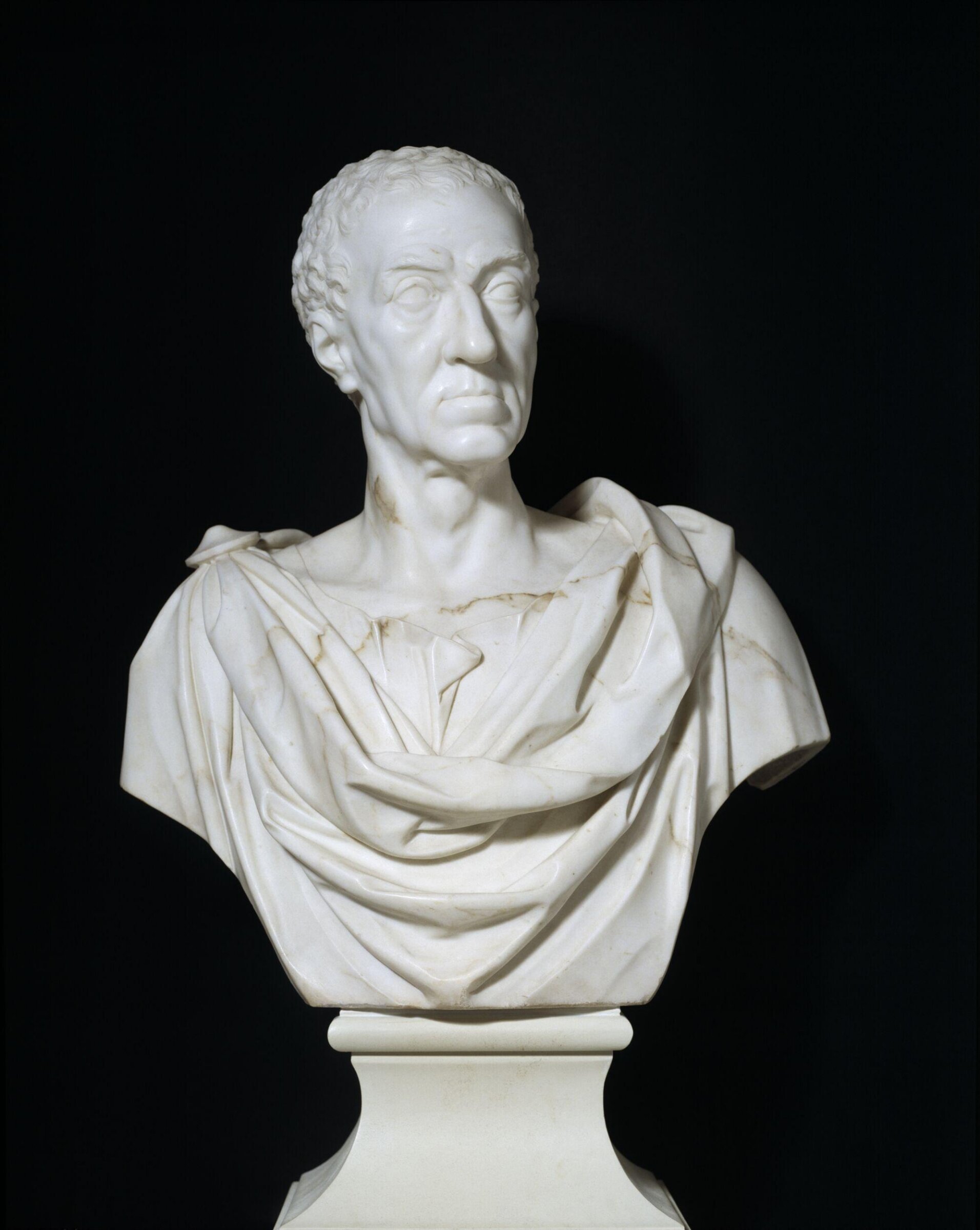
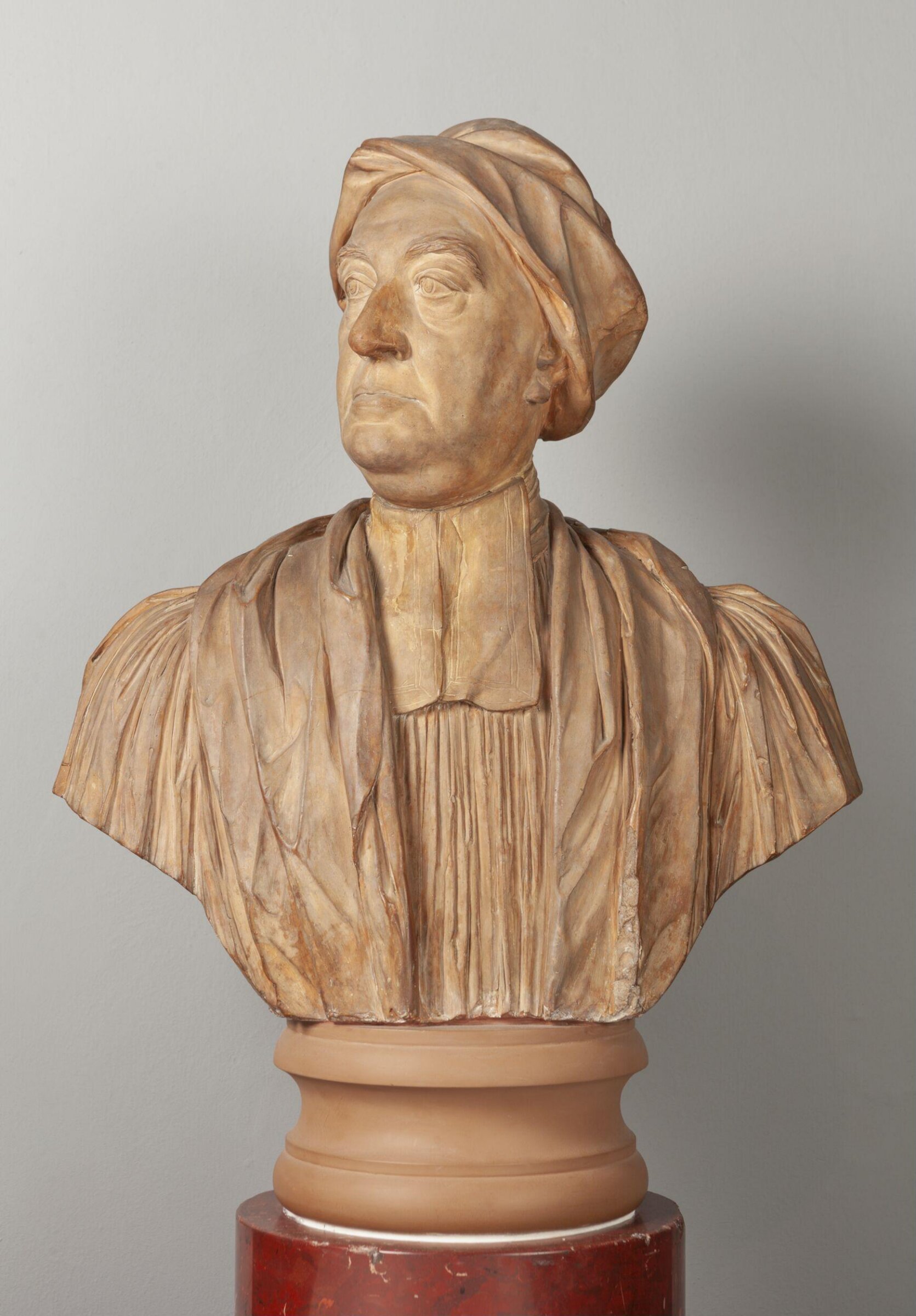
This terracotta bust representing Inigo Jones is sculpted after John Michael Rysbrack. The subject is derived from a portrait of Inigo Jones by Van Dyck (1599-1641).
According to the donor J. Whitehead this bust was originally positioned on the water-gate of the Thames near the Savoy, London, and may well have had a commemorative purpose.
Though historically attributed to Rysbrack and dated around 1725-27, recent conservation analysis has revealed the bust to be made of painted cement, not terracotta as originally thought. For this reason, it is more likely to date from the nineteenth century, though based on earlier representations of Inigo Jones by Rysbrack.
Read on
Inigo Jones was one of the first great English architects. He is known primarily for introducing the Palladian style into England from Venice. In 1606 James I employed him to design scenery and costumes for masques written by Ben Johnson and performed at Court. In 1615 he was appointed Surveyor General of the Royal Buildings. His most important London buildings are the Queen's House, Greenwich (1616-1635) and the Banqueting House in Whitehall (1622). His influence was curtailed by the English Civil War, but his work became popular again among the 18th century architects, who had a renewed interest in the work of Palladio.
Victoria and Albert Museum
Oplysninger
- Inventarnummer
- 488-1905
What it shows
I kataloget
Kilder
- Victoria and Albert Museum: the museum's own open data · hentet for 10 dage siden
- Billede: Victoria and Albert Museum — © Victoria and Albert Museum, London