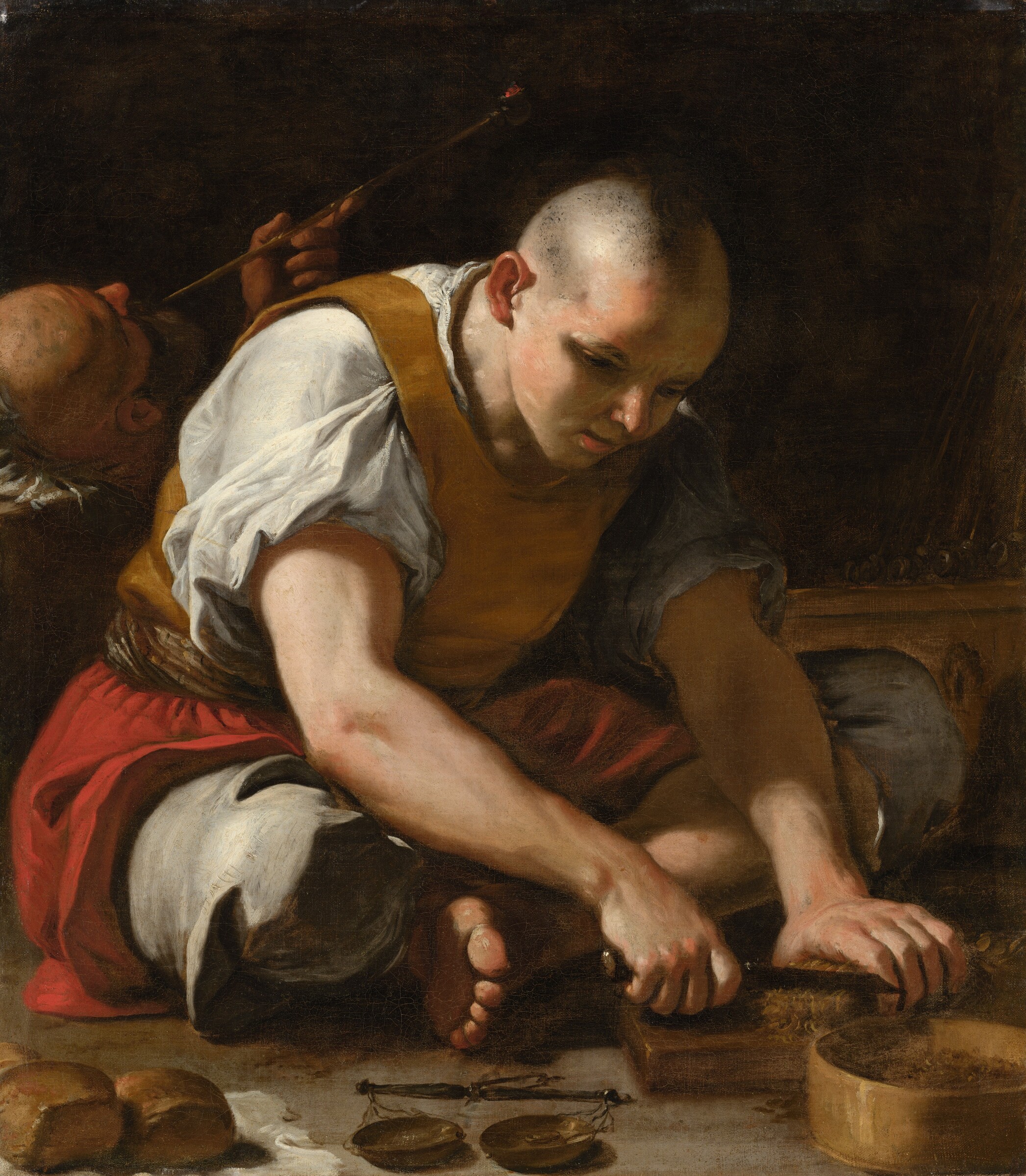
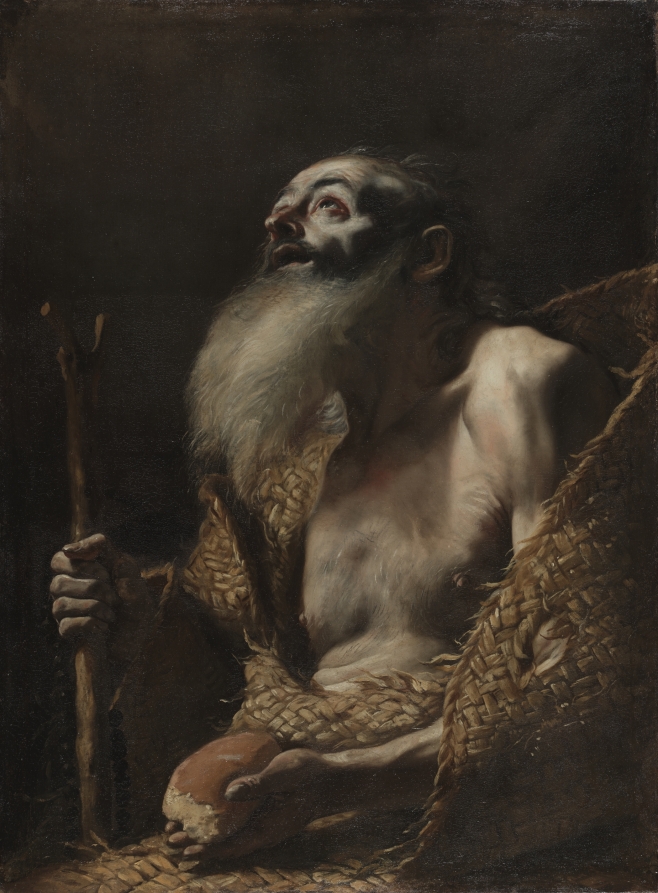
Mattia PretiItalien, 1613–1699
Игра в кости
Må man se det?
Ukendt
Rostov ved Don, Rusland
Ejeren er kendt; om værket er udstillet i dag, vides ikke.
- Uændret siden
- Kilde
- Museet
Om maleriet
Med museets ord — på russisk
Трехфигурная композиция с выдвинутыми на передний план полуфигурами расположенными на нейтральном, темном фоне. Двое мужчин сидят за столом, один против другого, и играют в кости. На мужчине справа латы и шлем, слева - коричневый камзол с белыми рукавами рубашки. Позади стола, справа от центра, сидит молодой человек в коричнево-красном берете, облокотившись правой рукой на стол и подпирая ею голову. Он наблюдает ходы игроков. Колорит темный, коричнево-черный с серо-зеленым в изображении шарфа поверх лат воина справа. Подписи нет. Справа внизу красной краской: 995
Rostov Regional Fine Arts Museum
Oplysninger
- Inventarnummer
- Ж-789
I kataloget
Kilder
- Ruslands statslige katalog over museumsfonden
- Billede: Rostov Regional Fine Arts Museum — © Ростовский областной музей изобразительных искусств · Госкаталог музейного фонда РФ
Imens i livet hos Mattia Preti
Hele livetchildhood and youth (until 1630)
Under the care of Don Marcello Anania
From an early age he was entrusted to the care of Don Marcello Anania, the parish priest of Santa Barbara in Taverna, who taught him grammar and the humanities and facilitated his initial contacts with Roman cultural circles. Art in his native Calabria was still rooted in the tradition of late Neapolitan Mannerism, as exemplified by Giovanni Balducci, Giovanni Bernardino Azzolini and Fabrizio Santafede.
1630
Moves to Rome to live with his brother Gregorio
He moved to Rome, where he lived with his older brother Gregorio, also a painter and about ten years his senior, who had arrived in the Papal capital two years earlier, in 1628. There he became acquainted with the techniques of Caravaggio and his followers, such as Bartolomeo Manfredi, Nicolas Tournier and Valentin de Boulogne, and in his early works he often used sharp contrasts between deep shadow and intense light and depicted everyday subjects: card players, musicians and tavern scenes.
1630–1653
Frequent journeys: Italy, Spain and Flanders
Although he remained in Rome for nearly twenty-five years, he travelled frequently throughout Italy and abroad, particularly to Spain and Flanders, and established contacts with Emilian painters of the preceding generation, Guercino and Giovanni Lanfranco, who further influenced his style.
1636
The brothers’ home at San Biagio; the Accademia di San Luca
By 1636 Mattia and Gregorio Preti were recorded as residing at the Church of San Biagio a Montecitorio, and their names had already appeared on lists of artists associated with the Accademia di San Luca, although they did not formally join the institution.
early 1640s
The Preti brothers’ success in Roman circles
By the early 1640s the brothers were enjoying considerable success in Roman circles: numerous works by Mattia were catalogued in important private collections belonging to the local nobility, alongside significant public commissions.