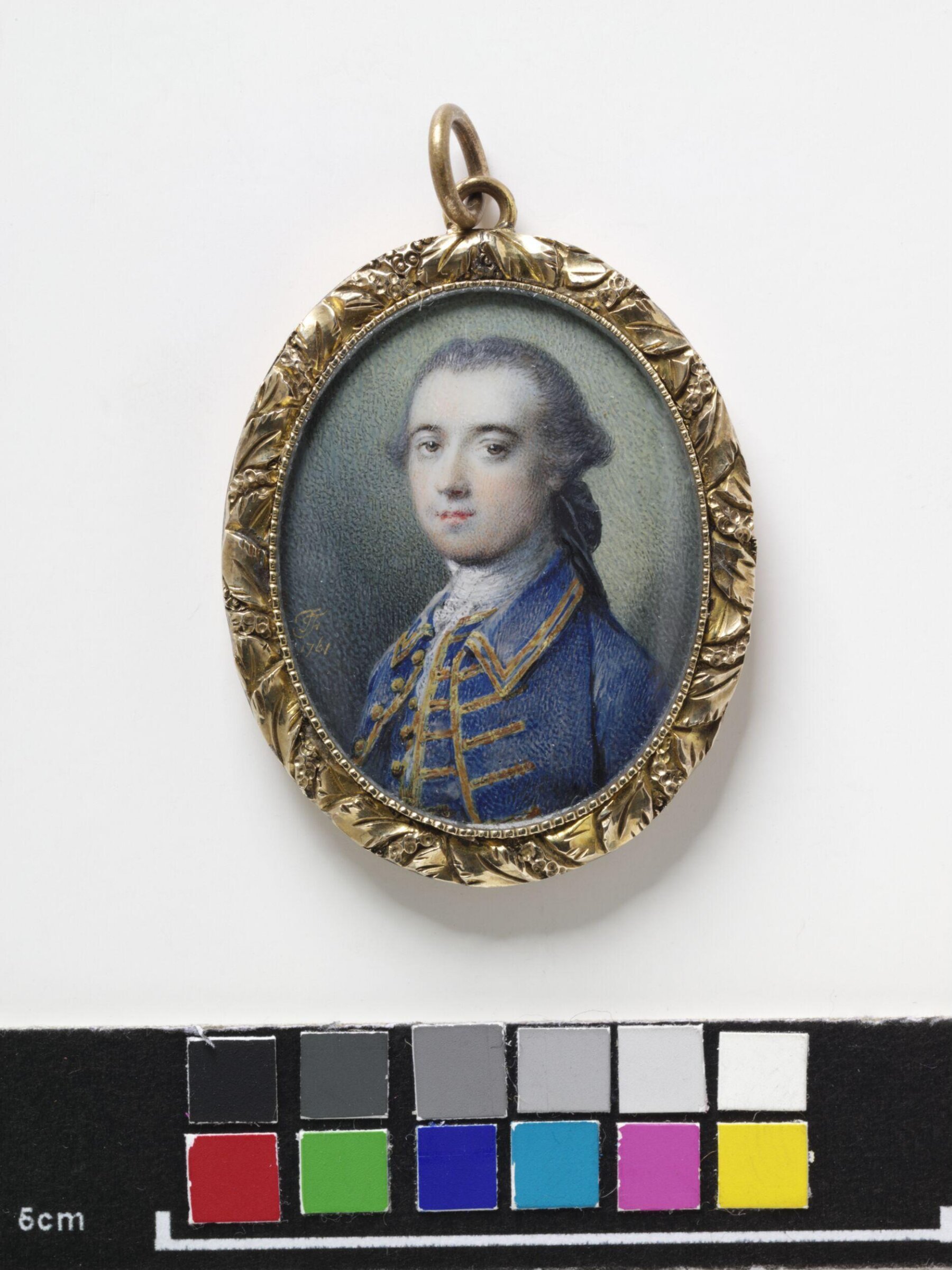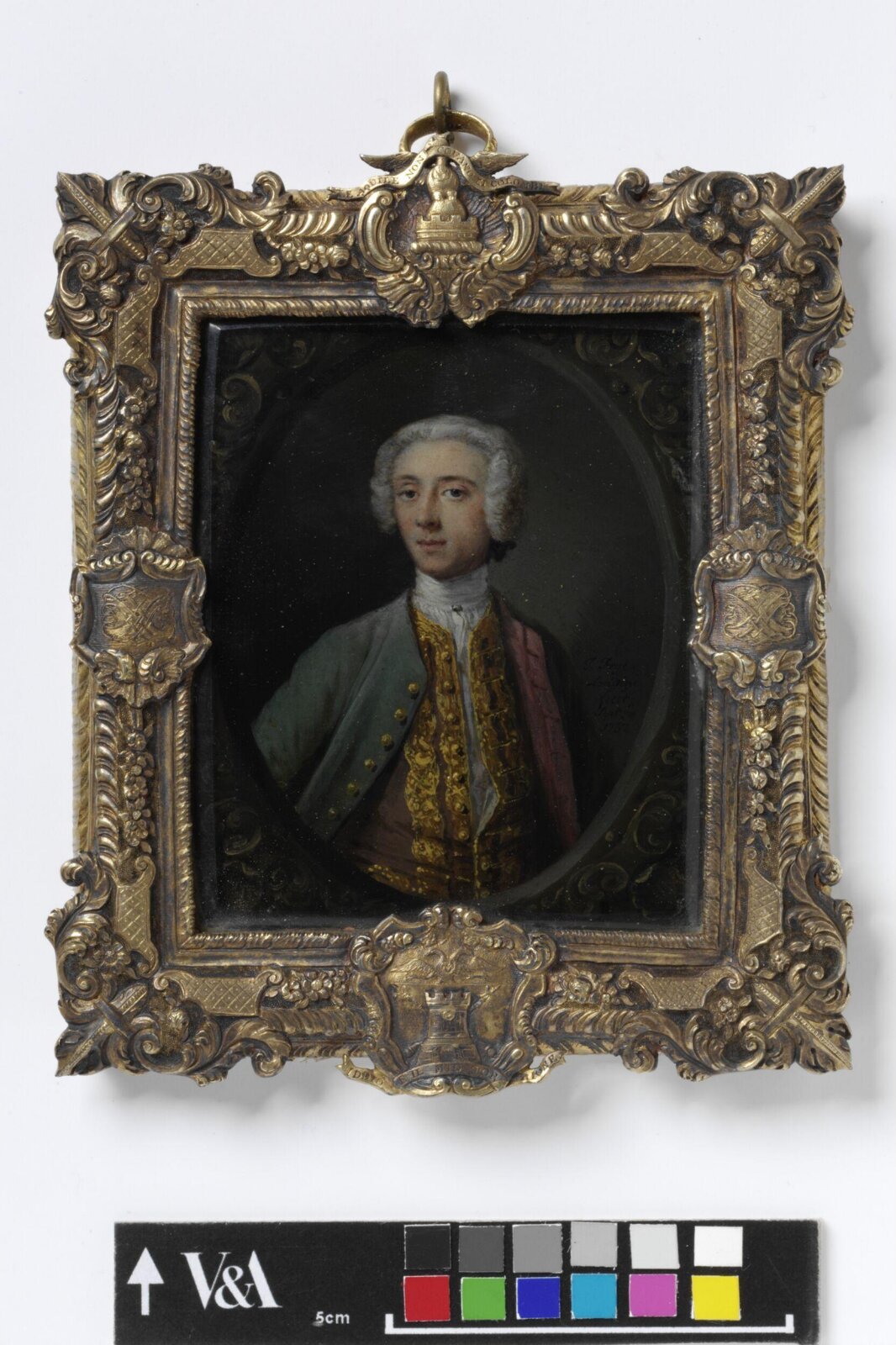
 Thomas FryeIrland, 1710–1762
Hilary Torriano
Må man se det?
Tager ikke imod for tiden

Victoria and Albert Museum
London, Storbritannien
Det hører til samlingen, men er ikke udstillet for tiden.
- Kontrolleret
- Uændret siden
- Kilde
- Museets egne samlingsdata
About the painting
In its strict sense, the word ‘miniature’ describes a technique of painting in watercolour rather than the size of a painting. Miniature painting developed as a separate art in the 16th century and in Britain it became predominantly a portrait art. In Continental Europe, however, the taste for portraits small enough to be carried on the person was often met by artists working within very different artistic traditions. One type of ‘miniature’ (as all such small works are now known), produced more on the Continent than in Britain, was the oil miniature, usually painted on metal. Most of these oil miniatures are anonymous, since the art of painting small portraits in oil on metal was not one in which leading artists specialised. More often it was part of a repertoire of portrait styles offered by less well-known oil painters.
Read on
This is an unusual example of an oil miniature portrait by a named English artist. Thomas Frye’s career typifies the multitude of artistic activities undertaken by English artists in the early part of the 18th century. Born in 1710, he was manager of the Bow china factory. He also painted oils, made mezzotints, drew works in crayon and so-called ‘plumbago’ (graphite) portraits, and painted miniatures in traditional watercolour as well as in enamel on metal and oil on metal. One problem with oil miniatures, which probably became apparent quite quickly, is that the varnish often discolours, which results in a darkened effect. This portrait has retained its colour well, but the maritime scene painted by Frye on a separate piece of metal and formerly framed at the back of this portrait has darkened.
Victoria and Albert Museum
Oplysninger
- Inventarnummer
- P.97&A-1931
What it shows
I kataloget
Kilder
- Victoria and Albert Museum: the museum's own open data · hentet for 11 dage siden
- Billede: Victoria and Albert Museum — © Victoria and Albert Museum, London