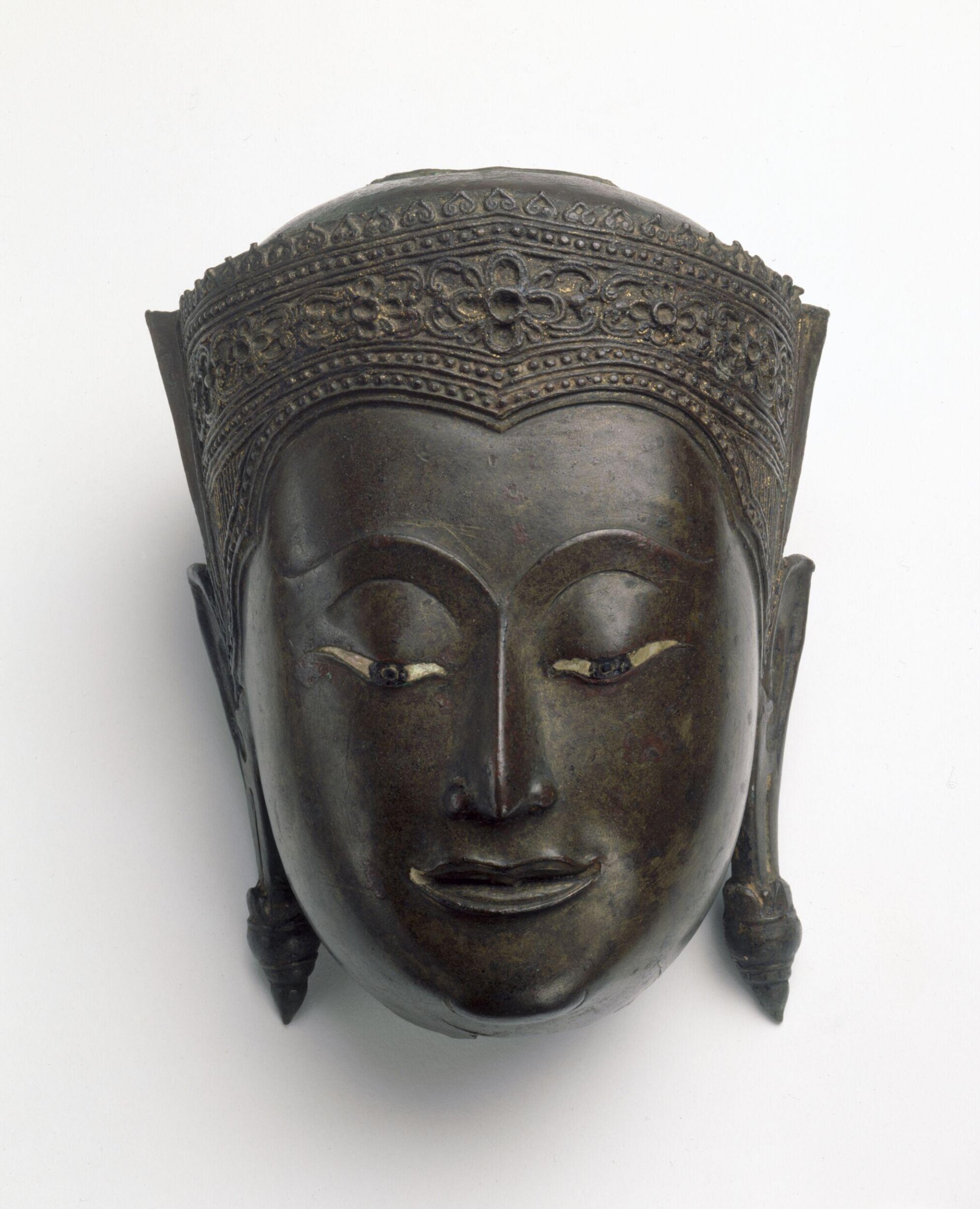
Head of a Bodhisattva
Kan det ses?
Ja, udstillet nu
Hvor er »Head of a Bodhisattva« i dag? Victoria and Albert Museum, The Himalayas and South-East Asia, Room 47a, London. Ja, udstillet nu. Kontrolleret 25. september 2026.

Lukket· åbner kl. 10.00
Udstillet for publikum.
- Kontrolleret
- Uændret siden
- Kilde
- Museet
Om skulpturen
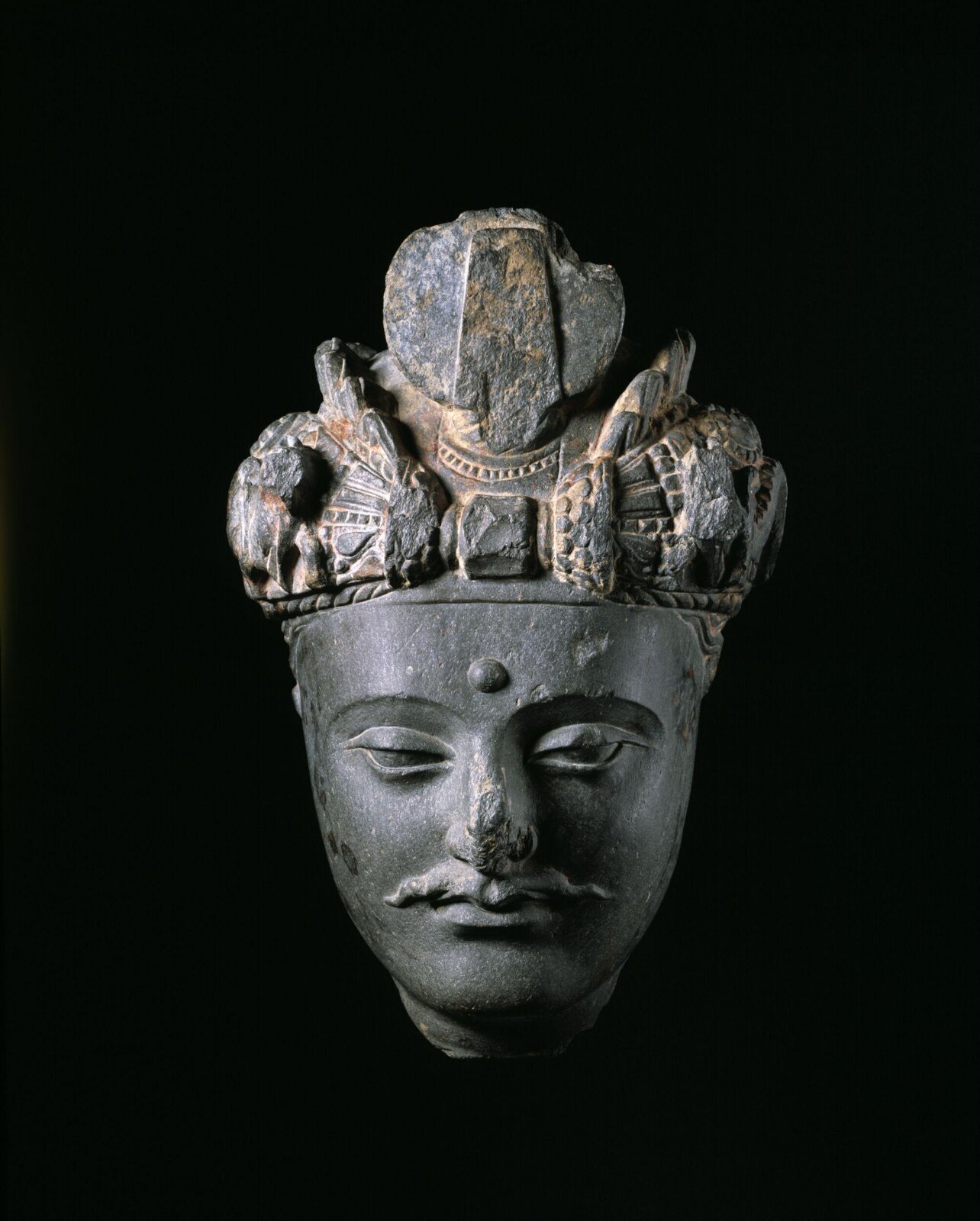
The fine carving of this head indicates that it belonged to a standing bodhisattva image of very high quality. (Bodhisattva is the name given to one on the path to becoming a buddha.) It has an elaborate headdress, constructed of ribbons and jewels. The central cockade (now missing) originally slotted onto the raised tapering tenon on a disc prominently displayed at the centre of the turban and bejewelled diadem. This probably displayed the attribute identifying the specific bodhisattva this head belonged to.
Læs videre
The beautifully carved head has an auspicious forehead mark (‘urna’) and the wavy moustache much favoured in the Gandharan school of Kushan Buddhist art. The Museum records indicate that this sculpture was ‘found near Peshawar’, in the Gandharan region. The head in not worked fully in the round. This suggests that it was intended to be displayed against a temple structure or in a wall niche.
In Gandharan art, images of the Buddha are often flanked by two attendant bodhisattvas, Maitreya and Avalokitesvara. Bodhisattvas also began to be worshipped as independent deities in this period. They were clearly distinguished from the Buddha by their princely attire.
Scientific analysis has revealed evidence of polychrome over a stucco ground with traces of gilding in the headdress. This confirms the widespread use of polychrome on stone as well as stucco sculptures.
Victoria and Albert Museum
Oplysninger
- Inventarnummer
- IM.4-1919
Hvad det viser
I kataloget
Kilder
- Victoria and Albert Museum
- Billede: Victoria and Albert Museum — © Victoria and Albert Museum, London