ART WIKI32.963 udstillet
KortSamlingKunstnereMuseerUdstillingerJournal
Log ind

ART WIKI

Hvor mesterværket hænger, og hvornår man bliver lukket ind.

Samlinger: Art Institute of Chicago, Det Russiske Museum, Eremitagen, Getty Villa, Harvard Art Museums, Hirshhorn Museum and Sculpture Garden, J. Paul Getty Museum, Louvre, Metropolitan Museum of Art, Minneapolis Institute of Art, Museum of Modern Art, National Gallery of Art, National Museum of Asian Art, National Portrait Gallery (Smithsonian), Pusjkinmuseet, Rijksmuseum Amsterdam, Smithsonian American Art Museum, Statens Museum for Kunst, The Cleveland Museum of Art, Tretjakovgalleriet, Victoria and Albert Museum, Whitney Museum of American Art, Ruslands statskatalog over museumsfonden (274 museer), Europeana (19 museer), Wikidata (6 museer), Paris Musées (12 museer) og Joconde, det franske kulturministeriums museumsdatabase (495 museer). Billederne tilhører deres rettighedshavere.

Afsnit

  • Kort
  • Søgning
  • Samling
  • Mesterværker
  • Udstillet nu
  • Kunstnere

Mere

  • Museer & gallerier
  • Udstillinger
  • Journal
  • Hvor data kommer fra
  • Privatliv & cookies
ForsideKortKatalog
  1. Samling/
  2. Victoria and Albert Museum/
  3. Head
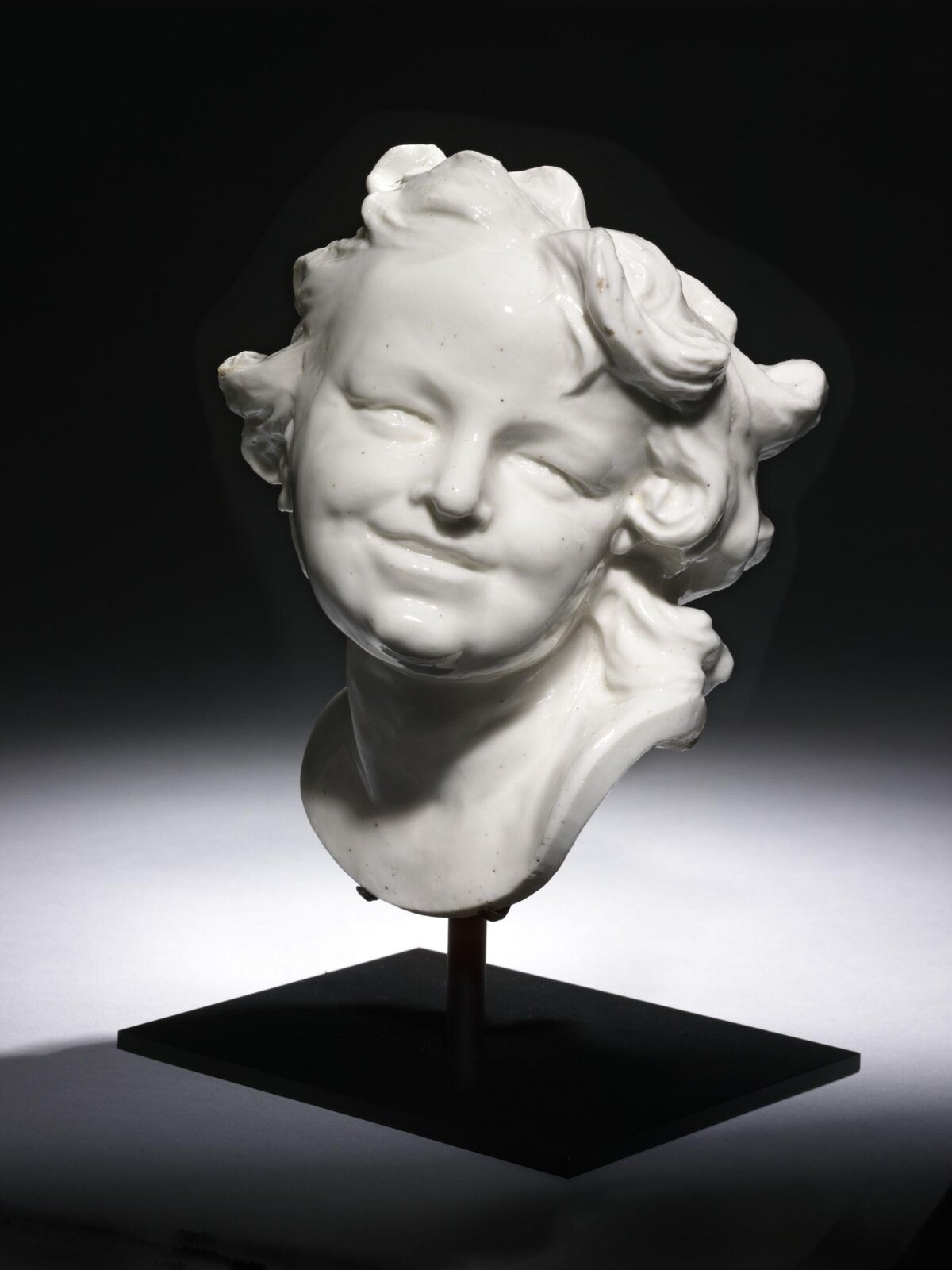
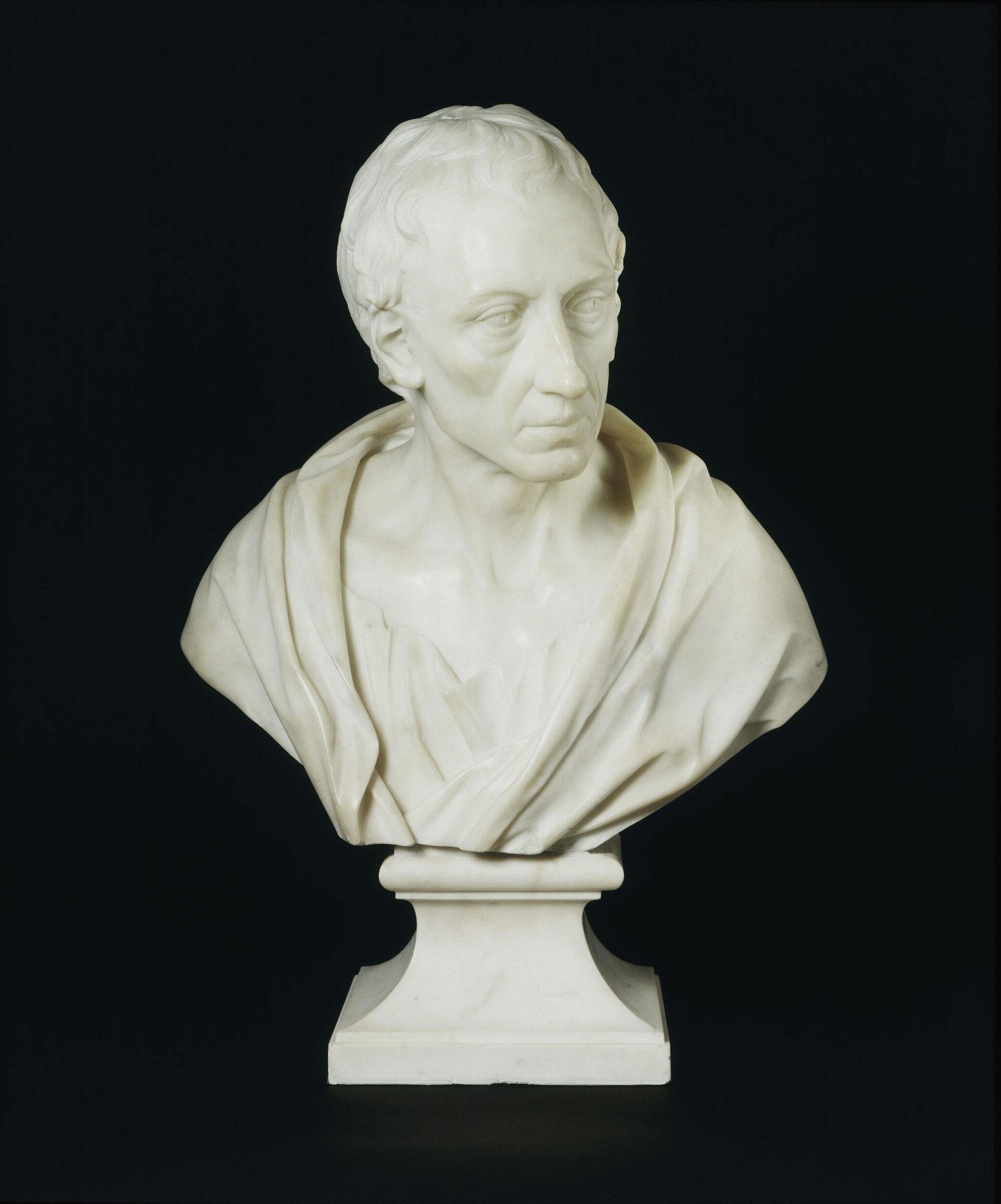
Head, Louis-François Roubiliac, ca. 1746-49
Louis François Roubiliac, portrætLouis François RoubiliacFrankrig, 1695–1762

Head

ca. 1746-49 · Head · 19.7 × 16.7 cm

Må man se det?

Ja, det tager imod

Victoria and Albert Museum

London, Storbritannien

SalBritish Galleries, Room 53a

Udstillet for publikum. Hvem der står inde for det, står nedenfor.

Kontrolleret
for 12 dage siden
Uændret siden
25. sep. 2026
Kilde
Museet
På kortetMuseets side

Om skulpturen

The Head of a Laughing Child is one of the most fluently modelled and aesthetically pleasing examples of English sculptural porcelain ever to have been produced, and must be considered of national importance. Made during the early years of the Chelsea porcelain factory, it is a testament to the artistic quality and sculptural ambition expressed in the early days of this brand-new material. It is on a par with the best work made at Meissen at that time.

The Head can be firmly attributed to the Chelsea porcelain factory on the basis of its material. The glassy body and glaze, without added tin-oxide, as well as the surface pitting, are typical for the early, experimental period at Chelsea. This experimental period and this early soft-paste porcelain are often referred to as triangle period and triangle paste, named after the earliest mark used by the Chelsea porcelain factory.

Læs videre

The secure, detailed and vivid modelling and the fact that there is no direct sculptural source for the Laughing Child, indicate that it was specifically modelled to be produced in Chelsea porcelain and Louis-François Roubiliac is the obvious candidate for the attribution of this work. He would have modelled the head directly in clay, and the resulting model was then used to create the plaster moulds which could be used to make multiple copies in porcelain. The subject is elusively enigmatic: does it represent a boy or a girl, or possibly an angel? Is it a portrait or an ideal head? It has Italianate qualities, and is reminiscent of the work of Gian Lorenzo Bernini (1598-1680), as well as recalling French and even Dresden sculpture. Roubiliac’s roots and training on the Continent, in both France and Dresden, as well as his knowledge of Roman baroque sculpture, mean that he is the most probable author.

Victoria and Albert Museum

Oplysninger

ca. 1746-49
16951762
Inventarnummer
C.37-2019

I kataloget

SkulpturTerrakotta og keramikRokoko1700-talletChelsea

Kilder

  • Victoria and Albert Museum
  • Billede: Victoria and Albert Museum — © Victoria and Albert Museum, London
Mere af Louis François Roubiliac

Alle værker
Alexander Pope, Louis François Roubiliac, 18th century

Alexander Pope

18th century · Victoria and Albert Museum

Robert Raymond (1672–1732), Lord Chief Justice, Louis-François Roubiliac, ca. 1733

Robert Raymond (1672–1732), Lord Chief Justice

ca. 1733 · Victoria and Albert Museum

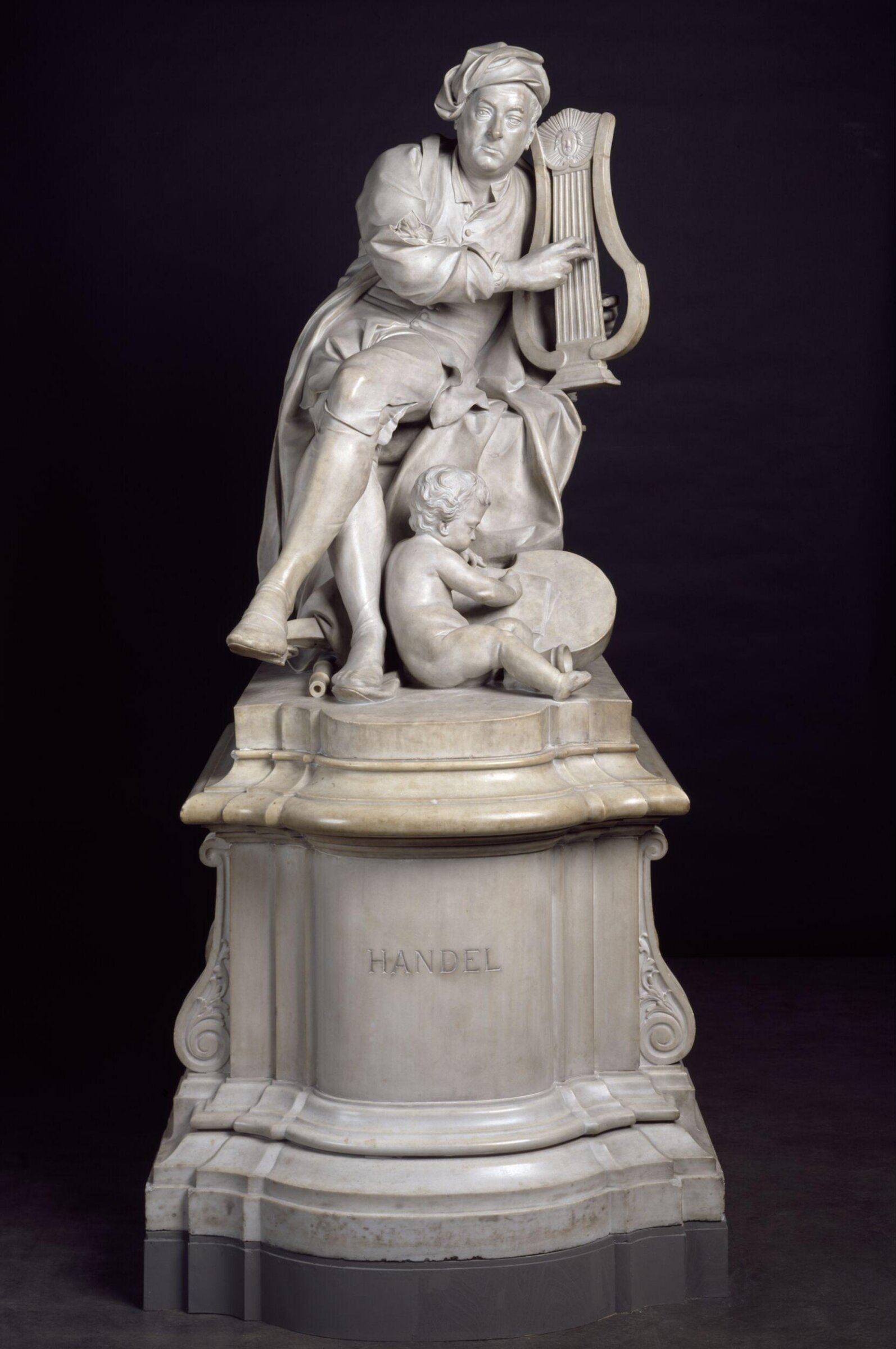
George Frederick Handel, Louis-François Roubiliac, 1738

George Frederick Handel

1738 · Victoria and Albert Museum

Jonathan Tyers, Louis François Roubiliac, ca. 1738

Jonathan Tyers

ca. 1738 · Victoria and Albert Museum

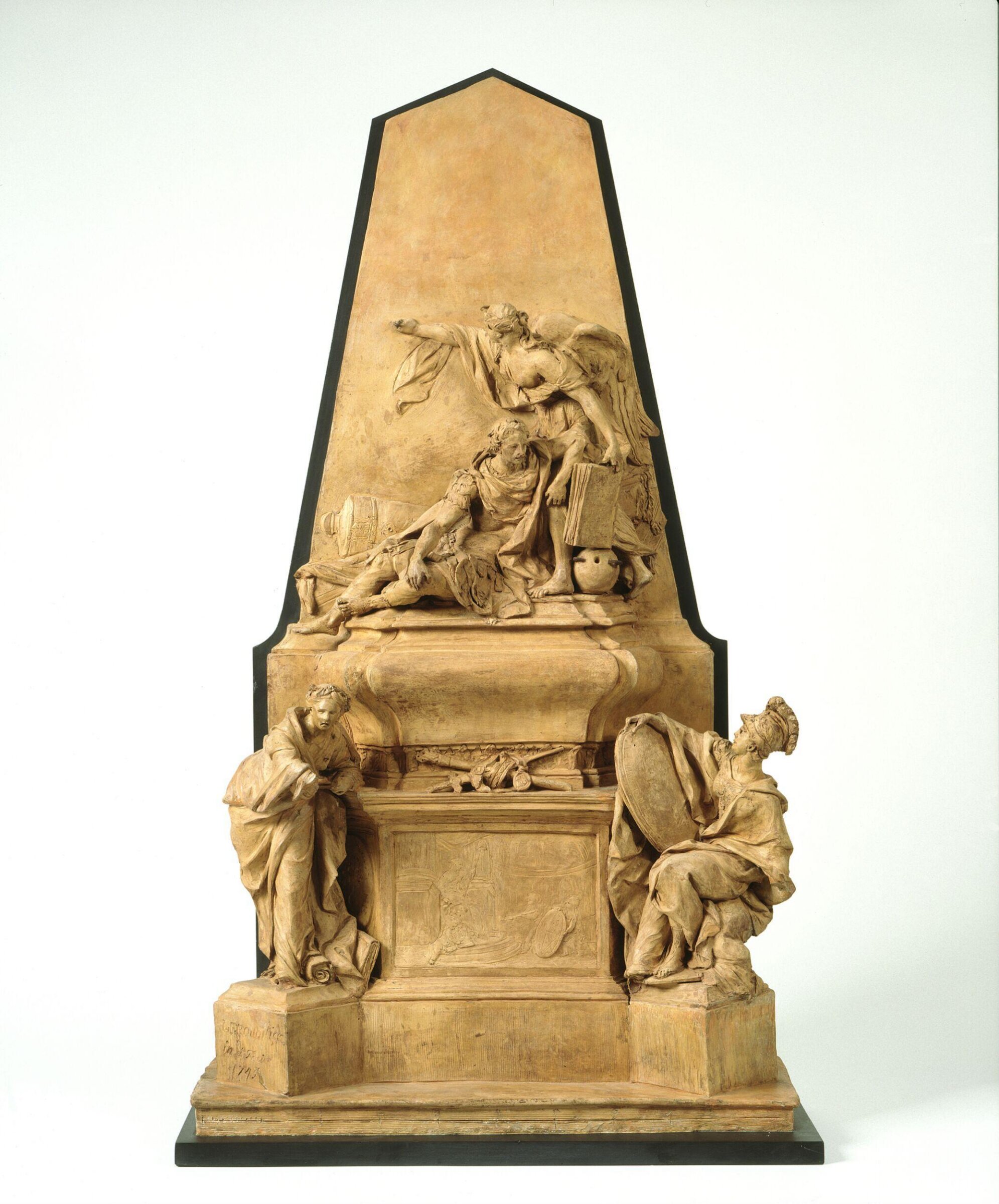
Model for the monument to John Campbell, 2nd Duke of Argyll and Greenwich, Louis François Roubiliac, 1745

Model for the monument to John Campbell, 2nd Duke of Argyll and Greenwich

1745 · Victoria and Albert Museum

Philip Dormer Stanhope, Fourth Earl of Chesterfield, Louis-François Roubiliac, ca. 1745

Philip Dormer Stanhope, Fourth Earl of Chesterfield

ca. 1745 · Victoria and Albert Museum

John, 2nd Duke of Montagu, Louis François Roubiliac, ca. 1750

John, 2nd Duke of Montagu

ca. 1750 · Victoria and Albert Museum

William Shakespeare, Louis-François Roubiliac, 1757

William Shakespeare

1757 · Victoria and Albert Museum

Naboer på Victoria and Albert Museum

Museets side
Bird of Paradise, Hashimoto Chitaka, 2026

Hashimoto Chitaka

Bird of Paradise, 2026

Torsion 2, Taruma Shoko, 2025

Taruma Shoko

Torsion 2, 2025

Fu, Someya Satoshi, 2025

Someya Satoshi

Fu, 2025

Bow Before the Curtain Falls, 2024

Bow Before the Curtain Falls, 2024

Summer, 2024

Summer, 2024

Red Flow, Ishizuka Genta, 2024

Ishizuka Genta

Red Flow, 2024

3D replica of Michelangelo's Prisoner (4117-1854), Factum Arte, 2024

Factum Arte

3D replica of Michelangelo's Prisoner (4117-1854), 2024

Sculpture, ‘Co-Existence – the Man and the Monkey’, Zhao Lin, 2024

Zhao Lin

Sculpture, ‘Co-Existence – the Man and the Monkey’, 2024