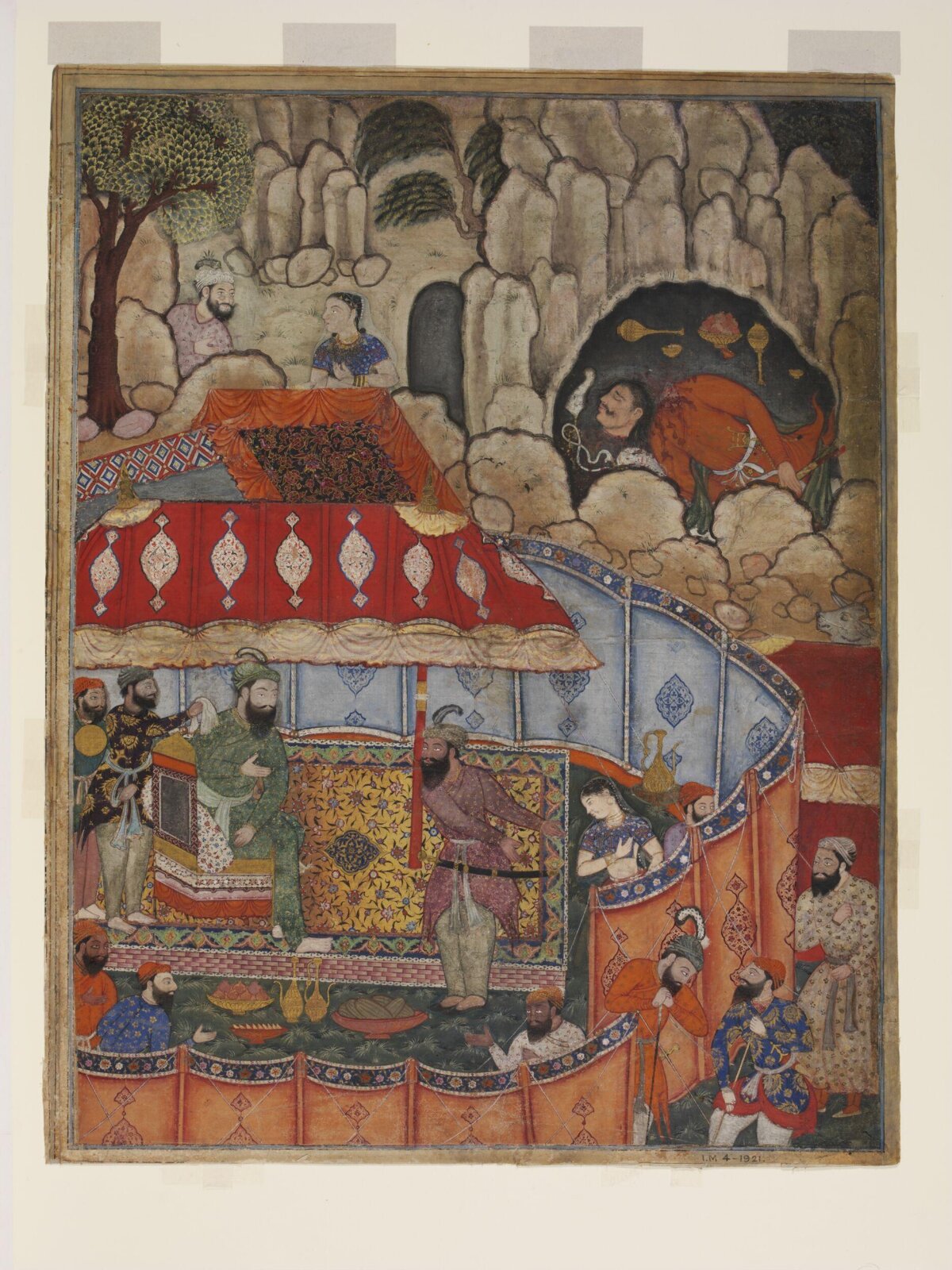
Hamzanama
Må man se det?
Tager ikke imod for tiden

Victoria and Albert Museum
London, Storbritannien
Det hører til samlingen, men er ikke udstillet for tiden.
- Kontrolleret
- for 7 dage siden
- Uændret siden
- 25. sep. 2026
- Kilde
- Museets egne samlingsdata
About the painting
The Hamzanama, or 'Book of Hamza' was commissioned by the great Mughal emperor Akbar in the mid-16th century. The epic story of a character based very loosely on the life of the uncle of the Prophet Muhammad chronicles the fantastic adventures of Hamza as he and his band of heroes fight against the enemies of Islam. The stories, from a long-established oral tradition, were written down in Persian, the language of the court, in multiple volumes. These originally had 1400 illustrations, and their creation is known to have taken 15 years. Work is thought to have begun in about 1562. Fewer than 200 illustrations have survived, and the original text is only that on the back of each remaining folio, meaning that the complicated stories are often difficult to follow. This painting depicts the dismembered body of Hamza in the cave, following his death in battle at Mount Uhud.
Read on
The folio was acquired by Sir Raleigh Gilbert Egerton in Srinagar, Kashmir, in 1913.
Victoria and Albert Museum
Oplysninger
- Inventarnummer
- IM.4-1921
What it shows
I kataloget
Kilder
- Victoria and Albert Museum: the museum's own open data · hentet for 7 dage siden
- Billede: Victoria and Albert Museum — © Victoria and Albert Museum, London