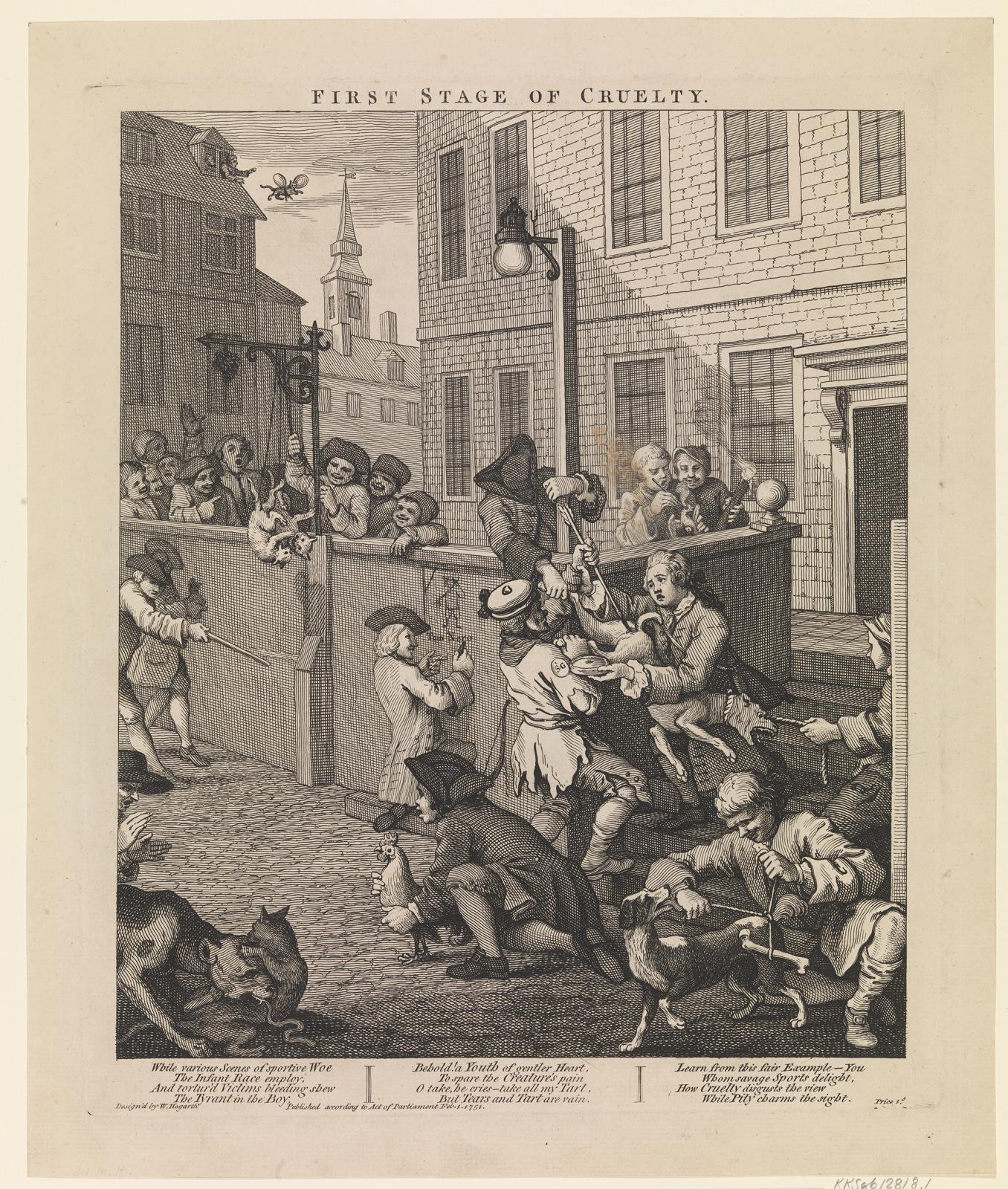
 William HogarthEngland, 1697–1764
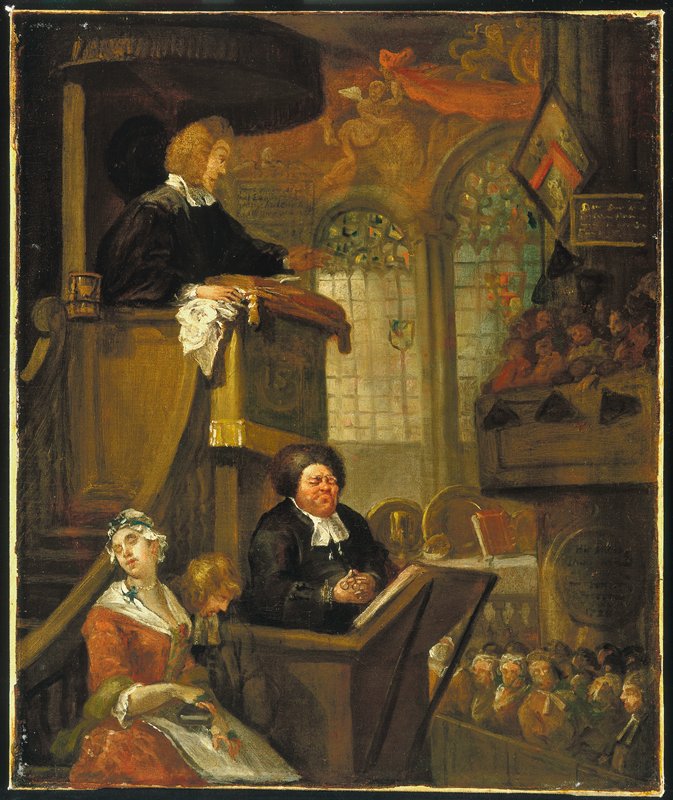
Grusomhedens første stadium
Må man se det?
Tager ikke imod for tiden

København, Danmark
Det hører til samlingen, men er ikke udstillet for tiden.
- Kontrolleret
- Uændret siden
- Kilde
- Museet
Oplysninger
- Inventarnummer
- KKSgb12818/1
I kataloget
Kilder
- Statens Museum for Kunst
- Billede: Statens Museum for Kunst — public domain
Imens i livet hos William Hogarth
Hele livet1712–1764 · Virkested
London
1748
A trip to France and “The Gate of Calais”
Back from a visit to France — which, Horace Walpole wrote, was risky after the peace of Aix-la-Chapelle — Hogarth at once painted “The Gate of Calais”: the French are shown as cringing, emaciated and superstitious, while an enormous sirloin of beef is carried to the English inn as a symbol of British prosperity. By his own account he painted himself in the left corner sketching the gate, with a soldier’s hand on his shoulder.
1749
A country house in Chiswick
In 1749 Hogarth bought a country retreat in Chiswick — now Hogarth’s House, a museum — and spent time there for the rest of his life; his main home remained the house in Leicester Fields (now Leicester Square).
1753
The treatise “The Analysis of Beauty”
In 1753 Hogarth published the treatise “The Analysis of Beauty”, in which he declared the S-shaped “line of beauty” — a serpentine line that conveys life and movement — the basis of harmony, and made it his emblem. His adherents praised the book as a fine statement on aesthetics, while enemies and rivals such as Paul Sandby mocked its obscurities and minor errors in endless caricatures.