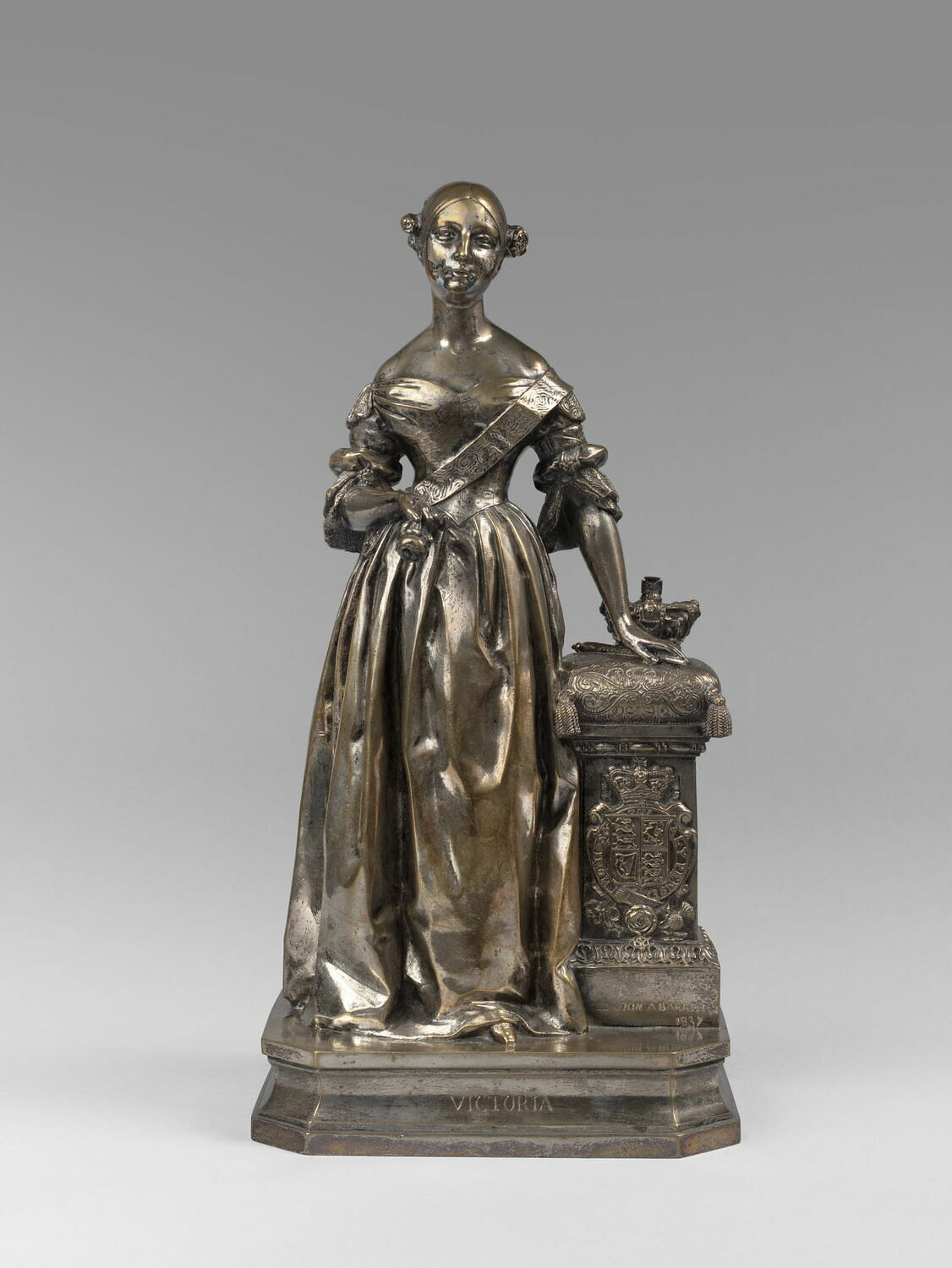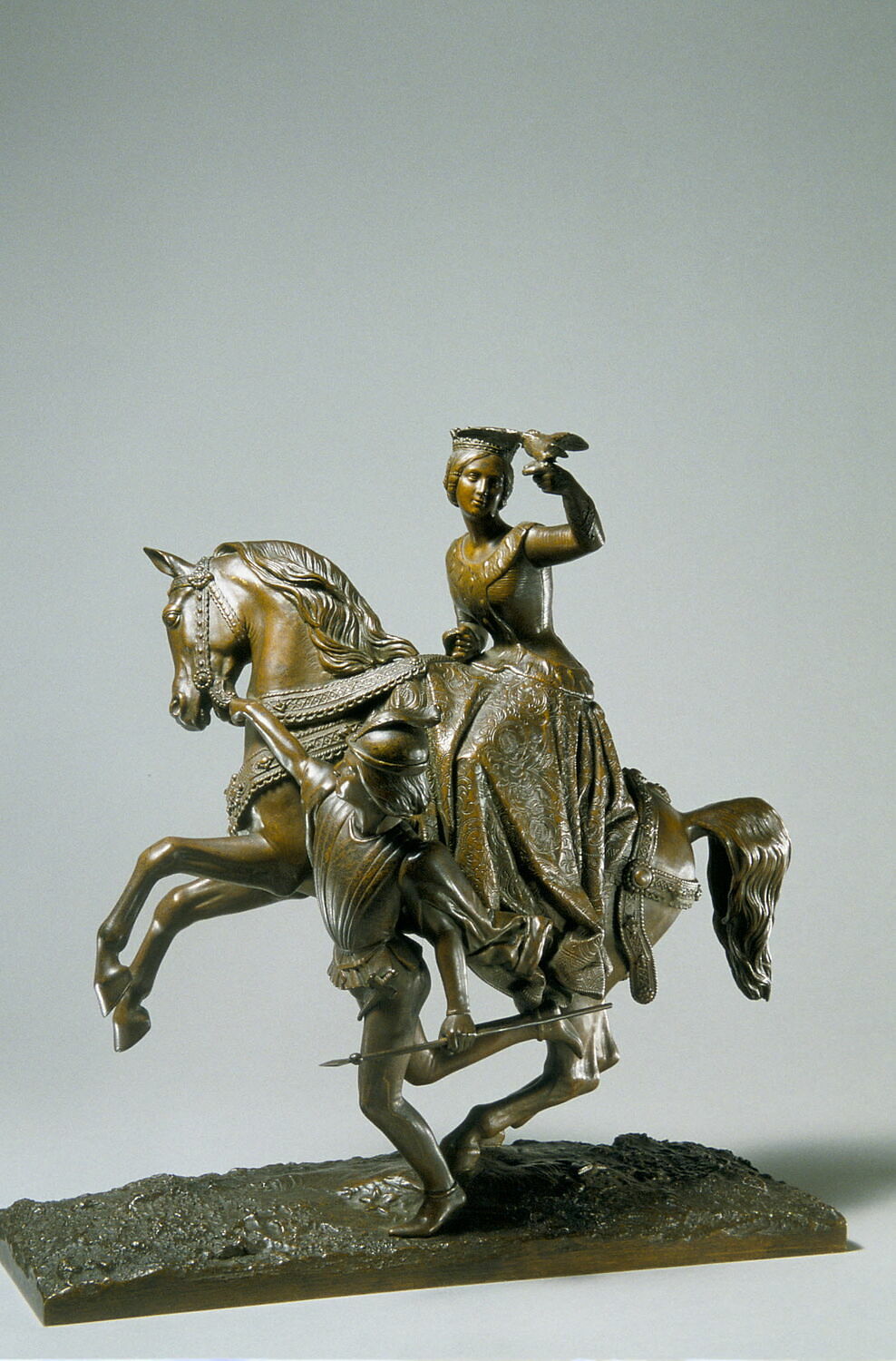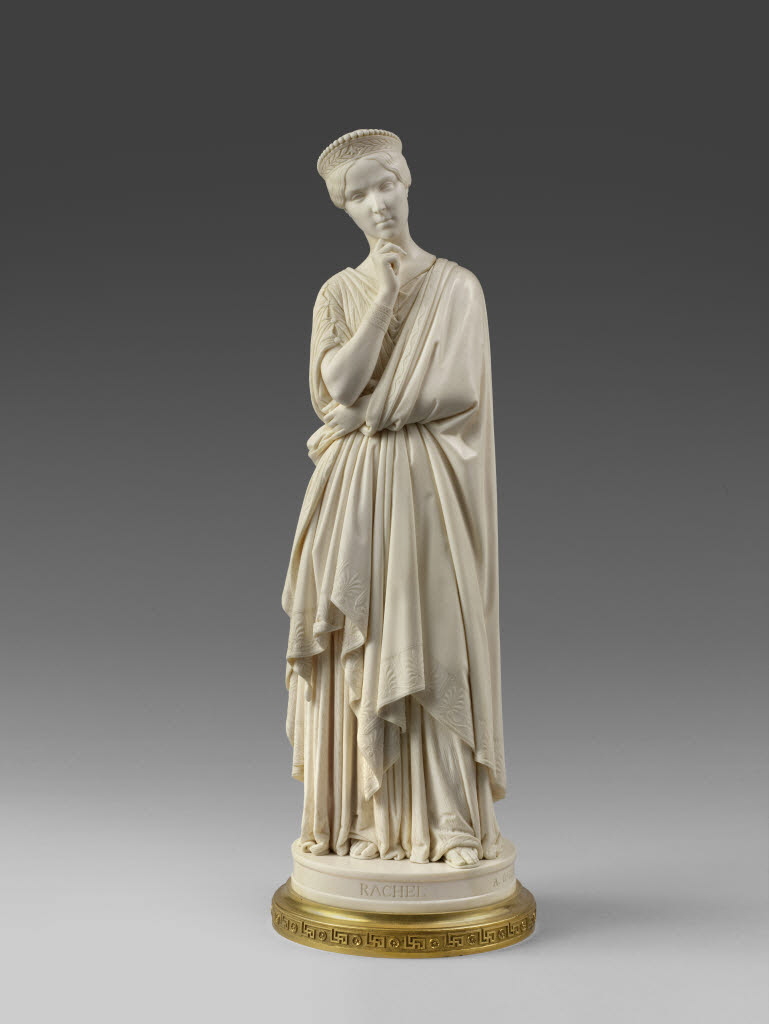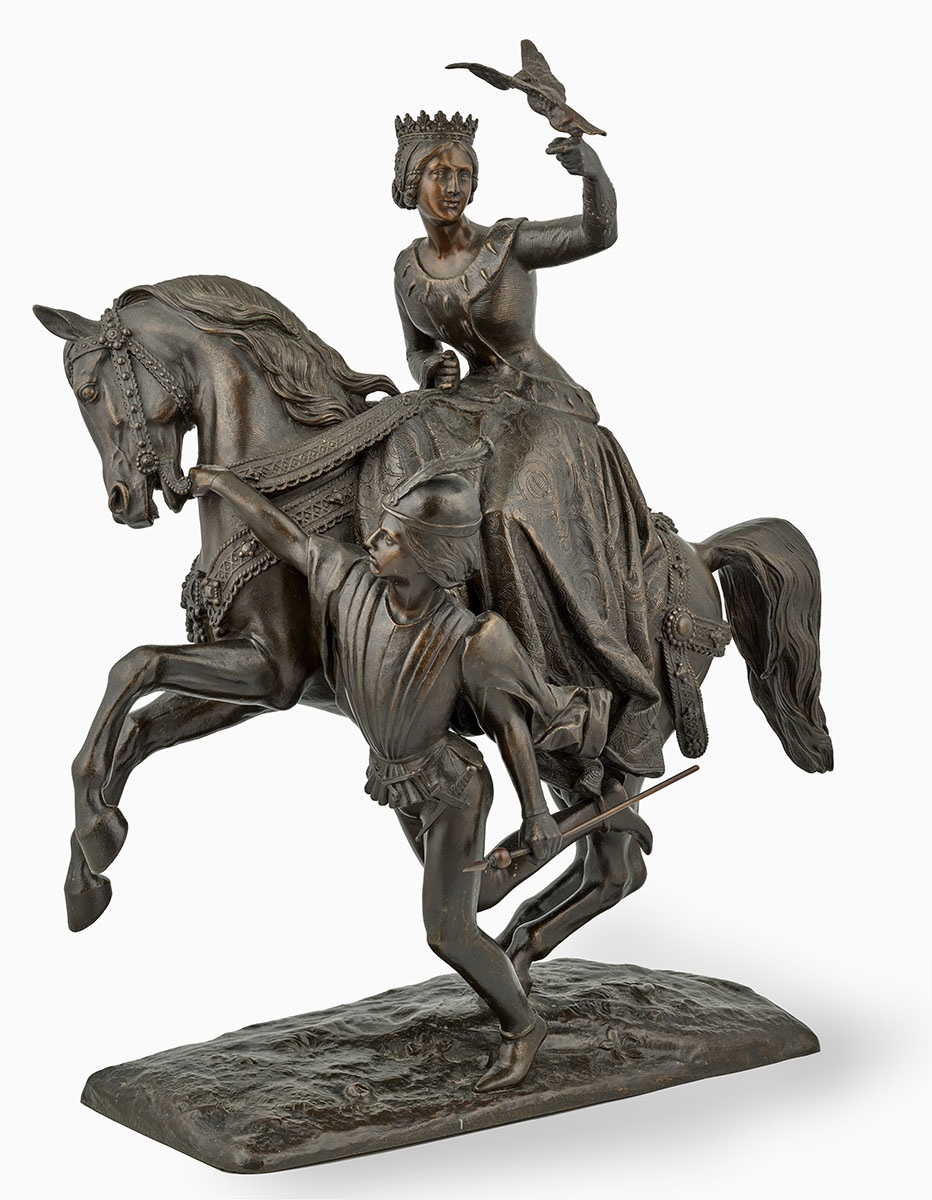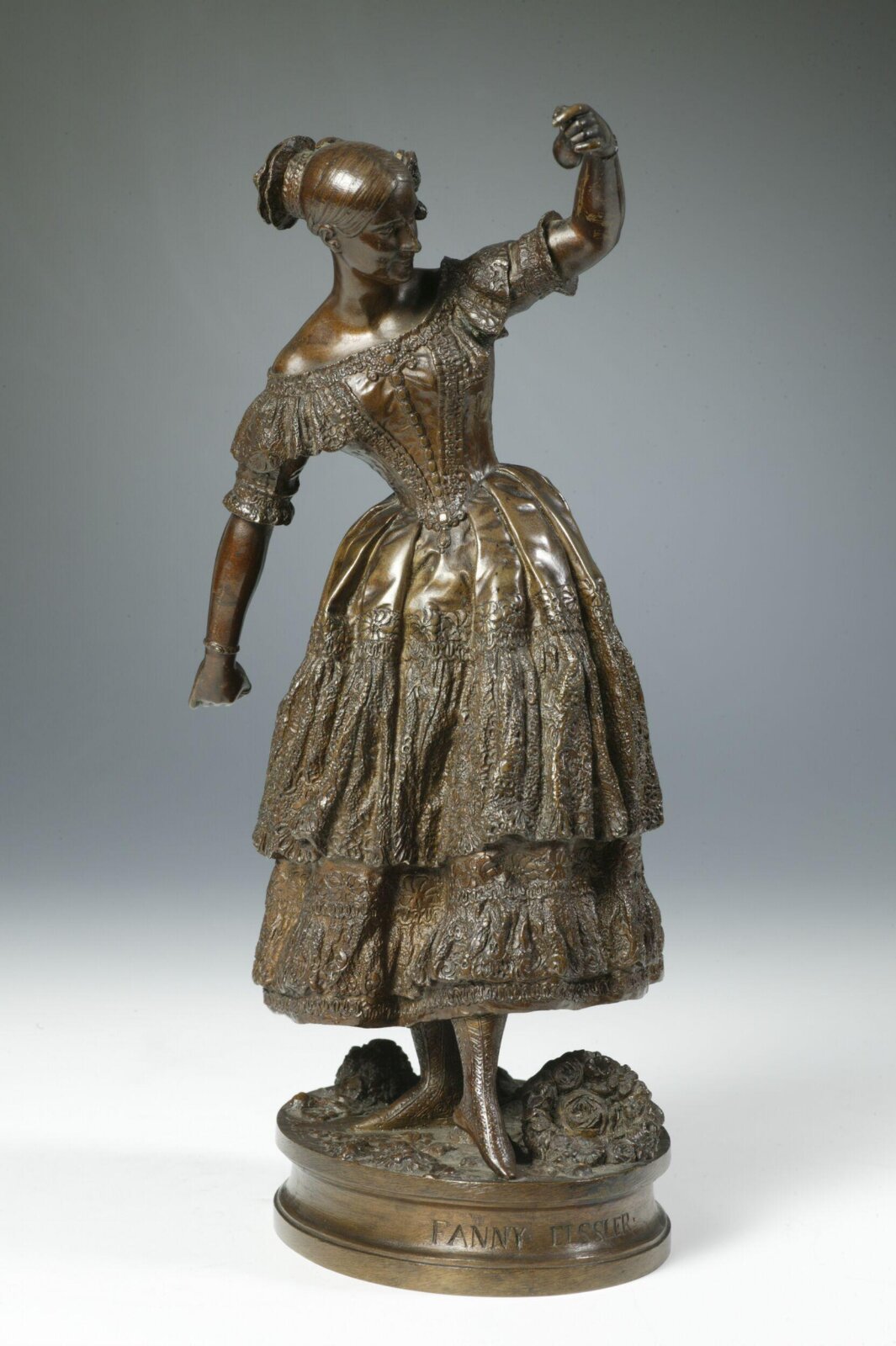
 Jean-Auguste BarreFrankrig, 1811–1896
Figurine
Må man se det?
Tager ikke imod for tiden

Victoria and Albert Museum
London, Storbritannien
Det hører til samlingen, men er ikke udstillet for tiden.
- Kontrolleret
- Uændret siden
- Kilde
- Museet
Om skulpturen
This figurine of the Romantic ballerina Fanny Elssler (1810-1844) shows her with castanets, dancing the Cachucha, the Spanish dance she made famous in 1836 as Florinda in Jean Coralli's ballet Le Diable Boiteux. Its sculptor Jean Auguste Barre (1811-1896) was fascinated by capturing Romantic ballerinas in sculpture, from the weightlessness of Taglioni to the earthy stability of Elssler. He sculpted figurines of other dancers at the height of their careers, including Emma Livry in Le Papillon and Marie Taglioni in La Sylphide. His sculptures were so successful that prints of them were issued as souvenirs, and some were adapted for ornamentation on candlesticks and clocks.
Læs videre
Fanny Elssler was born in Vienna and became one of the most famous dancers of the Romantic age. She performed in her native Austria from an early age but left Vienna for Italy when she was seventeen and was soon was appearing on stage in many major European cities including Berlin, Paris and London. Her accomplished performance of national and character dances helped to build her reputation and set styles in fashion. She danced the Cachucha in a pink dress trimmed with black lace at the neckline and hem. The white camellia she wore in her hair became a symbol of the Romantic dancer.
Victoria and Albert Museum
Oplysninger
- Inventarnummer
- S.35-1976
Hvad det viser
I kataloget
Kilder
- Victoria and Albert Museum
- Billede: Victoria and Albert Museum — © Victoria and Albert Museum, London