Joseph Anton Weinmüller
Figure group
Må man se det?
Ja, det tager imod

Victoria and Albert Museum
London, Storbritannien
SalCeramics, Room 139, The Curtain Foundation Gallery
Udstillet for publikum. Hvem der står inde for det, står nedenfor.
- Kontrolleret
- Uændret siden
- Kilde
- Museets egne samlingsdata
About the sculpture
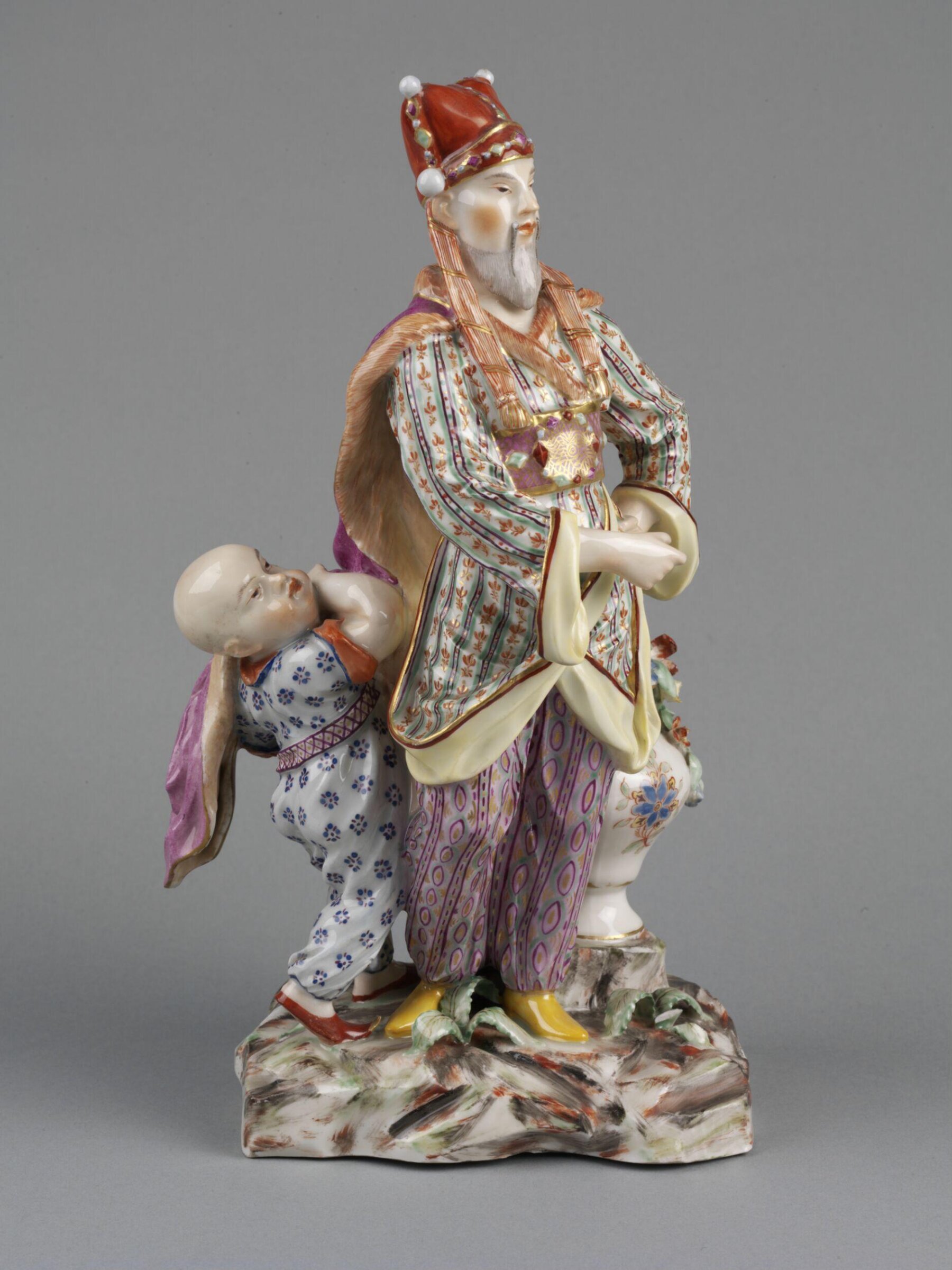
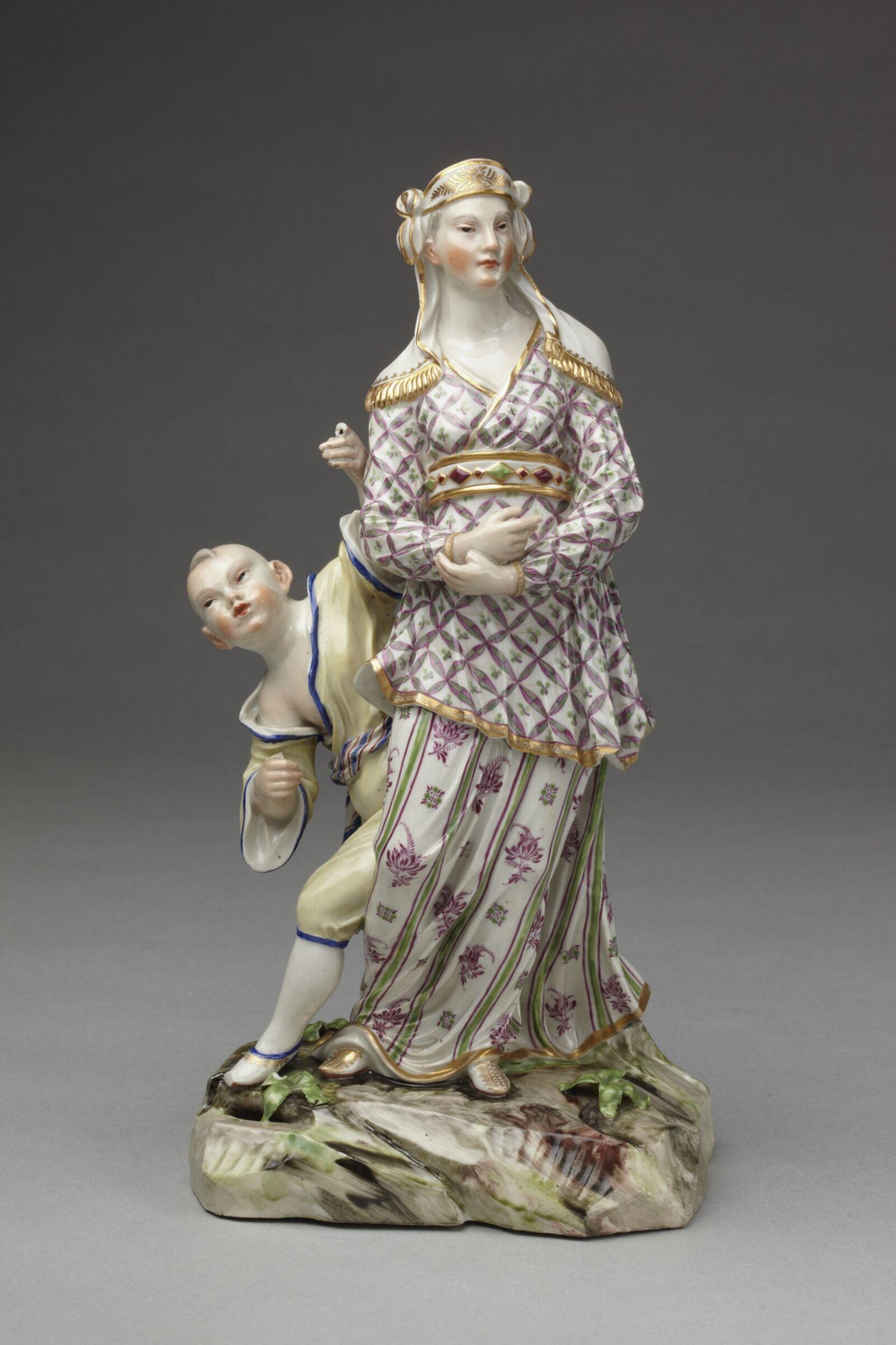
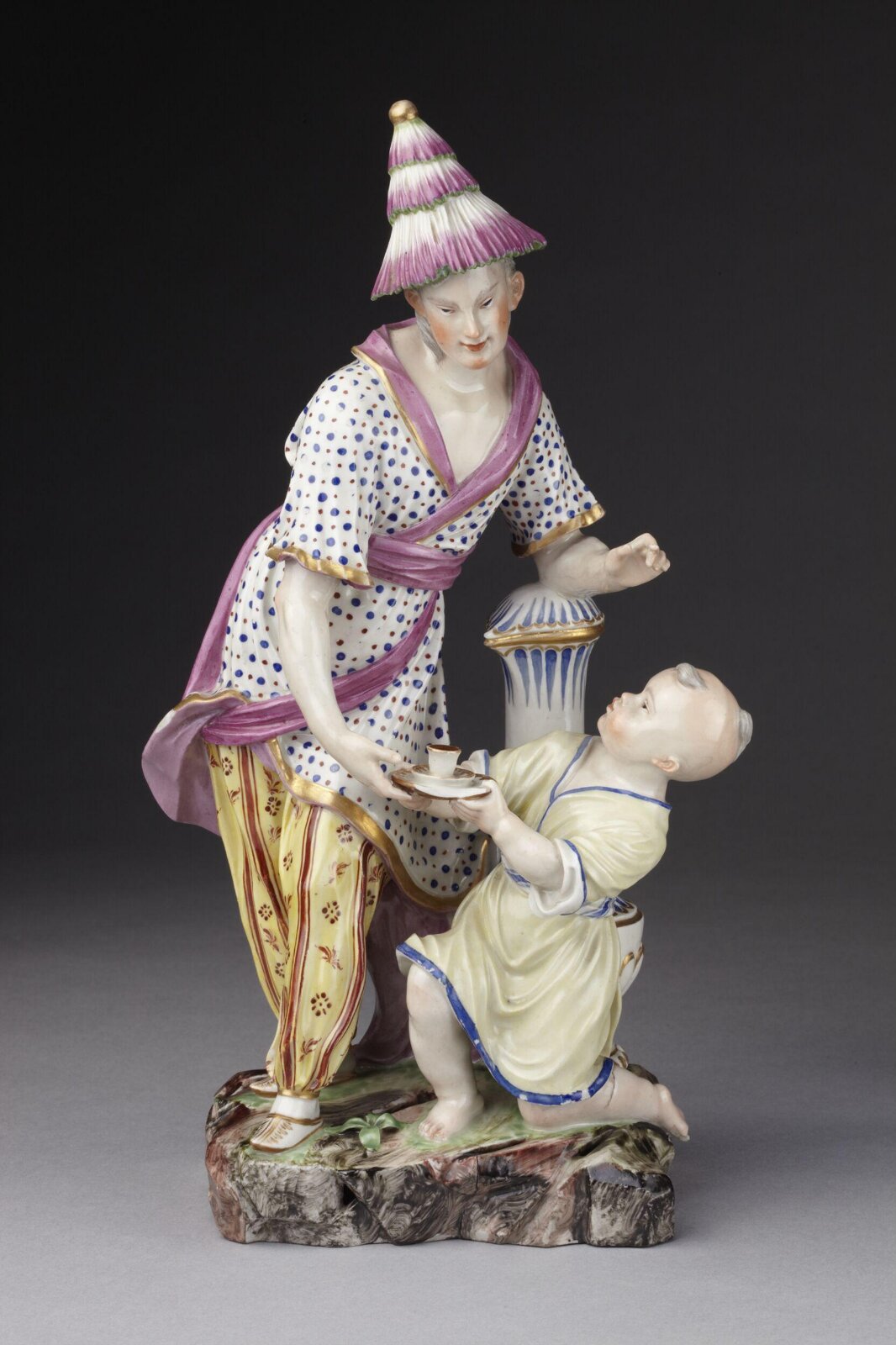
The man and boy here have clothing and hairstyles that are intended as East Asian but which to Asian eyes may appear closer to European fancy dress. The man’s feathered hat is a recurrent motif in European chinoiserie figures from other factories, such as Meissen and Frankenthal, and in prints after such mid-eighteenth-century French artists as François Boucher and Jean-Baptiste Pillement.
Read on
Like all the porcelain factories founded in the German states of the Holy Roman Empire in the 1750s and 1760s, the one at Ludwigsburg relied on industrial secrets stolen from Meissen and spread from one part of the empire to another, chiefly by a kiln technician from Vienna, J.J. Ringler. This man was appointed director at Ludwigsburg in 1758-1759, having previously been at Höchst, Strasbourg and Nymphenburg; it was as a result of his involvement at these factories that knowledge of Meissen’s materials and processes spread to Berlin, Frankenthal, Fürstenberg and elsewhere. Like all the smaller German factories, Ludwigsburg (founded 1758) relied on the patronage of the prince or elector of the state in which it was located: in the case of Ludwigsburg, this was the Duke of Württemberg. Ludwigsburg porcelain has a distinctive greyish tone, clearly visible here.
The incised mark ‘Elbs’ records the name of the workman (confusingly known as a ‘repairer’) who assembled the inkstand from its separately formed component parts, most of which would have been made by pressing clay into plaster moulds.
Victoria and Albert Museum
Oplysninger
- Inventarnummer
- C.740-1923
What it shows
I kataloget
Kilder
- Victoria and Albert Museum: the museum's own open data · hentet for 11 dage siden
- Billede: Victoria and Albert Museum — © Victoria and Albert Museum, London