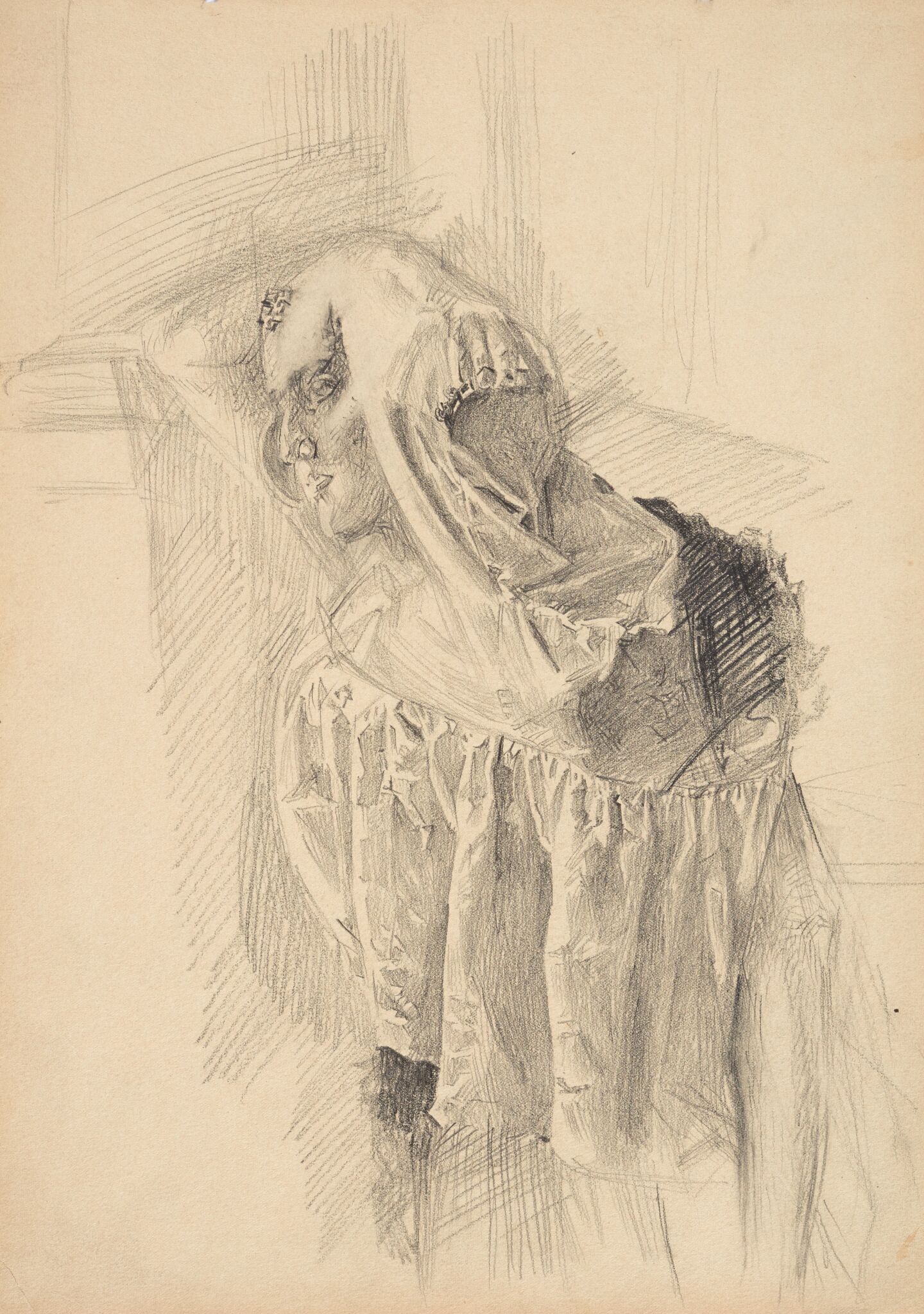
 Mikhail Vrubel1856–1910
Фантазия
Må man se det?
Ukendt

Tretjakovgalleriet
Moskva, Rusland
Ejeren er kendt; om værket er udstillet i dag, vides ikke.
- Uændret siden
- Kilde
- Museet
Om værket
Med museets ord — på russisk
Предметы, запечатленные в рисунках «Бессонницы», кажутся Врубелю живыми, вступающими с ним в диалог, беседующими о чем-то грустном. Трудно найти в истории искусства подобные примеры, когда рисунки бытовых вещей столь откровенно повествовали бы о душевной измученности и одиночестве. Наивысшей степенью одушевления предмета стала метаморфоза в рисунке «Фантазия». Мебельный чехол с оборкой по нижнему краю преображается в одежду женщины, призрачное лицо которой создал художник в своем рисунке.
Læs videre
Доктор Усольцев делился наблюдениями над своим необычным пациентом: «Кажется, что Врубель уже не из себя берет образы, а копирует окружающую жизнь и природу. Но нет! все, что выходит из-под его карандаша или кисти, так оригинально, так ново, сравнительно с оригиналом, что ясно, что, и копируя, Врубель творит. Он творил всегда, можно сказать, непрерывно, и творчество было для него так же легко и так же необходимо, как дыхание. Пока жив человек, – он все дышит; пока дышал Врубель, – он все творил».
Tretjakovgalleriet
Oplysninger
- Inventarnummer
- Р-247
I kataloget
Kilder
- Tretjakovgalleriet
- Billede: Tretjakovgalleriet — © State Tretyakov Gallery
Imens i livet hos Mikhail Vrubel
Hele livet1 September 1901
Birth of his son Savva
Nadezhda Zabela-Vrubel gave birth to a son, Savva — a sturdy baby with a cleft lip; for his sake she left the stage for a time, and the family’s keep fell entirely on Vrubel. In the thick of his work on the “Demon” the artist painted a large watercolour portrait of his six-month-old son in a pram.
1902
Bekhterev’s diagnosis
In St Petersburg Vrubel went on repainting the “Demon” without pause, ruining it in his friends’ view, and his family took him to the psychiatrist Vladimir Bekhterev, who diagnosed “incurable progressive paralysis” — tertiary syphilis; the artist himself was told nothing. In Moscow, although the collector Vladimir von Meck bought the painting for 3,000 roubles, he grew worse still: he drank and squandered money, and his wife and son tried to take refuge from him with relatives in Ryazan.
2 February 1902
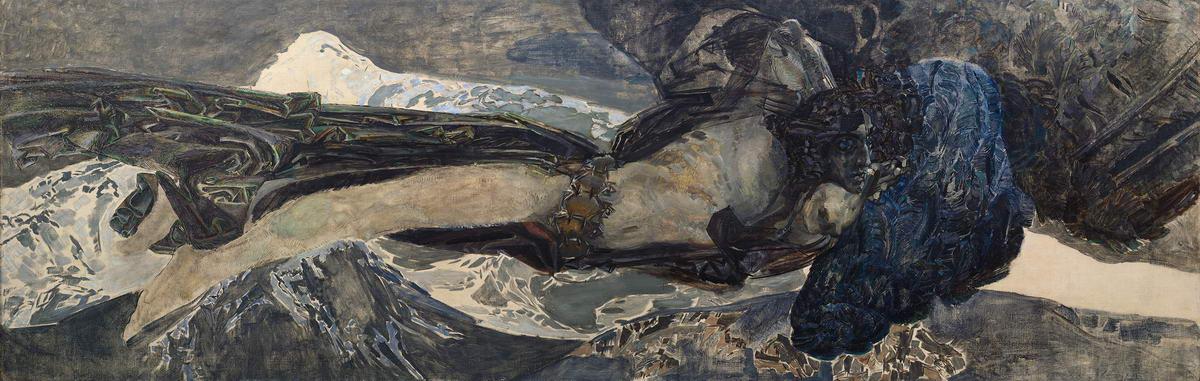
“The Demon Downcast” fails in Moscow
The painting went on show in Moscow a day before the “Group of 36” exhibition closed; Vrubel hoped it would be bought for the Tretyakov Gallery. The failure coincided with news of the suicide of Alexander Rizzoni after unfair criticism in the journal Mir iskusstva.
April 1902
First hospitalisation
In early April, with symptoms of acute mental disorder, Vrubel was admitted to F. A. Savey-Mogilevich’s private clinic; until August his condition was so grave that even his wife and sister were not allowed to see him. In September he was moved to Vladimir Serbsky’s clinic at Moscow University, and Serbsky confirmed the diagnosis, establishing that the infection dated back to 1892.
3 May 1903
Death of his son Savva
Vrubel had been discharged from the clinic in February, and von Meck invited the family to spend the summer on his estate in Kiev province, but on the eve of departure two-year-old Savva fell ill, and in Kiev the child died. Vrubel at once shook off his apathy, busied himself with the funeral and supported his wife, who would not say a word; their son was buried on Baikove Hill.
February 1906
Total blindness
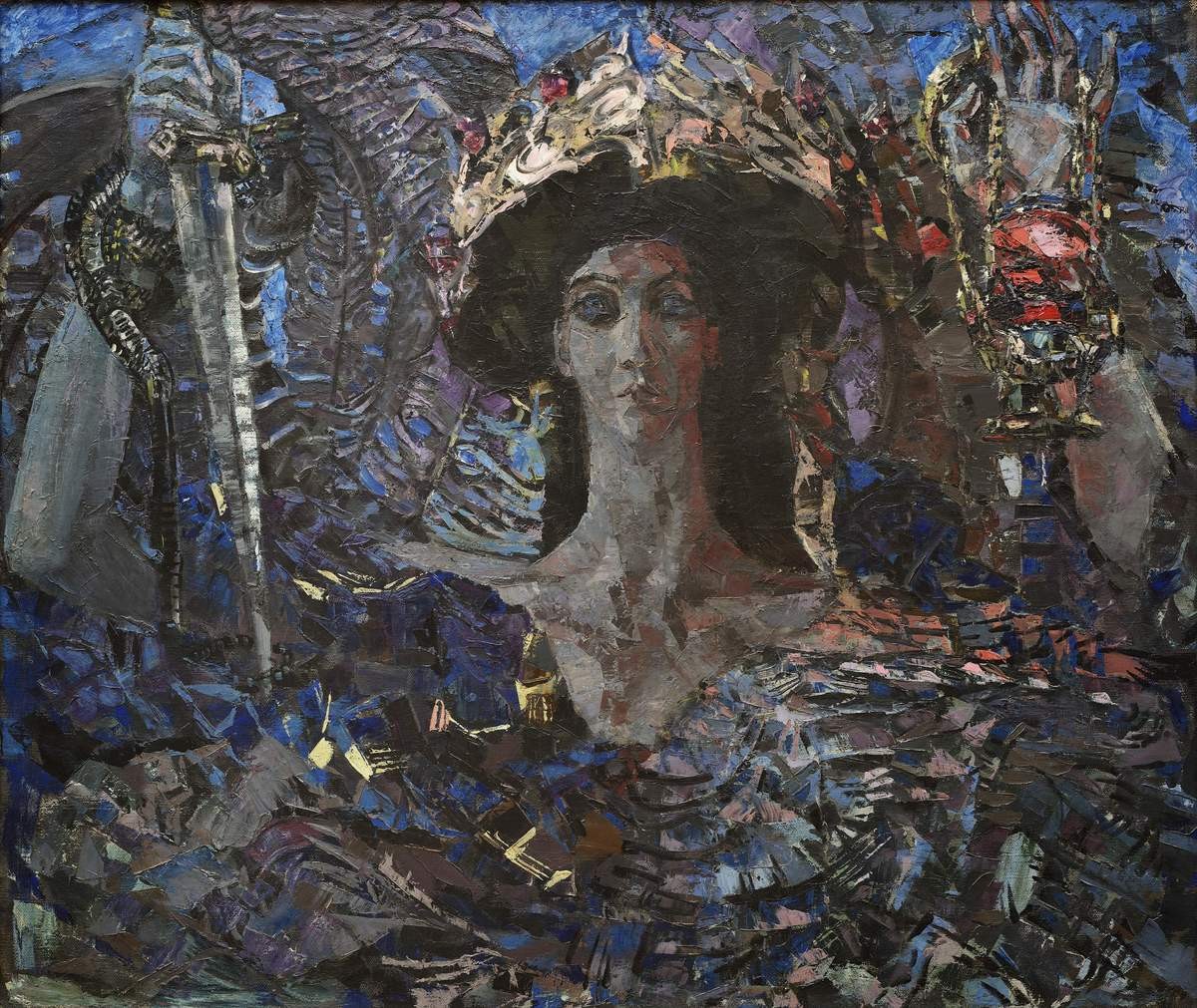
Despite the “voices” that tormented him, Vrubel returned to the theme of the Prophet — he began painting a six-winged seraph and took up the visions of Ezekiel — but the picture was never finished: his sight began to fail catastrophically, and atrophy of the optic nerve set in. On 12 February 1906 he complained in a letter to his wife that he could neither read nor draw, and a few days later he was completely blind.