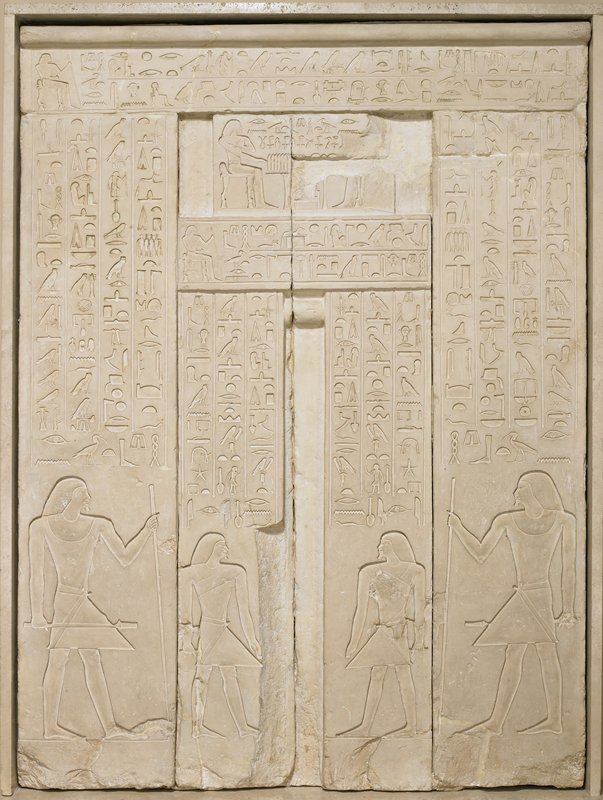
False door
Kan det ses?
Ja, udstillet nu
Hvor er »False door« i dag? Minneapolis Institute of Art, G250, Minneapolis. Ja, udstillet nu. Kontrolleret 16. november 2026.

Minneapolis, USA
Åbent nu· til kl. 17.00
Udstillet for publikum.
- Kontrolleret
- Uændret siden
- Kilde
- Museet
Om skulpturen
A false door, built into the west wall of the tomb chapel, was the focal point of the cult of the deceased in ancient Egypt. This was the interface between the world of the living and the world of the dead, where visitors came to say prayers and deposit offerings for the spirit of the deceased, whose soul could pass through the door. The inscriptions on this door commemorate the priest Iryenakhet (year-ee-en-AH-ket), who is depicted seven times. The central niche is framed by two door jambs and a lintel in a composition ruled by symmetry. The normal direction of Egyptian writing was from right to left, with the hieroglyphs facing right, but here the hieroglyphs on the right jamb face left (as do the figures), toward the niche.
Minneapolis Institute of Art
Oplysninger
- Inventarnummer
- 52.22
I kataloget
Kilder
- Minneapolis Institute of Art
- Billede: Minneapolis Institute of Art — public domain