
 Jacques-Louis DavidFrankrig, 1748–1825
Emmanuel Joseph Sieyès (1748-1836)
Kan det ses?
Ja, udstillet nu
Hvor er »Emmanuel Joseph Sieyès (1748-1836)« i dag? Harvard Art Museums, Gallery 2200, floor 2, European and American Art, 17th–19th century, Cambridge. Ja, udstillet nu. Kontrolleret 29. september 2026.

Udstillet for publikum.
- Kontrolleret
- Uændret siden
- Kilde
- Museet
Om maleriet
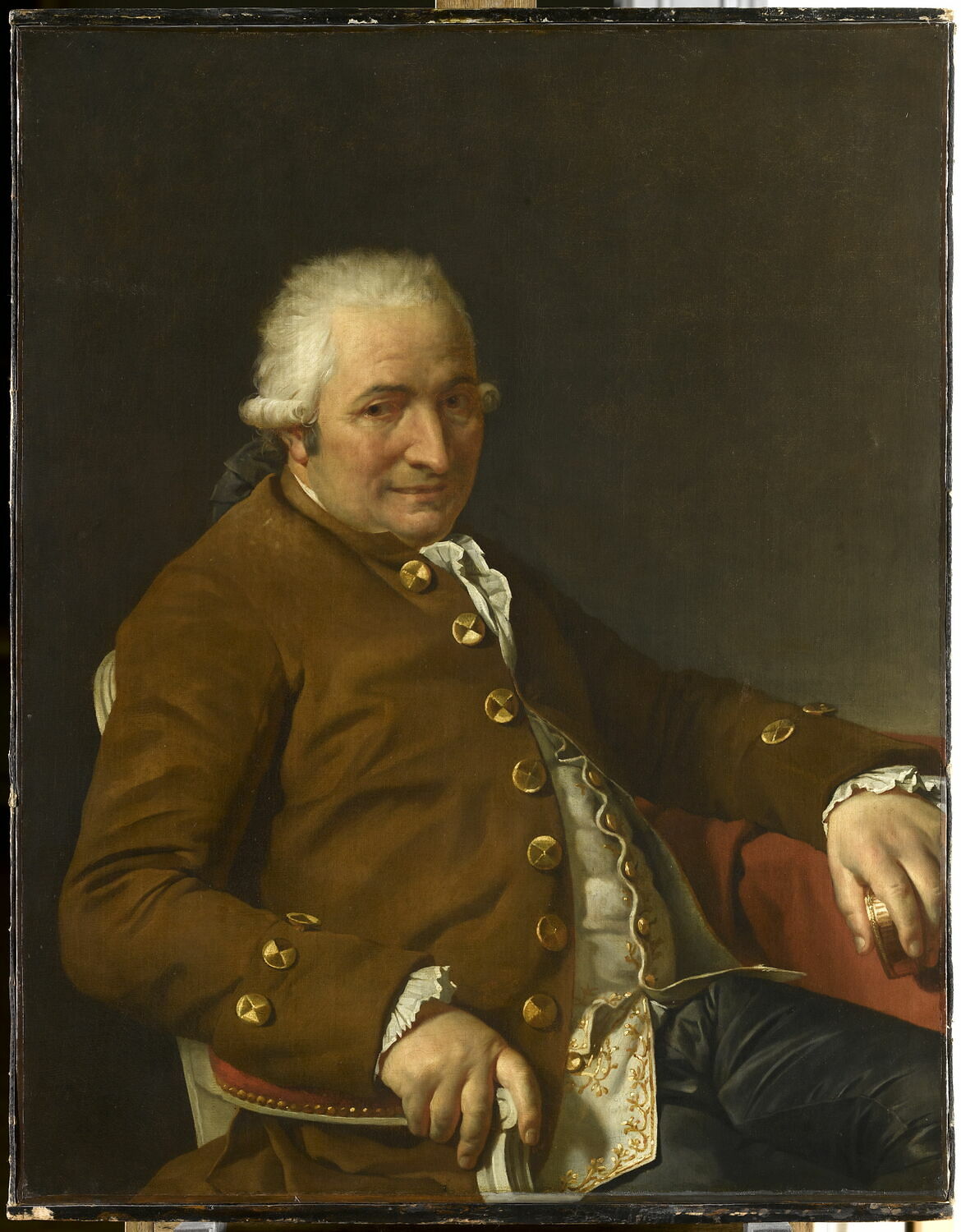
Following Napoleon’s defeat at Waterloo in 1815, David was banished from France. He settled in Brussels, where he painted this portrait of Sieyès (1748– 1836), a fellow exile. Sieyès had been an early proponent of the claims of the Third Estate, or the French commoners, at the outset of the Revolution in 1789. Though he lacked distinction as an orator, he remained a figure of great influence throughout the Revolution, and was instrumental in bringing Bonaparte to power in 1799. His subsequent relations with Napoleon were equivocal, though he remained in favor until he voted for the emperor’s deposition in 1814. This portrait is a restrained testament to an extraordinary depth of shared experience: both men were survivors of nearly thirty years of political turmoil in which they played considerable roles before facing the overthrow of their fortunes and the debasement of their ideals.
Harvard Art Museums
Oplysninger
- Inventarnummer
- 1943.229
I kataloget
Kilder
- Harvard Art Museums
- Billede: Harvard Art Museums — © President and Fellows of Harvard College
Imens i livet hos Jacques-Louis David
Hele livet1815
Flees to Switzerland after Waterloo
After Bonaparte’s defeat at Waterloo and the Bourbon restoration he was forced to flee to Switzerland; in August of the same year he returned to France.
1815
Napoleon visits David during the Hundred Days
During the Hundred Days Napoleon visited the painter and awarded him the commander’s cross of the Legion of Honour.
1816
Exile: moves to Brussels
Exiled from France for his part in the king’s execution, despite the intercession of the police minister Élie Decazes, he settled in Brussels, where he lived for the rest of his life.
1816–1825
The Brussels years: pupils and smaller works
He trained and influenced Brussels artists such as François-Joseph Navez and Ignace Brice, painted “Cupid and Psyche,” smaller mythological scenes, portraits of Brussels citizens and Napoleonic émigrés, and, towards the end of his life, a portrait of his old friend Abbé Sieyès.


![[Tah-Col-o-Quoit (Rising Cloud)], Asakiwaki/Sauk Warrior; representative of the Sauk and Fox coalition, Henry Inman, c. 1832-1834](https://nrs.harvard.edu/urn-3:HUAM:787793/full/!2400,2400/0/default.jpg)
