 Vasily Perov1834–1882
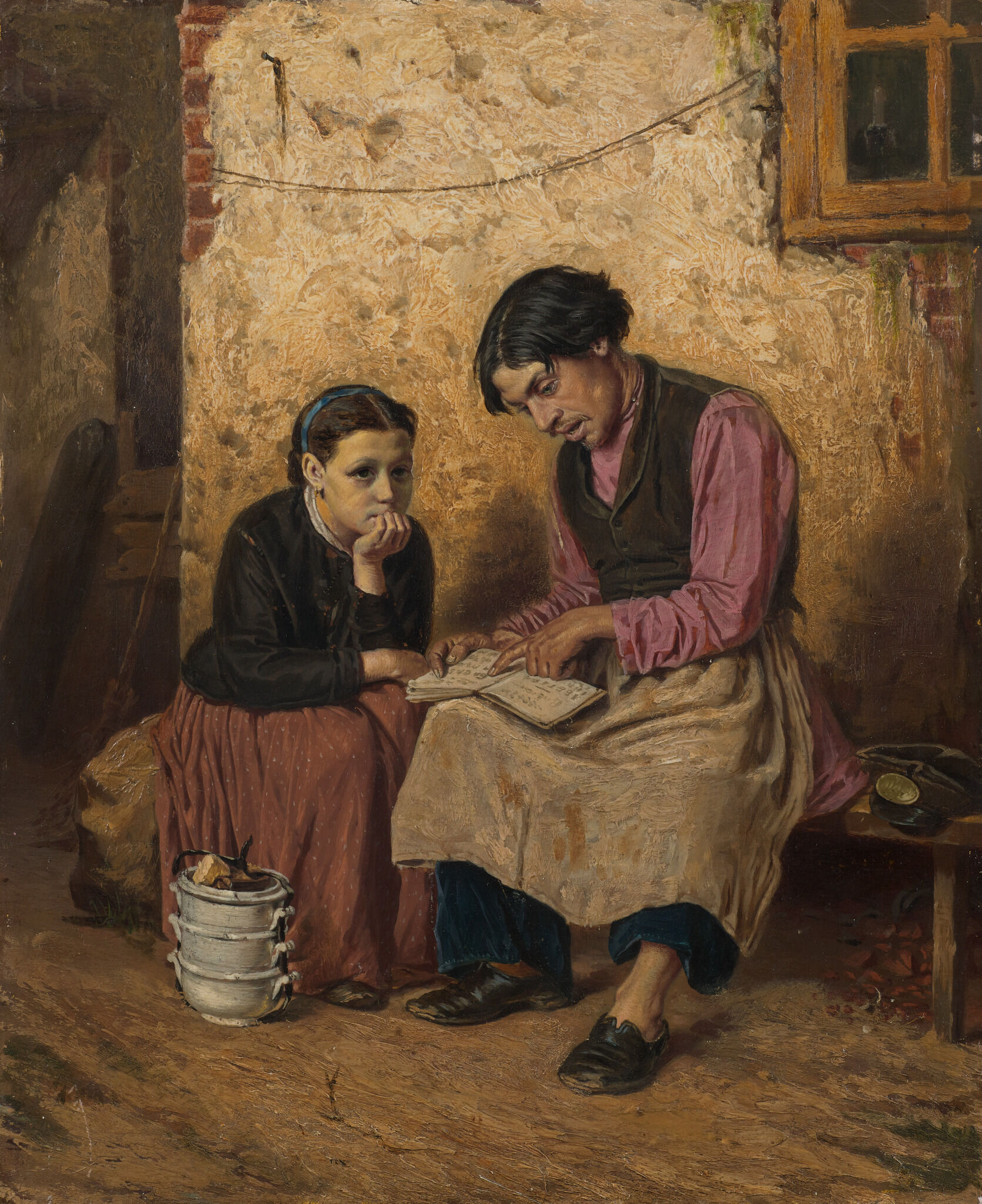
Дворник-самоучка
Kan det ses?
Ukendt
Hvor er »Дворник-самоучка« i dag? Samling: Tretjakovgalleriet, Moskva. Ukendt.

Moskva, Rusland
Ejeren er kendt; om værket er udstillet i dag, vides ikke.
- Kilde
- Museet
Om maleriet
Med museets ord — på russisk
С именем Василия Перова связан расцвет бытового жанра, который с 1860-х годов стал одним из ведущих направлений в русской живописи. Отчасти художник продолжал традиции, заложенные его предшественником Павлом Федотовым, автором картин «Разборчивая невеста» (1847), «Сватовство майора» (1848) и «Завтрак аристократа» (1849–1850). Неслучайно критик Владимир Стасов отмечал, что Перов поднял «выпавшую из рук Федотова кисть на том самом месте, где он ее уронил, и продолжал начатое им дело».
Læs videre
Наряду с произведениями обличительного характера, Перов создавал и менее критические жанровые картины на тему судьбы «маленького человека». К числу таких полотен относится картина «Дворник-самоучка». Название работы поясняет содержание сюжета, взятого из жизни городских обитателей. Художник с симпатией и сопереживанием изобразил своих героев — молодую пару, дворника и служанку. Как тонкий психолог, Перов передал внутреннее состояние персонажей: сосредоточенность юноши, погруженного в чтение букваря, и мечтательную задумчивость девушки, для которой мир грамоты остается совершенно непостижимым.
Появление картины «Дворник-самоучка» связано с важными переменами в системе образования, которые происходили после отмены крепостного права (1861). Согласно принятым в 1864 году программам обучения, «Уставу гимназий и прогимназий» и «Положению о начальных народных училищах», образование стало доступно представителям всех сословий. В частности, получили распространение воскресные школы для обучения ремесленников и рабочих.
Tretjakovgalleriet
Oplysninger
- Inventarnummer
- Ж-562
I kataloget
Kilder
- Tretjakovgalleriet
- Billede: Tretjakovgalleriet — © State Tretyakov Gallery
Imens i livet hos Vasily Perov
Hele livet1865–1870
From satire to the drama of the “humiliated and insulted”
The canvases “Seeing Off the Dead” and “The Queue at the Fountain”, which won first prizes at the competitions of the Moscow Society of Art Lovers and the Society for the Encouragement of Artists, opened a new stage: from satirical subjects Perov moved to more dramatic ones, about the “humiliated and insulted”.
1866
Made an academician for “Troika” and “The Arrival of a Governess”
For the paintings “Troika” and “The Arrival of a Governess at a Merchant's House” — about the hard, humiliating condition of hired workers — Perov was awarded the title of academician; “Troika” was bought by P. M. Tretyakov.
1867
Five paintings at the 1867 World's Fair
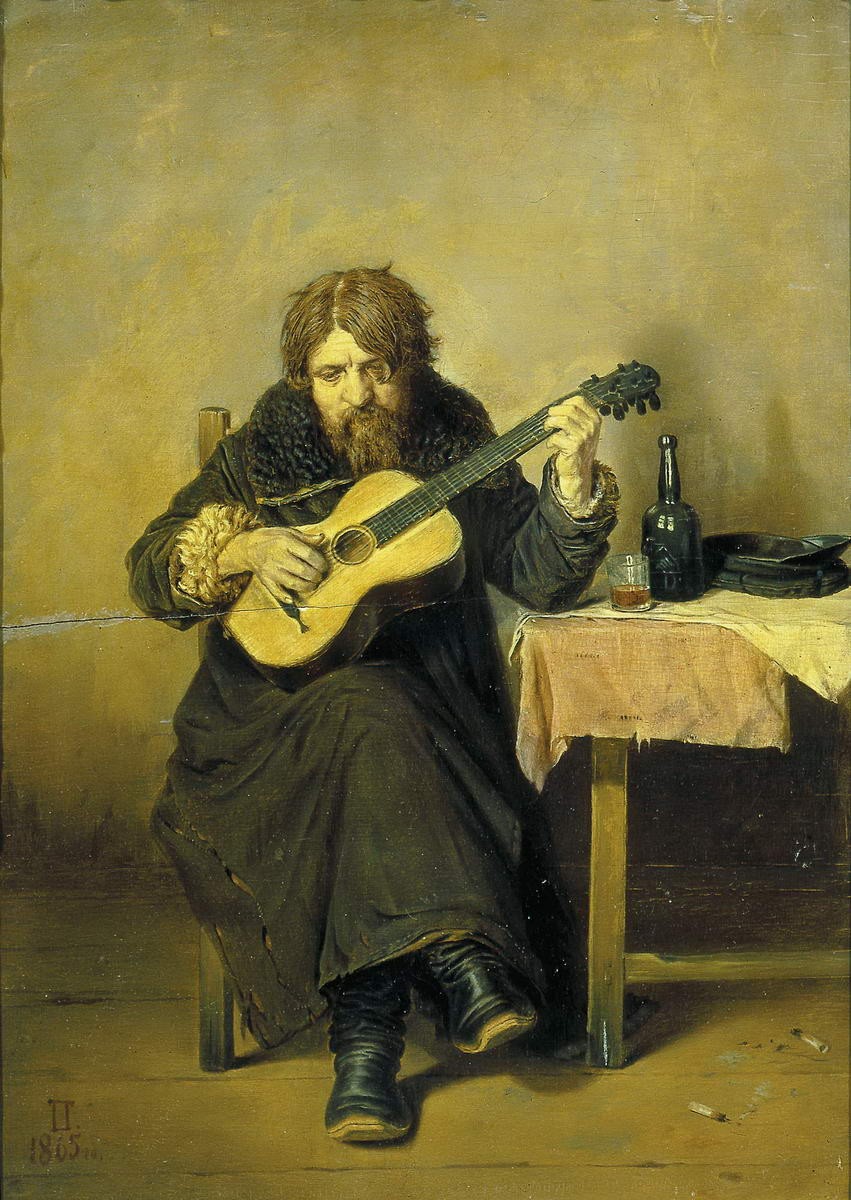
Five of Perov's paintings were shown at the 1867 World's Fair: “Seeing Off the Dead”, “The First Rank”, “The Amateur”, “The Bachelor Guitarist” and “Troika”; T. Thoré-Bürger noted that he was Russian both in his choice of subjects and in his manner.
1867 · Udmærkelse
Large gold medal of the Imperial Academy of Arts
1869–1870
Organises the Moscow group of the Peredvizhniki
In 1869, together with Myasoedov, whose idea the Association of Travelling Art Exhibitions was, Perov organised the Moscow group of the Peredvizhniki; in 1870 he became one of the Association's founders and for seven years sat on its board.
1870
Made a professor for “The Wanderer” and “The Birdcatcher”
For the paintings “The Wanderer” and “The Birdcatcher” the Academy of Arts awarded Perov the title of professor; for “The Birdcatcher” he also won a first prize from the Society for the Encouragement of Artists.