John Gregory Crace
Drawing
Må man se det?
Tager ikke imod for tiden

Victoria and Albert Museum
London, Storbritannien
Det hører til samlingen, men er ikke udstillet for tiden.
- Kontrolleret
- for 8 dage siden
- Uændret siden
- 25. sep. 2026
- Kilde
- Museets egne samlingsdata
Om værket
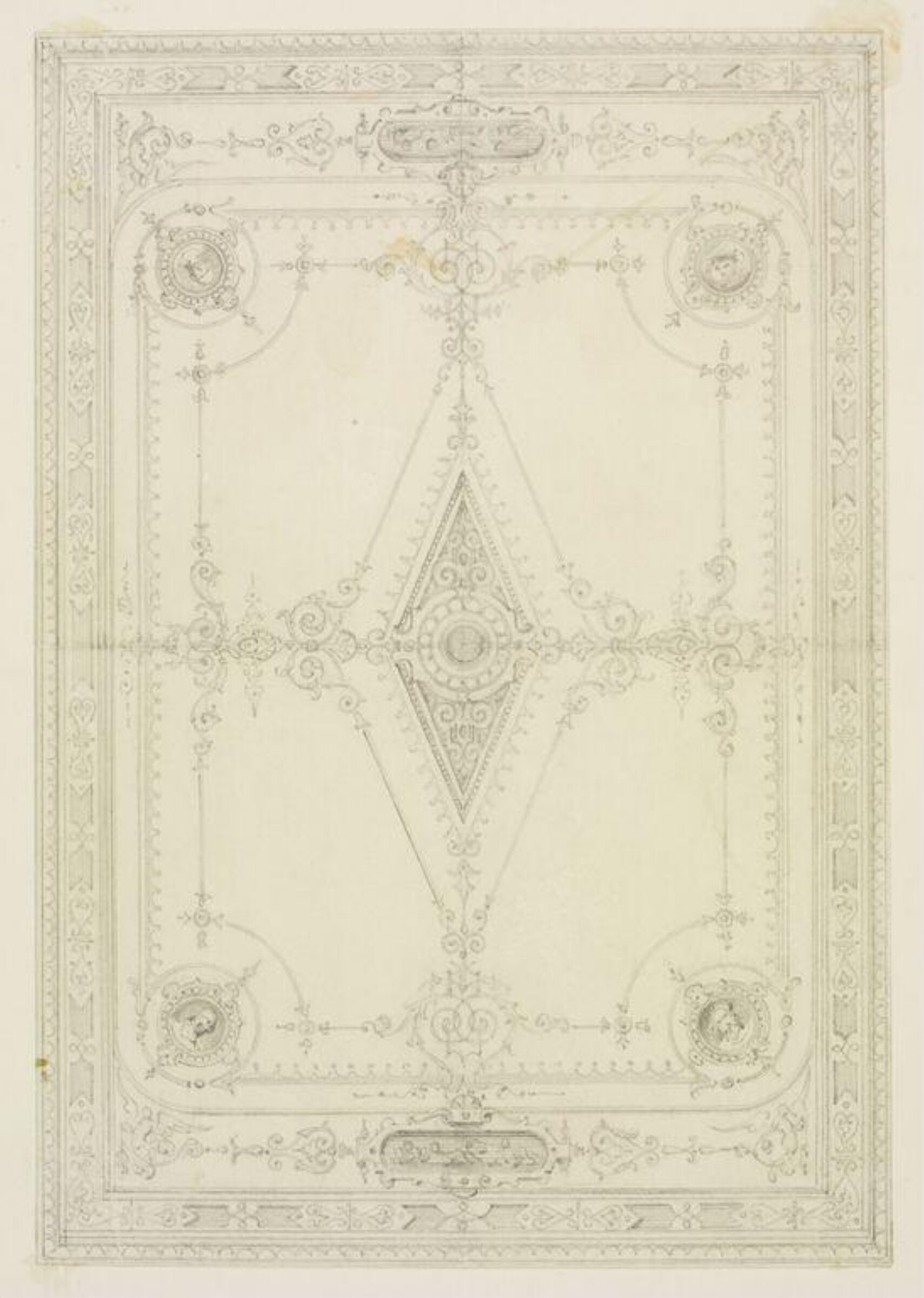
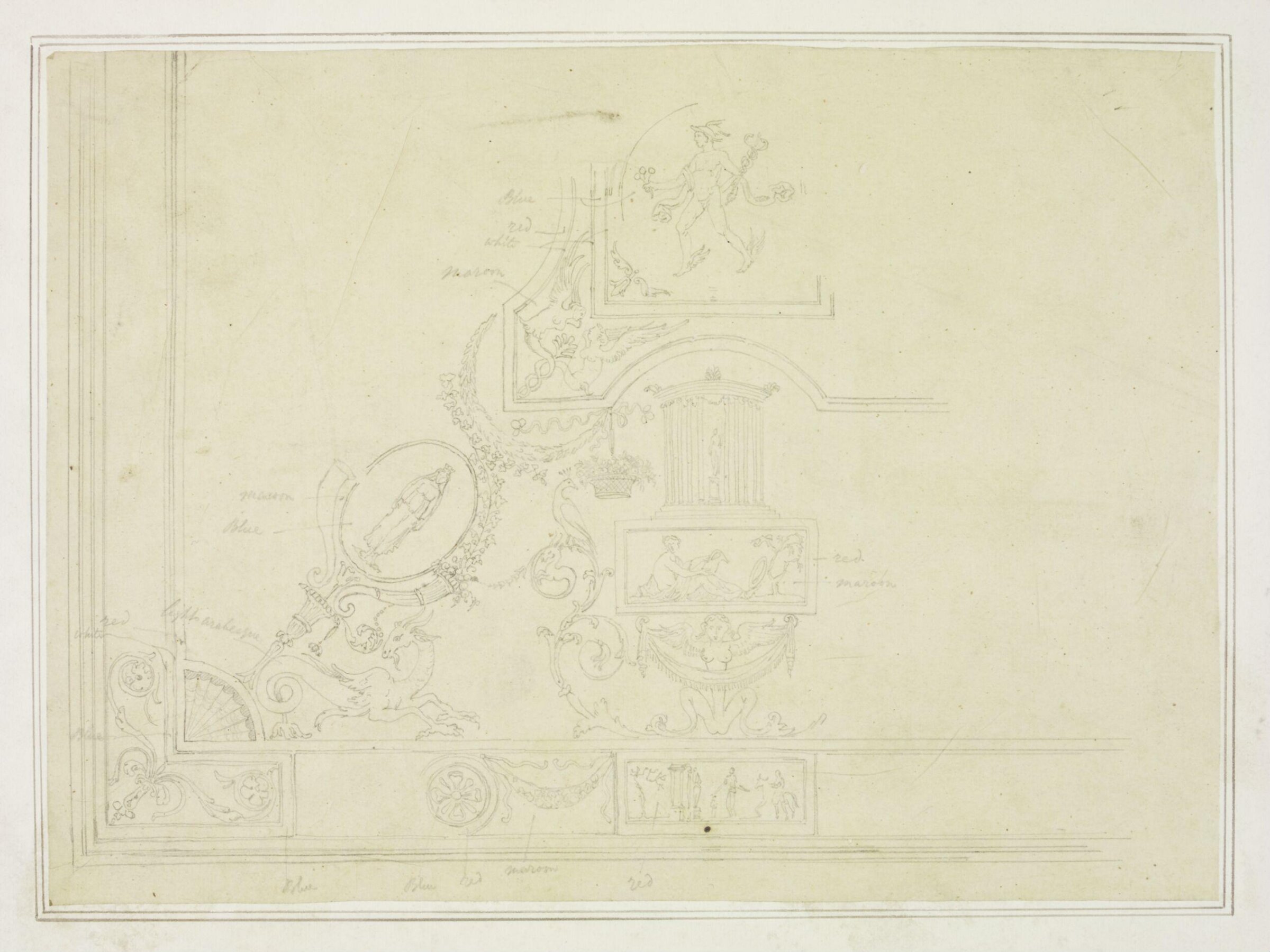
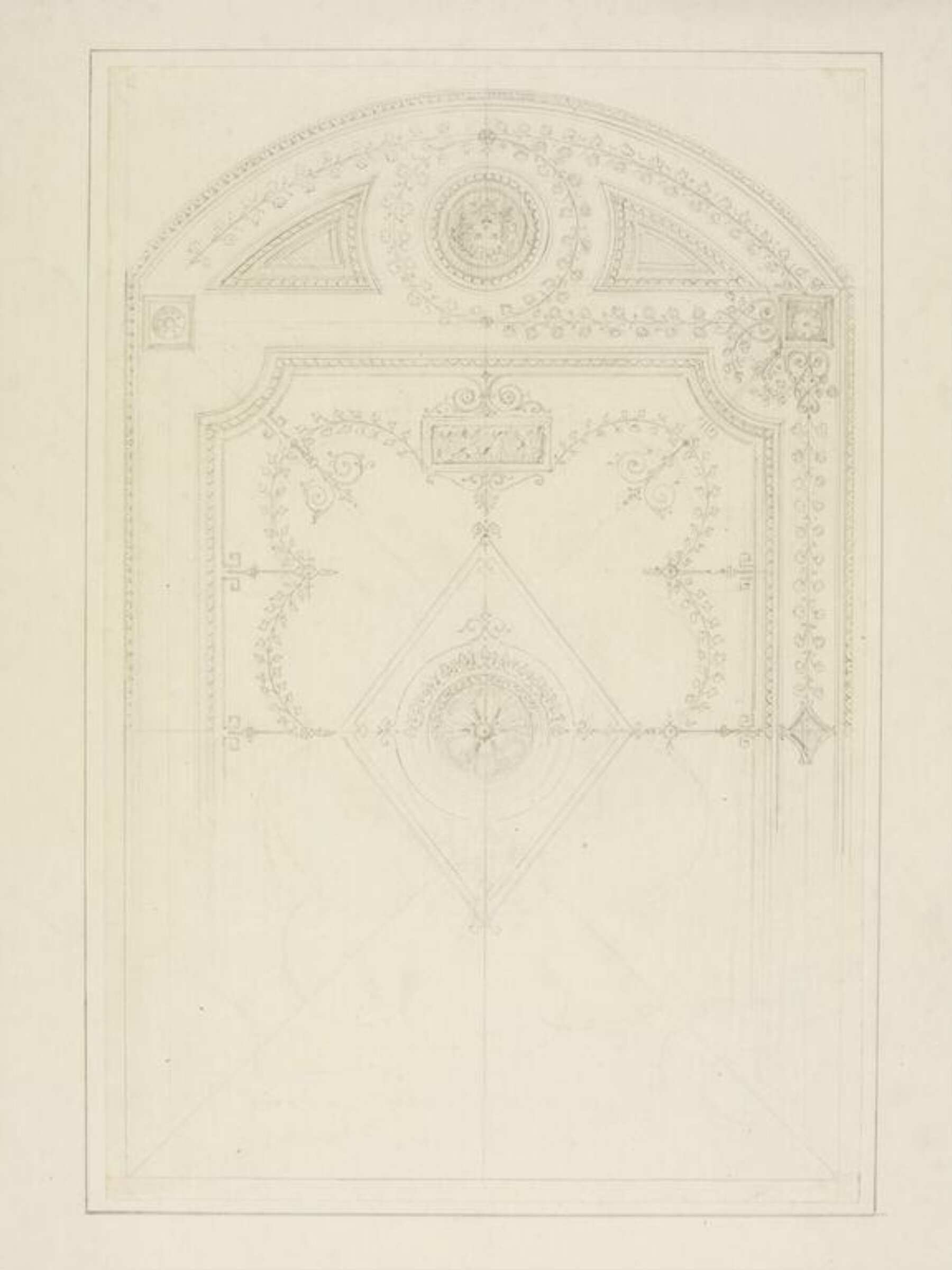
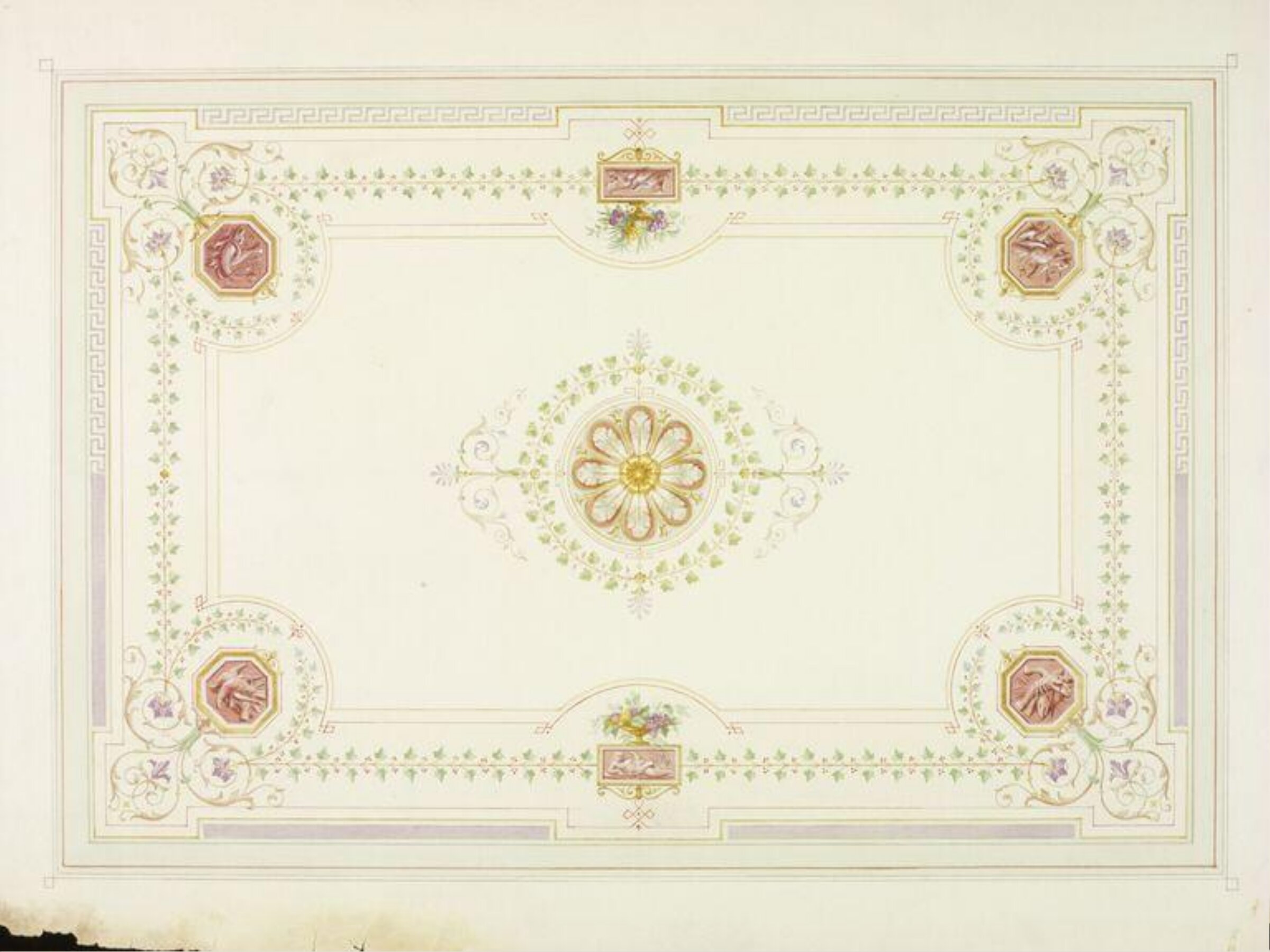
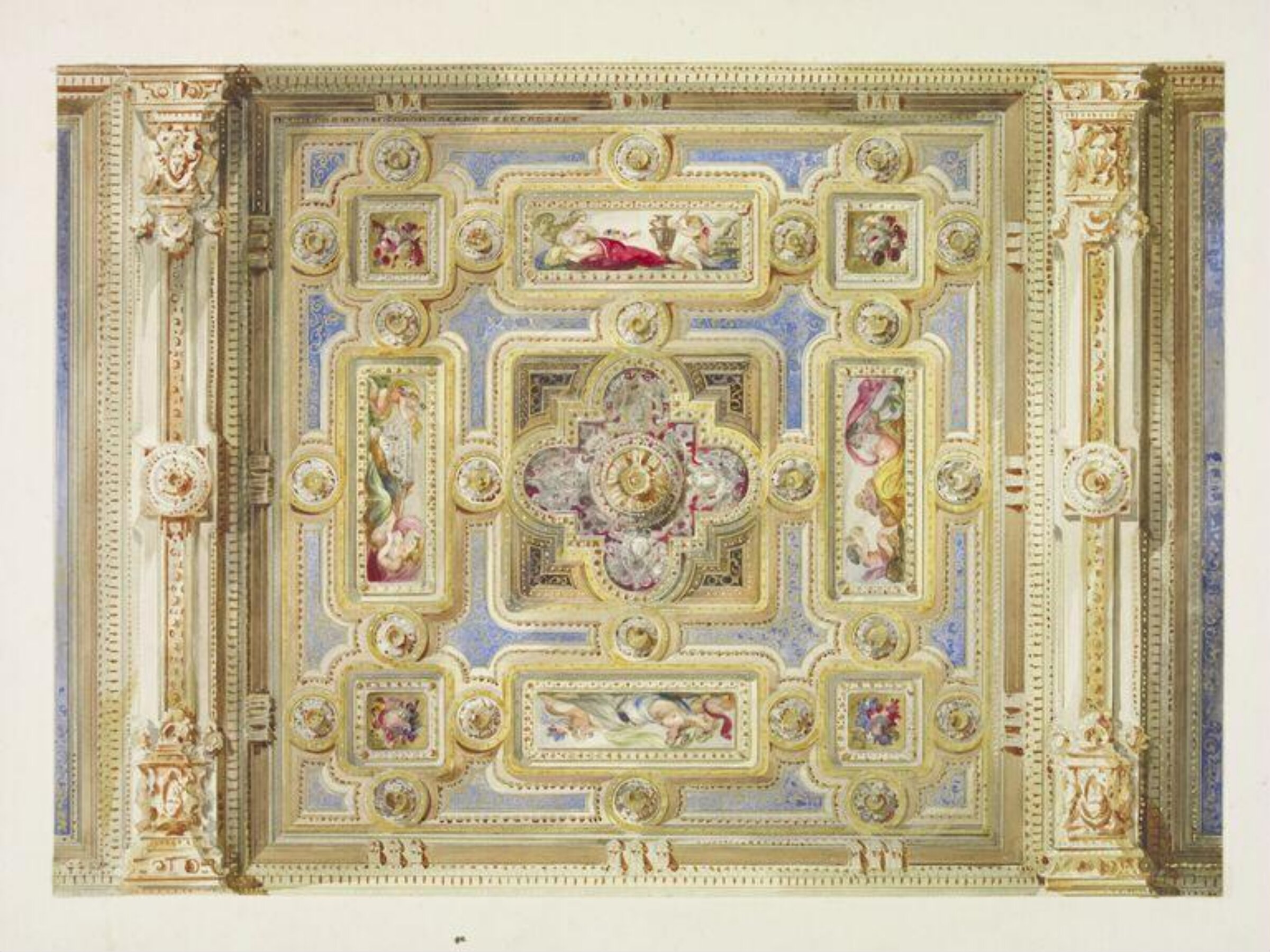
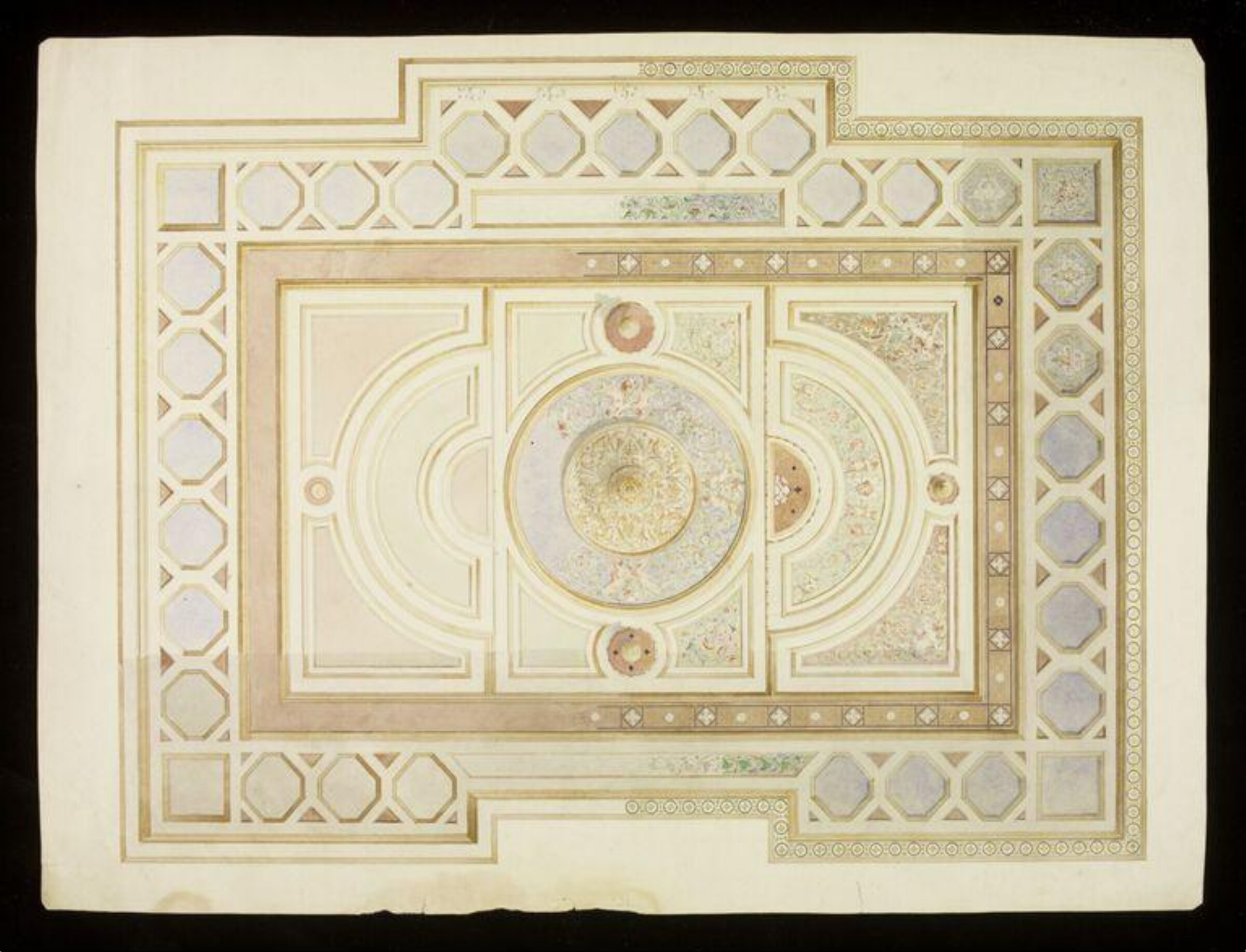
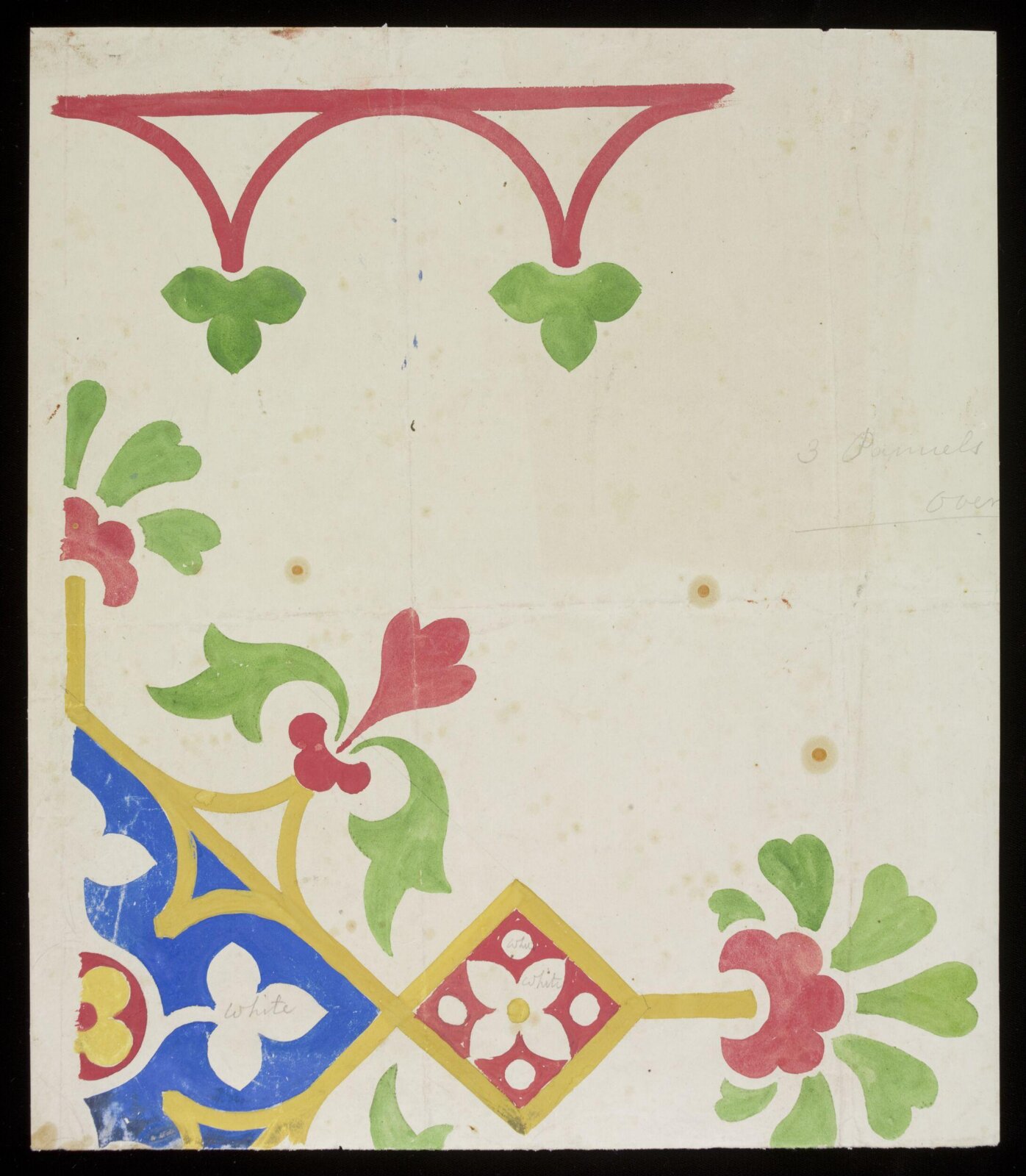
This detail, almost certainly made by J. G. Crace, is most interesting because it shows how Crace interpreted Pugin's sketch from D.879-1908. Crace seems to have kept as close as possible to Pugin's design, but details such as foliage lack Pugin's intensity.
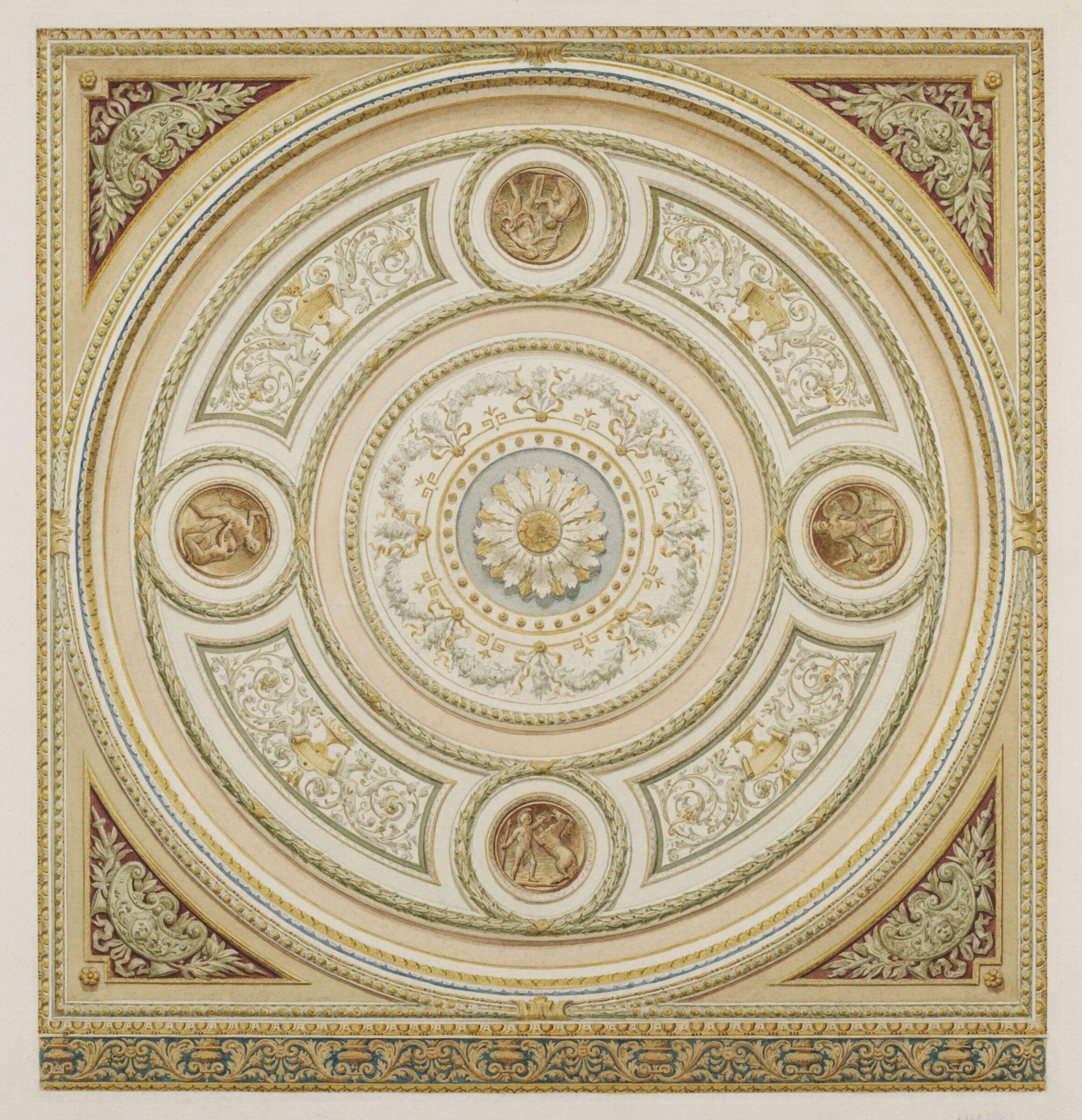
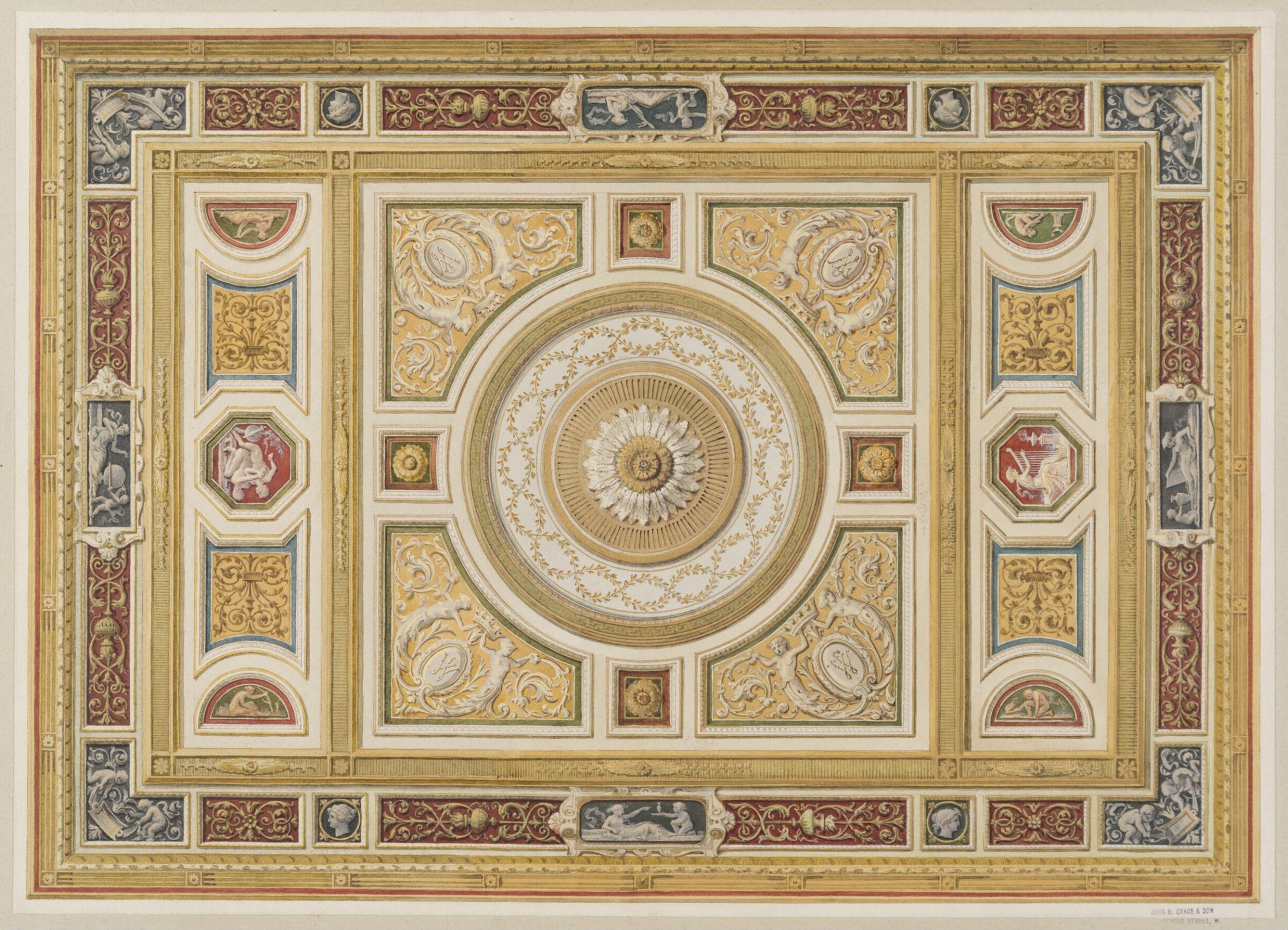
The designs for Burton Closes in Bakewell, Derbyshire, provide a valuable example of Pugin’s domestic interiors. The existence of such a complete set of design drawings and Crace’s coloured trials offer an unusual opportunity to understand Pugin’s original intentions. Burton Closes was a newly built house, in picturesque Elizabethan style, when Pugin and J. G. Crace were commissioned by John Allcard to decorate the house. Allcard commented in 1848 that ‘I am not a little astonished at the Beauty and grandeur of our doing’.
Read on
Augustus Welby Northmore Pugin (1812-52) is widely considered as one of the most significant and influential architects, designers and theorists of the 19th century. Following his conversion to Catholicism in 1835, he identified the Gothic style with Christian architecture and his work and writings inspired and framed the Gothic Revival. In 'Contrasts', published in 1836, he condemned classical forms and ardently praised 14th and 15th-century architecture. Pugin is best remembered for his work on the Palace of Westminster.
Victoria and Albert Museum
Oplysninger
- Inventarnummer
- D.968-1908
What it shows
I kataloget
Kilder
- Victoria and Albert Museum: the museum's own open data · hentet for 8 dage siden
- Billede: Victoria and Albert Museum — © Victoria and Albert Museum, London