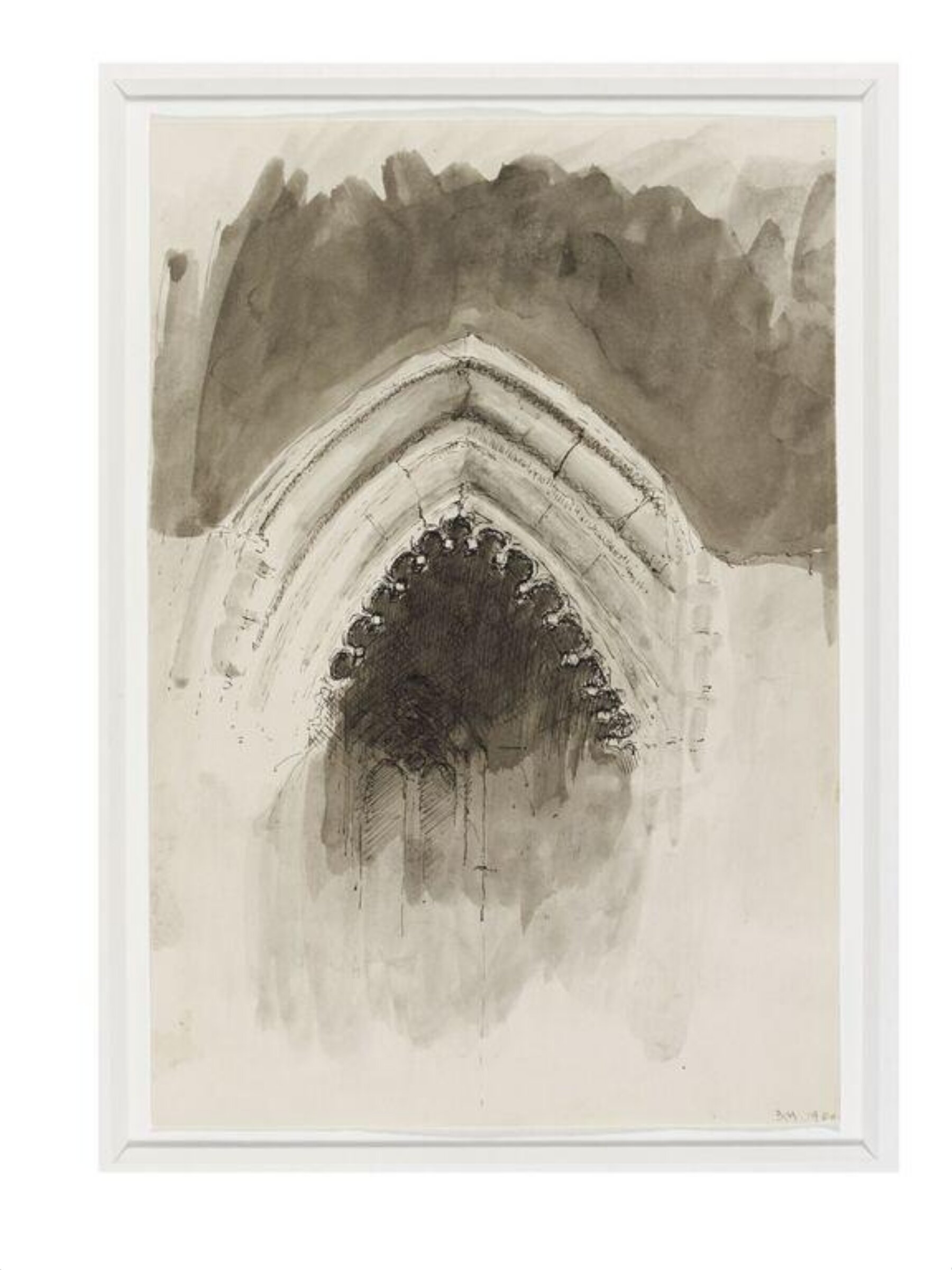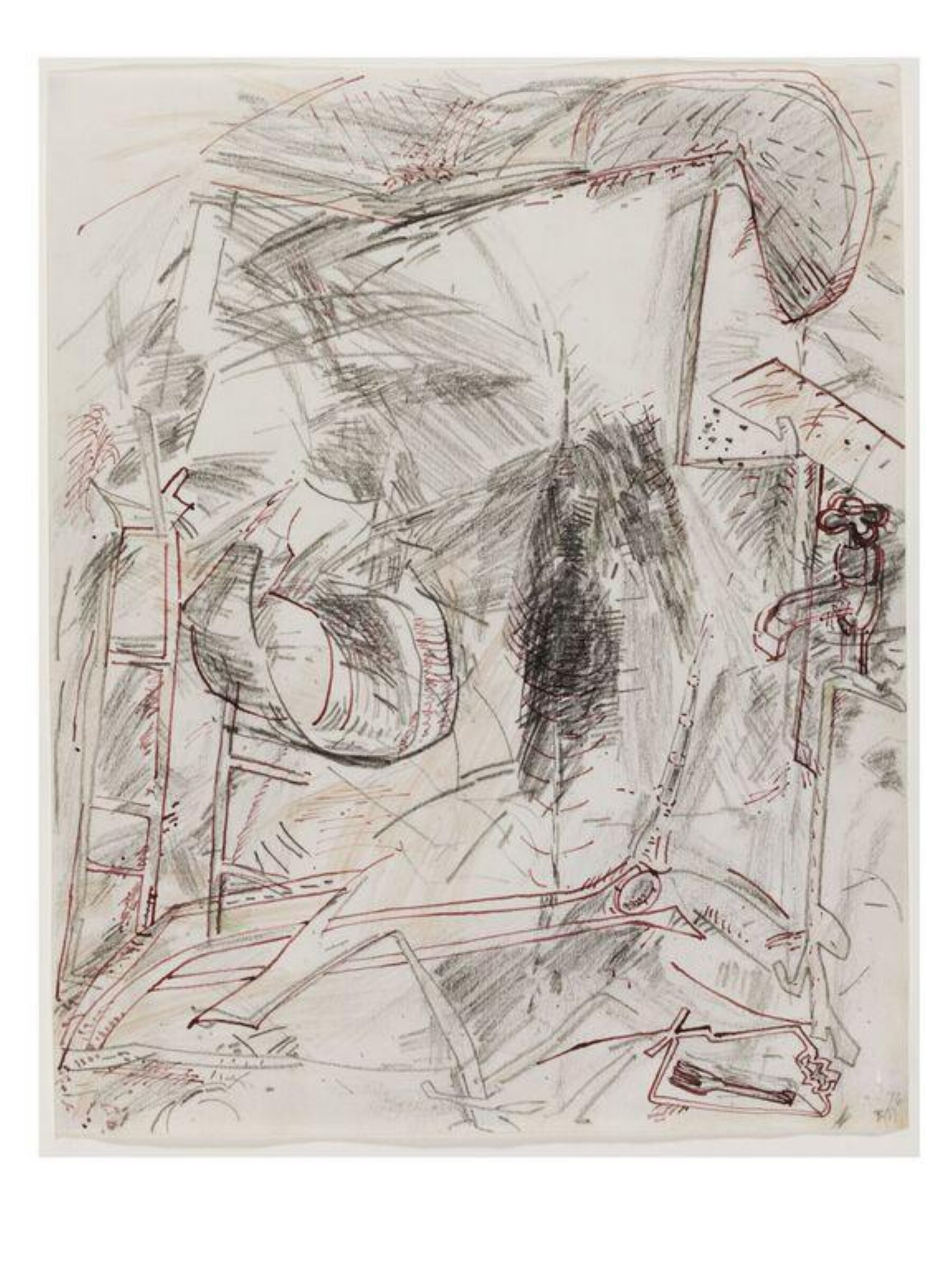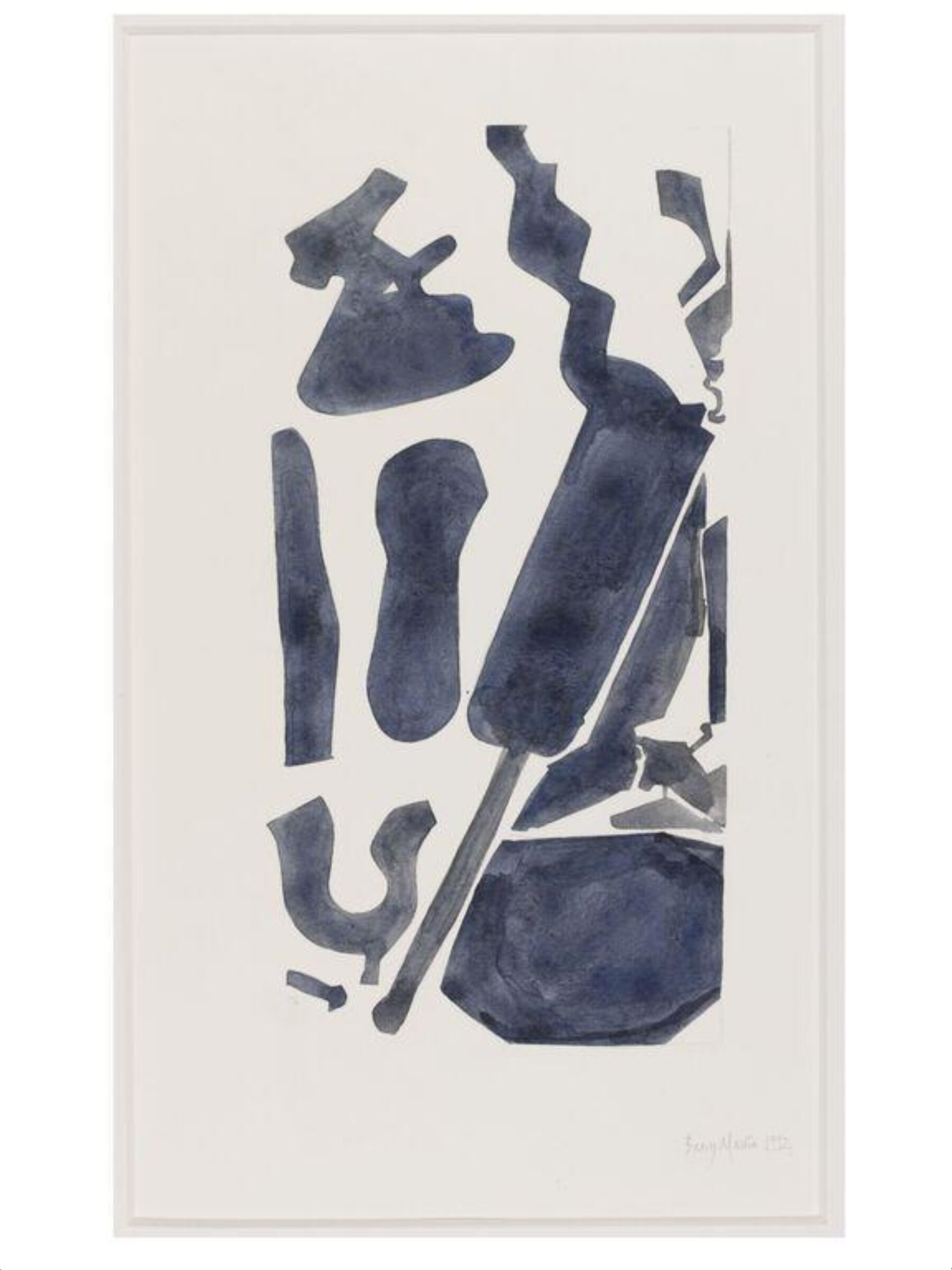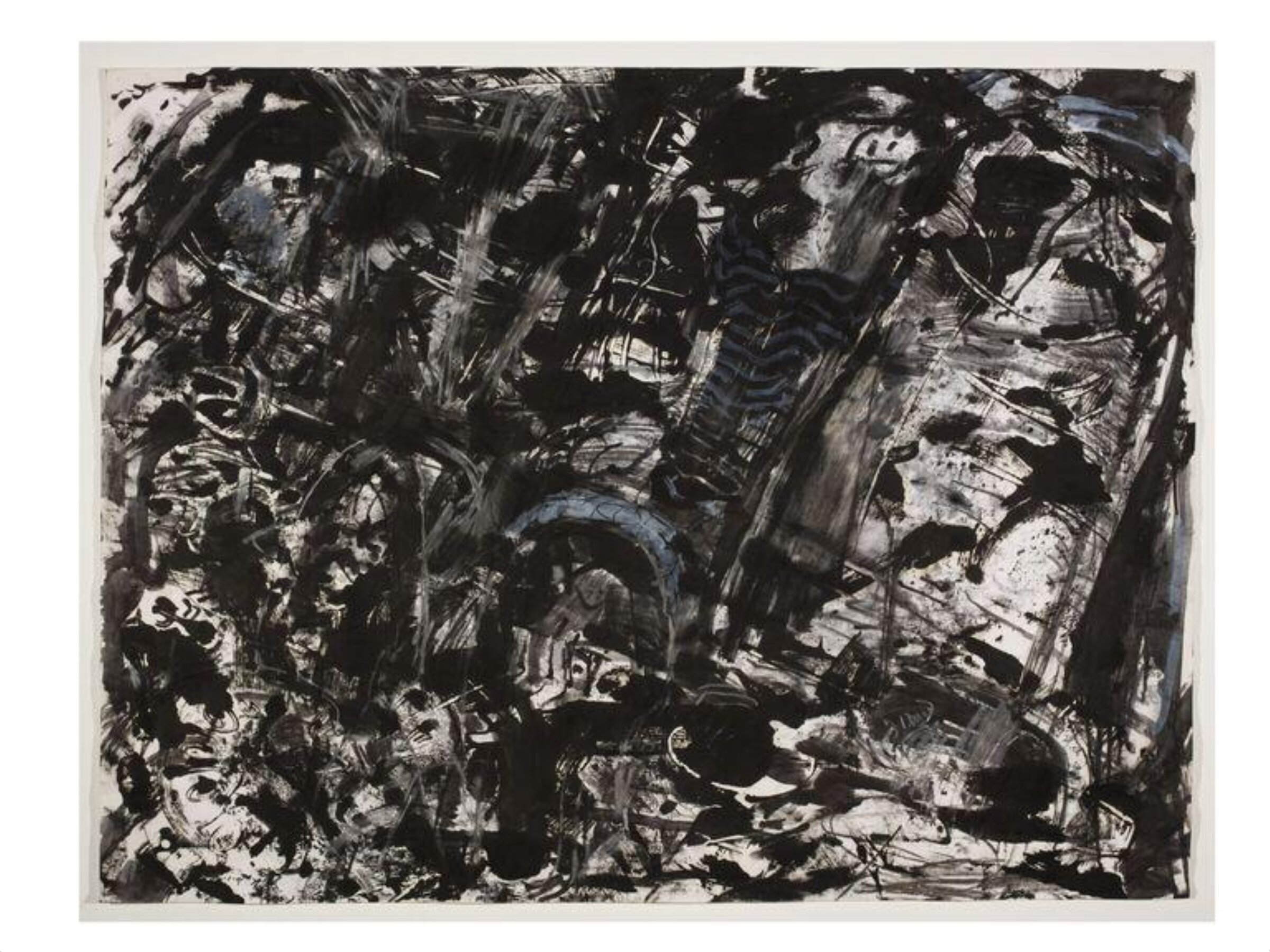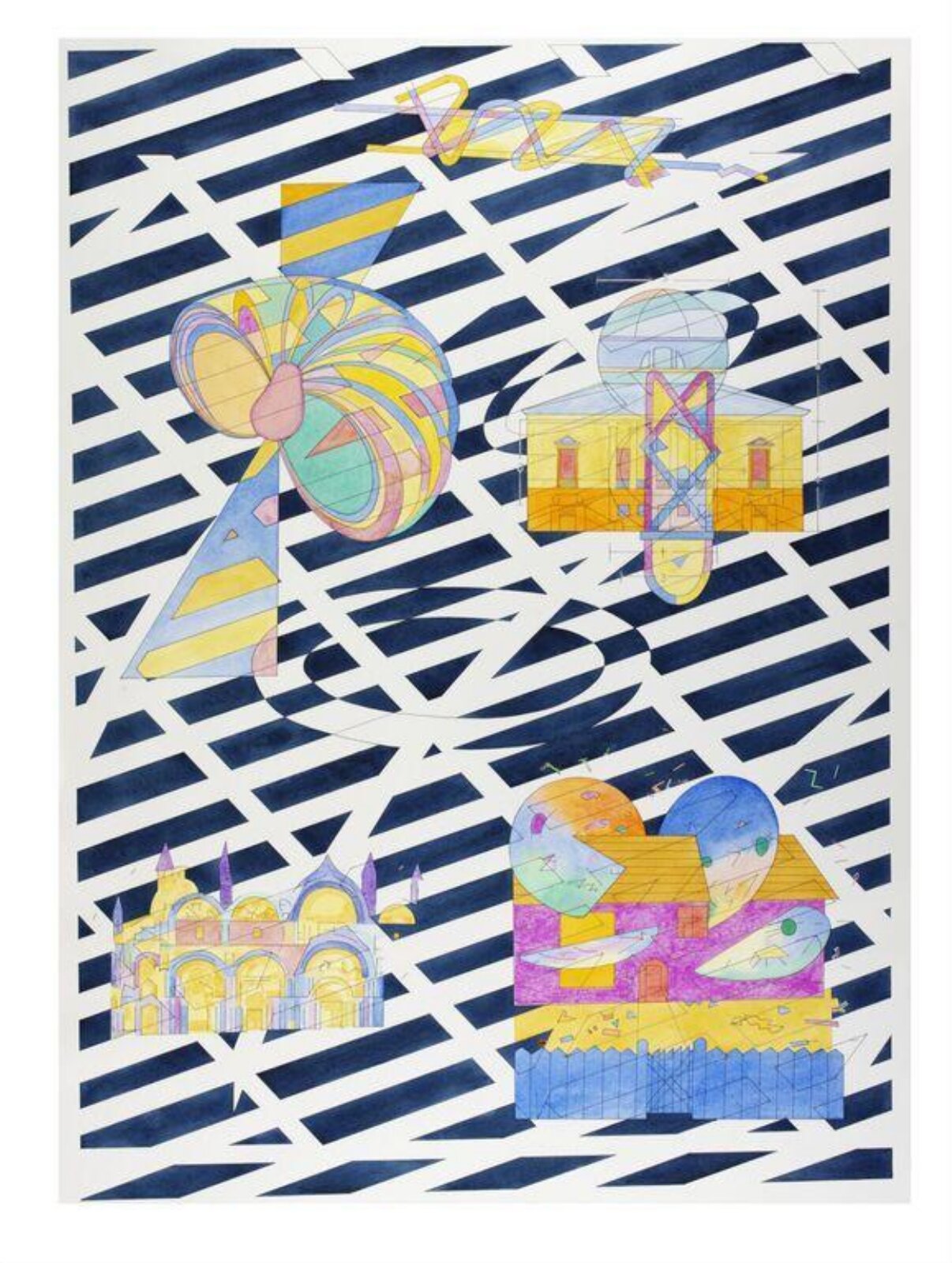
Domestic Kinetic
Kan det ses?
Ikke udstillet lige nu
Hvor er »Domestic Kinetic« i dag? Samling: Victoria and Albert Museum, London. Ikke udstillet lige nu. Kontrolleret 25. september 2026.

London, Storbritannien
Det hører til samlingen, men er ikke udstillet for tiden.
- Kontrolleret
- Uændret siden
- Kilde
- Museet
Om værket
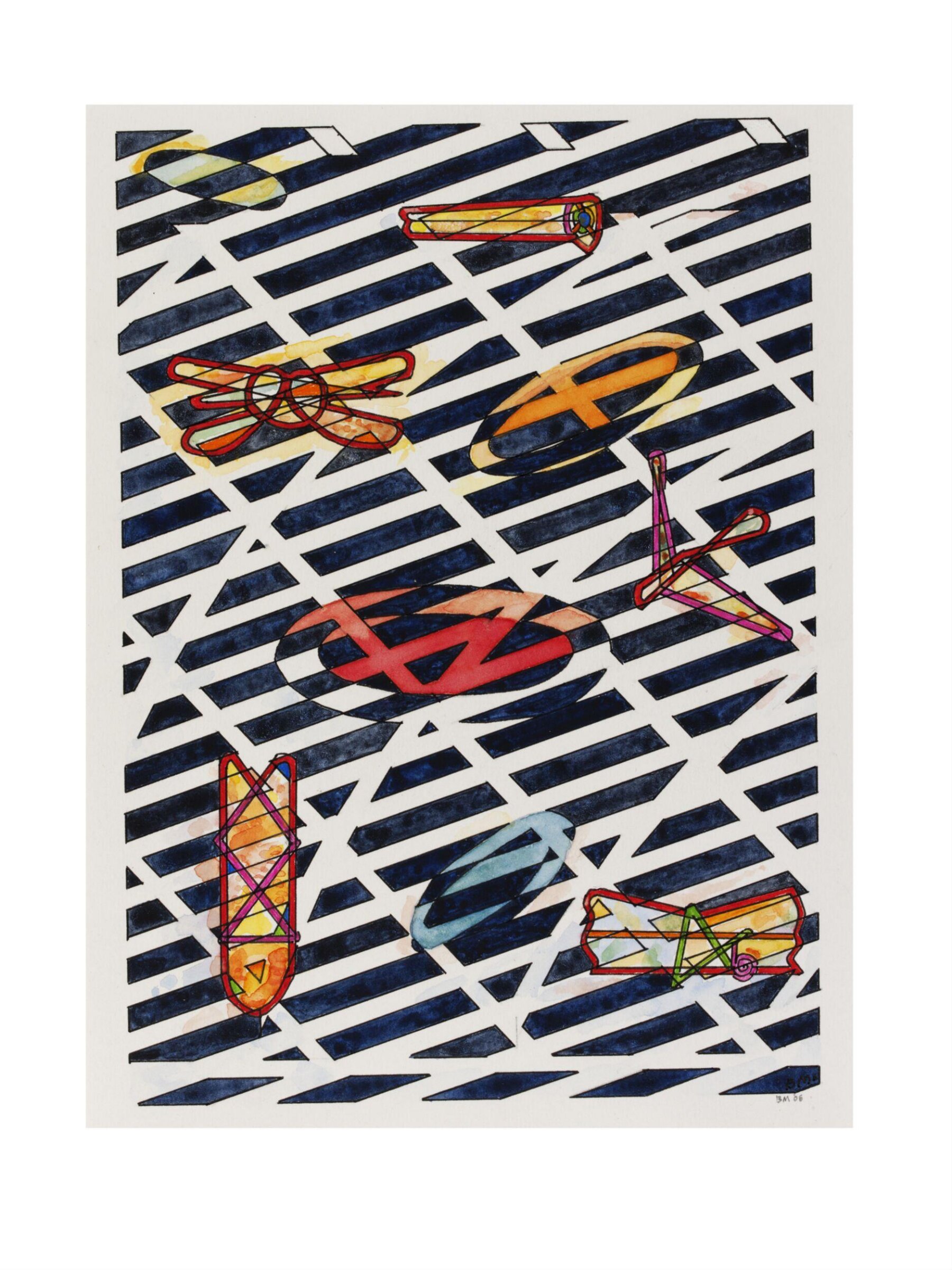
Domestic Kinetic is one of a group of watercolours produced by Barry Martin under the title the 'Radian Series'. The 'Radian' is Martin's metaphor for a relationship of geometrical perfection, referring to the angle at the centre of the circle that produces an arc whose length is equal to that of the circle's radius. Each work in the Radian series was created with the same compositional structure of lines meeting at different angles to form a grid pattern. Martin was a leading exponent of Kinetic Art during the 1970s, and the decision to entitle this work Domestic Kinetic demonstrates the continuing importance of the principles of Kinetic Art in his work.
Læs videre
Domestic Kinetic explores ideas of space and movement through the traditional medium of watercolour. The imposing scale of the work challenges our perception of watercolour as a 'safe' and 'traditional' art form. The feeling of energy in this composition expressed through geometrical forms may be compared with the dynamic drawings of the Italian Futurists and British Vorticists of the early twentieth century.
Various abstract and architectural motifs recur throughout the 'Radian' Series. Here curving forms depicted in bright tones of pink, purple, greens and yellow appear to float and move within or above a grid of dark blue which echoes the constrained space of a gaming board. These forms include a representation of Chiswick House, included for its classic proportions, and a modern suburban house from which furniture and objects are thrown on discs of colour.
Victoria and Albert Museum
Oplysninger
- Inventarnummer
- E.3656-2007
Hvad det viser
I kataloget
Kilder
- Victoria and Albert Museum
- Billede: Victoria and Albert Museum — © Victoria and Albert Museum, London