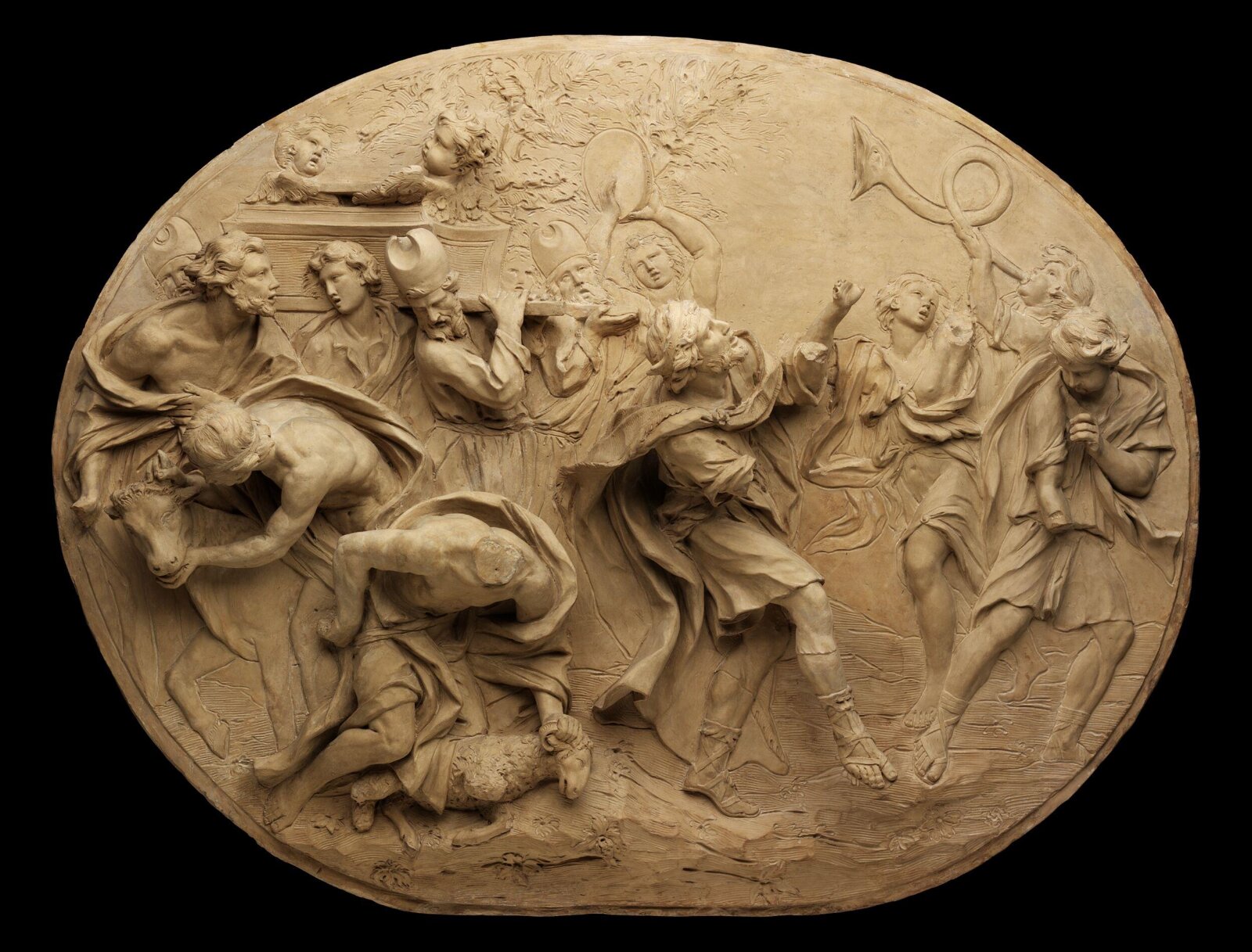
David Dancing before the Arc
Kan det ses?
Ja, udstillet nu
Hvor er »David Dancing before the Arc« i dag? Victoria and Albert Museum, Europe 1600-1815, Room 7, The Sheikha Amna Bint Mohammed Al Thani Gallery, London. Ja, udstillet nu. Kontrolleret 25. september 2026.

London, Storbritannien
SalEurope 1600-1815, Room 7, The Sheikha Amna Bint Mohammed Al Thani Gallery
Lukket· åbner kl. 10.00
Udstillet for publikum.
- Kontrolleret
- Uændret siden
- Kilde
- Museet
Om skulpturen
This relief depicts the Old Testament story in which David and thirty thousand Israelites process the Ark of the Covenant into Jerusalem with David dancing before the ark in celebration (2 Samuel 6:14). In typical Baroque style, the scene is presented with vibrant energy. The rendering of limbs and bodies in various stages of action enhance the sense of movement and invite the viewer's eye to explore across the surface.
Læs videre
The full range of relief has been used, with the extremely high relief creating deep recesses and sharp contrasts of light and dark for dramatic effect, characteristic of the Baroque. David and the three men following him frame and thereby accentuate the Ark above, with the low relief of the Ark itself creating the sense that it is emerging from the space behind. This energy disrupts the transportation of the Ark, in a scene that resembles classical bacchanals, marrying chaos with joviality, and with a similar emphasis on music and dance. The two men holding the animals in the foreground represent different stages of the male form, from a bent to a standing position. This technique, generally associated with the Renaissance, is also found in classical sculpture, to signal the skill of the artist in rendering variety in human form.
Various features suggest that this composition was designed to be cast in metal rather than carved in marble. These include the protruding limbs of the figures that would have been especially vulnerable in marble - as indicated by the damage sustained by the brittle terracotta. Similarly, the sketchy low-relief incisions of the background figures, foliage and landscape would have translated well into the wax and ultimately to the finished cast metal, in which they would have more easily reflected light, and thus perhaps given the impression of greater depth.
Victoria and Albert Museum
Oplysninger
- Inventarnummer
- A.23:1-1959
Hvad det viser
I kataloget
Kilder
- Victoria and Albert Museum
- Billede: Victoria and Albert Museum — © Victoria and Albert Museum, London