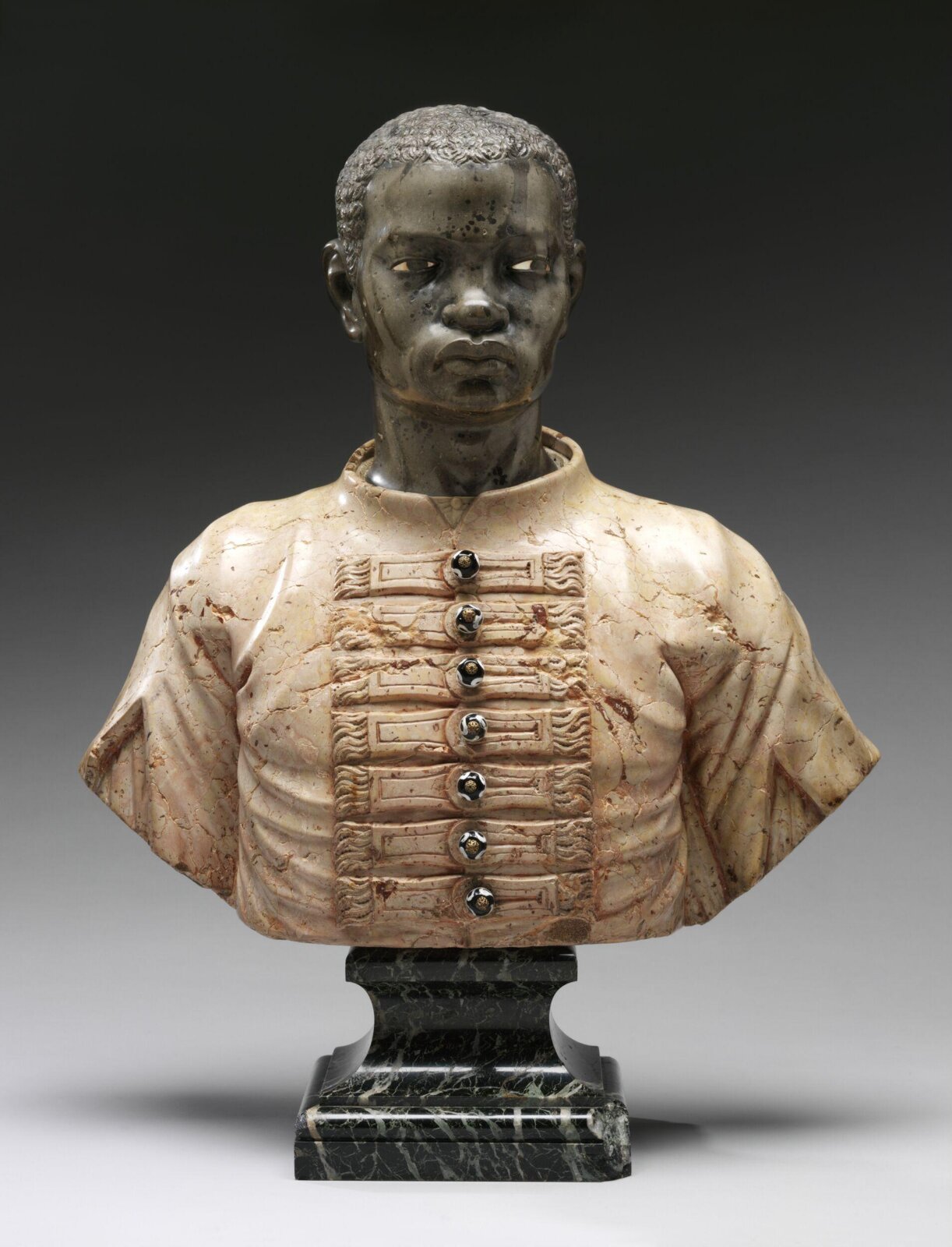
Bust of a Young Man
Må man se det?
Ja, det tager imod

London, Storbritannien
SalEurope 1600-1815, Room 7, The Sheikha Amna Bint Mohammed Al Thani Gallery
Udstillet for publikum.
- Kontrolleret
- Uændret siden
- Kilde
- Museet
Om skulpturen
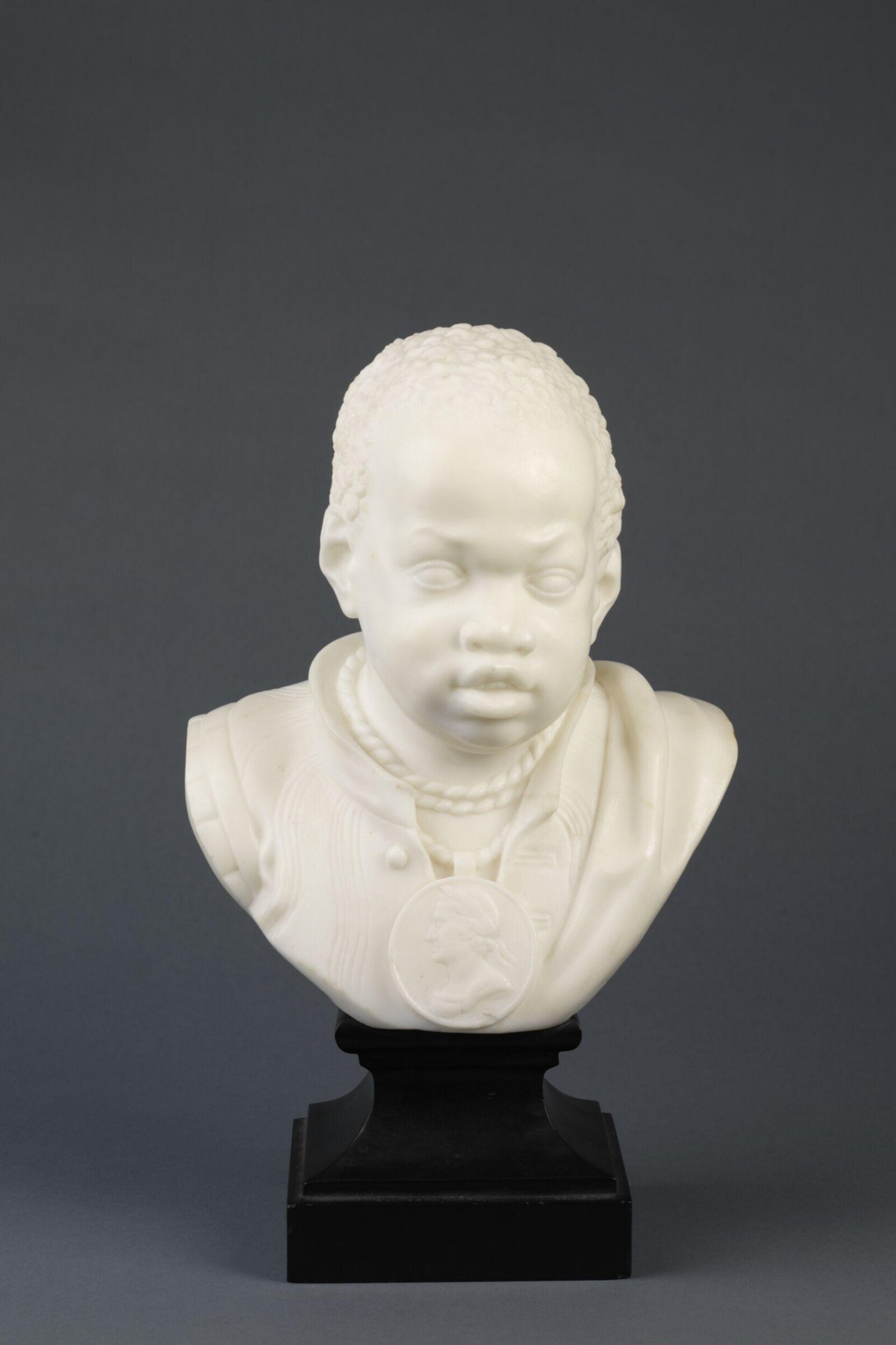
This striking life-sized bust of a young man of African descent is carved in coloured marble; black marble for the head and yellow-pink marble for the tunic which is also ornated with Venetian glass buttons. Traces of red paint found on the lips added to the realism of the portrait, while the intensity of the young man’s gaze is accentuated by inserts of mother of pearl to represent the white of the eyes.
The bust was produced in Venice at the end of the 1600s or the beginning of the 1700s. It probably originated from Ca’ Rezzonico, an Aristocratic Venetian house, and may have been displayed in a circular niche or on a plinth. While the realism of this depiction indicates that it was modelled after a real individual, the identity of the sitter, the artist and the original context of the commission remain unknown.
Læs videre
At the time in Venice and in Europe more widely, depictions of people of African descent were often generalised, stereotypical portrayals of clearly enslaved individuals in positions of servitude, or sometimes personifications of the continent of Africa. This bust is unusual as it does not depict any clear markers of enslavement, such as jewellery, shackles, a collar, or a turban. The young man is however wearing a type of tunic was typical for servants at the time, with frogged fastening in the Eastern European or Ottoman style.
People of African descent had been present in Venice since the Middle Ages, and would have almost entirely arrived in the city enslaved. They would have often worked in domestic service, which in Venice included being a gondolier. By the 1700s, only the wealthiest people in Venice employed enslaved African people. Ca’ Rezzonico was a centre of great wealth, so perhaps this bust implied the status and prestige of its aristocratic patrons.
Victoria and Albert Museum
Oplysninger
- Inventarnummer
- 451-1869
Hvad det viser
I kataloget
Kilder
- Victoria and Albert Museum
- Billede: Victoria and Albert Museum — © Victoria and Albert Museum, London