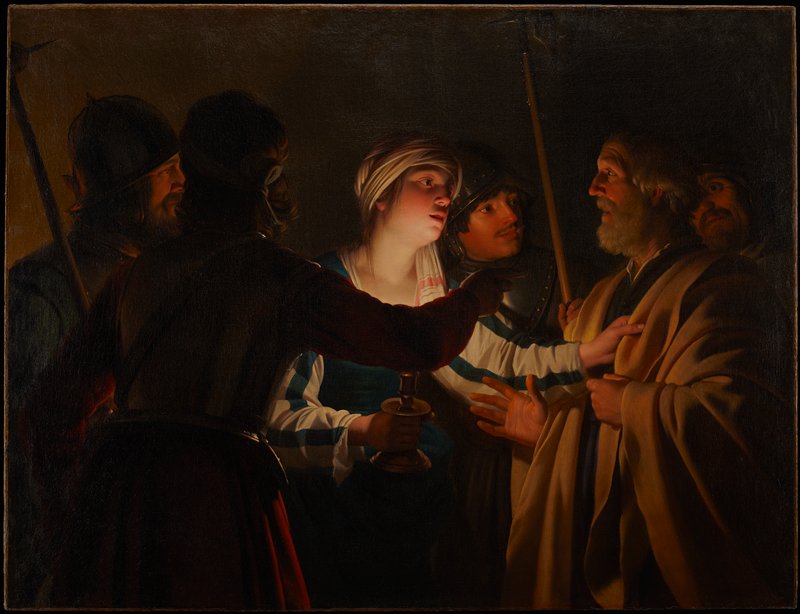
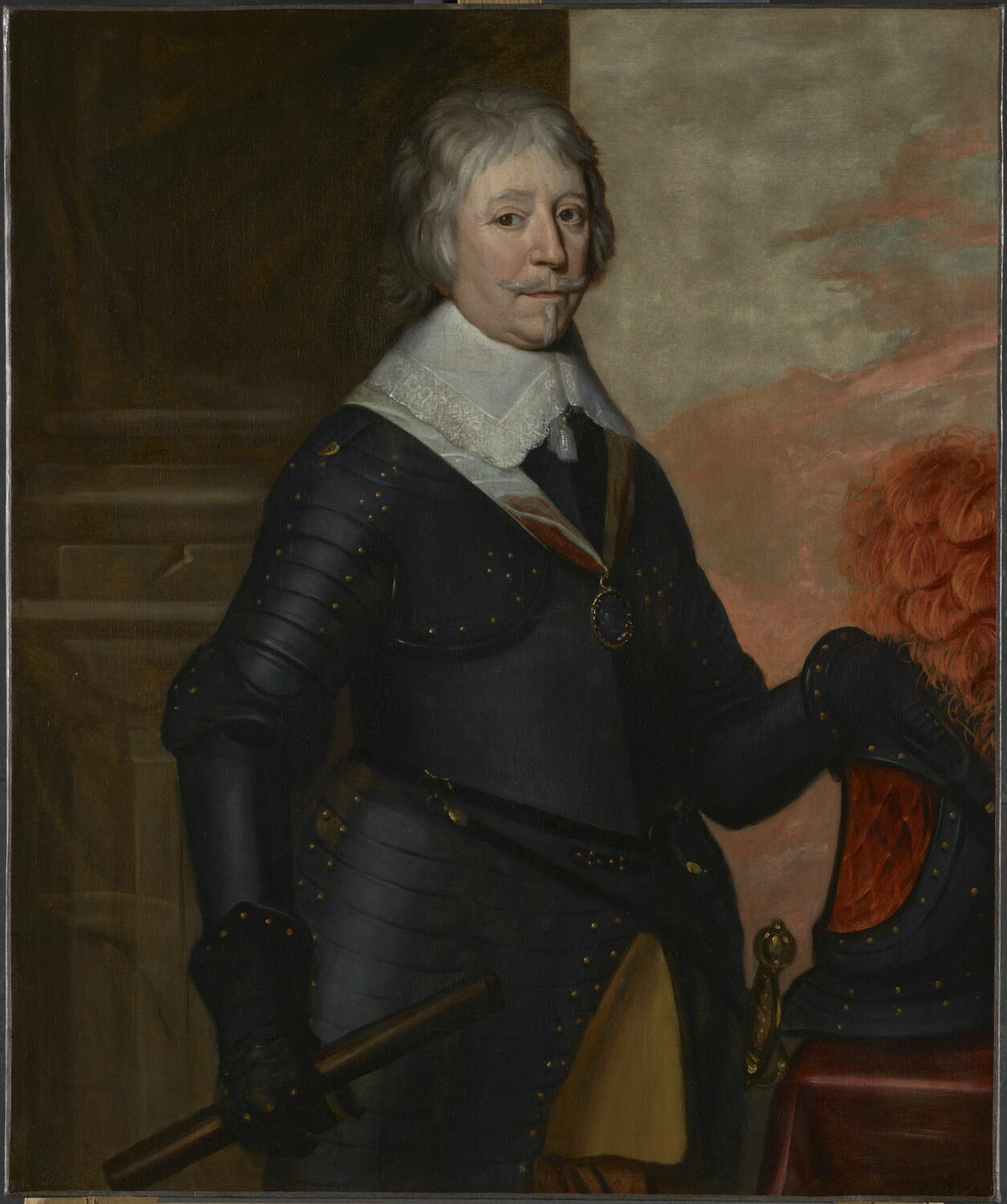
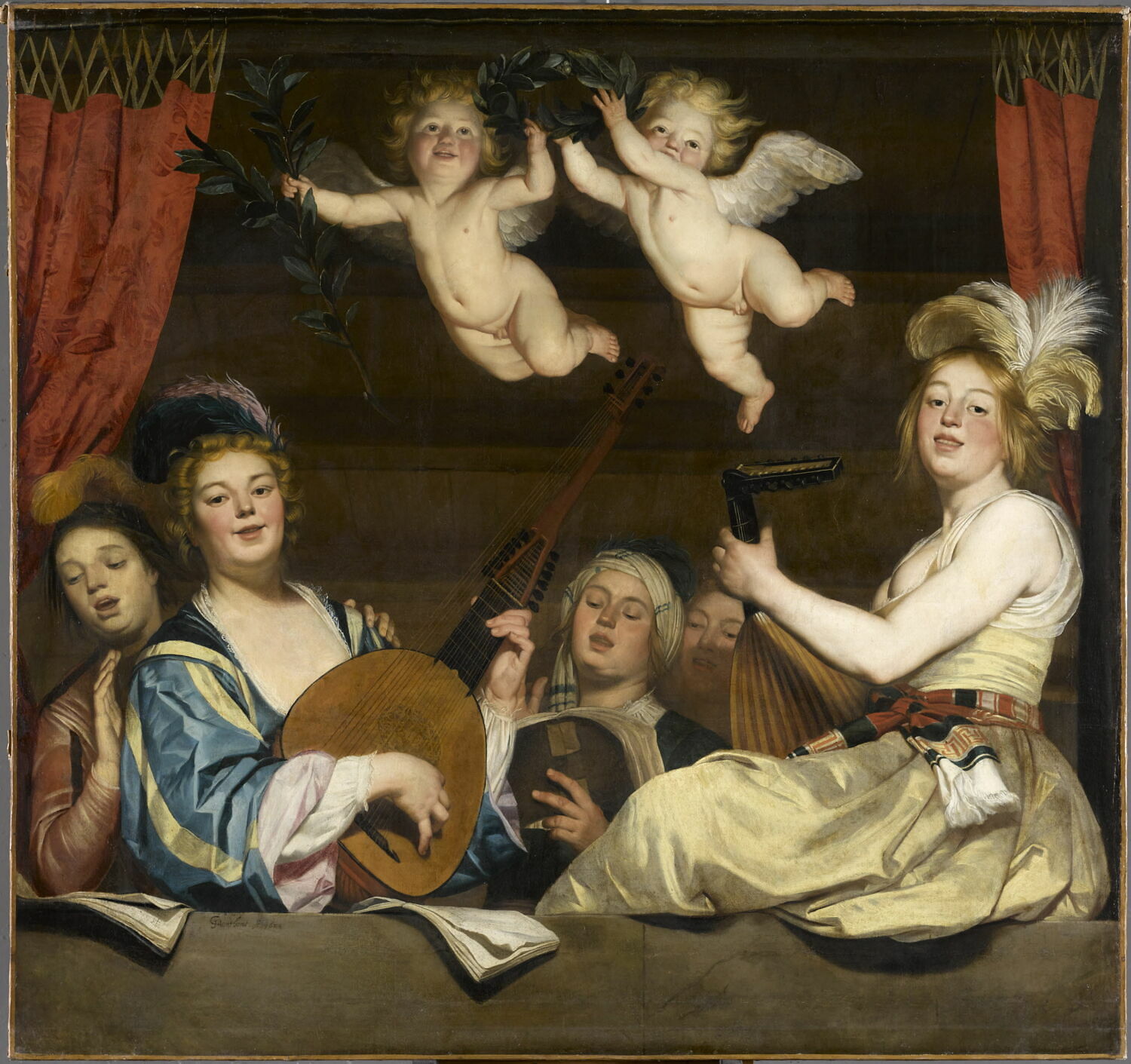
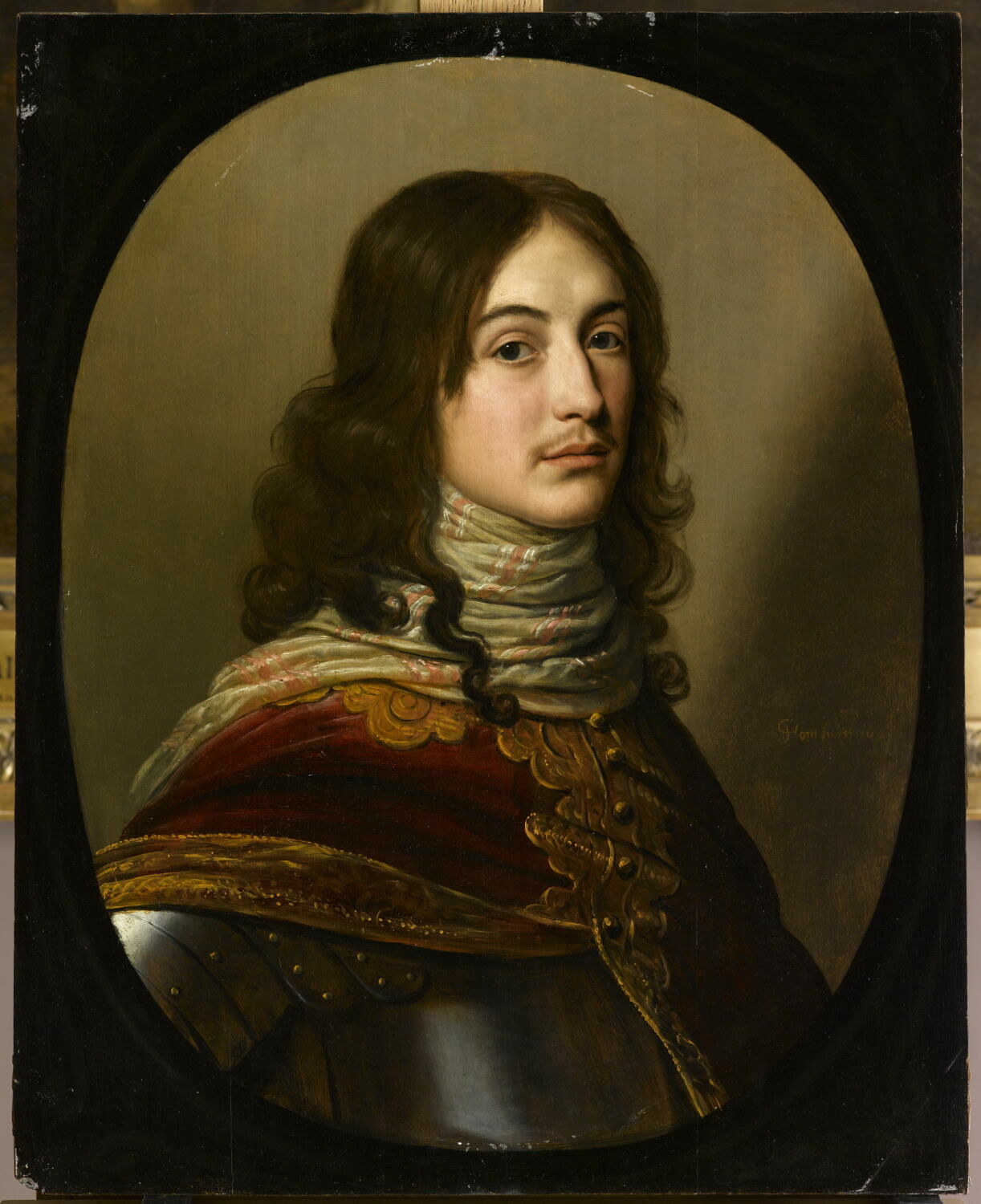
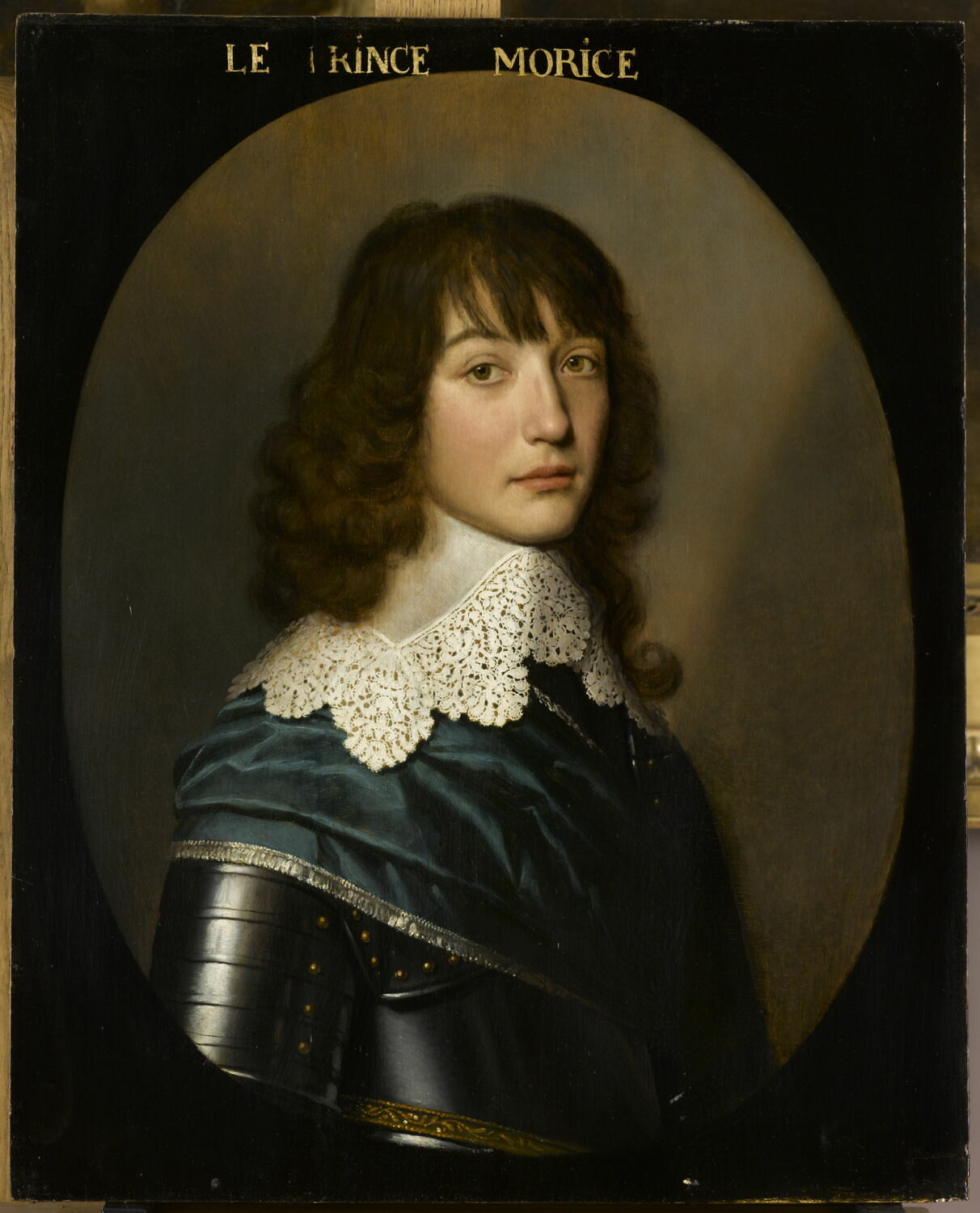
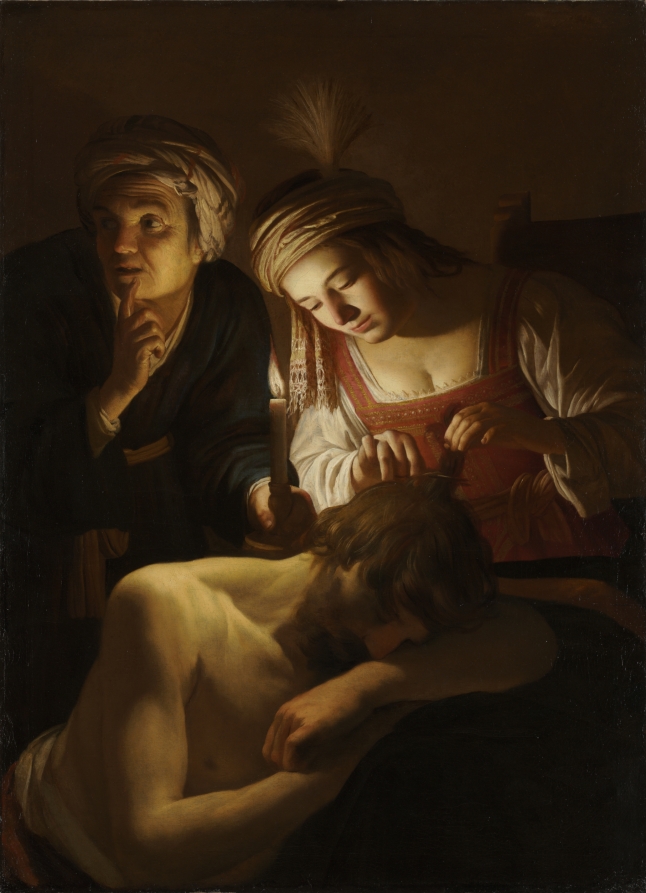
Gerard van HonthorstHolland, 1592–1656
Boy with a Torch
Må man se det?
Tager ikke imod for tiden

Eremitagen
Sankt Petersborg, Rusland
Det hører til samlingen, men er ikke udstillet for tiden.
- Kontrolleret
- 29. aug. 2026
- Uændret siden
- 30. aug. 2026
- Kilde
- Museets egne samlingsdata
Oplysninger
- Inventarnummer
- ГЭ-8556
I kataloget
Kilder
- Eremitagen: the museum's own open data · hentet 29. aug. 2026
- Billede: Eremitagen — © State Hermitage Museum
Imens i livet hos Gerard van Honthorst
Hele livetc. 1610 – 1620
At the palace of Marquis Giustiniani in Rome
In Rome Honthorst lodged at the palace of Marquis Vincenzo Giustiniani, where he painted “Christ Before the High Priest” (now in the National Gallery, London), and under Caravaggio's influence took up night scenes lit by a hidden artificial source. Italian documents of his day call him “Gherardo Fiammingo” or “Gherardo Hollandese”: the nickname “Gherardo delle Notti” came into use only in the 18th century.
c. 1610 – 1620
Commissions from Cardinal Scipione Borghese
Cardinal Scipione Borghese became another important patron, securing him commissions at San Silvestro in Monte Compatri and Santa Maria della Vittoria in Rome. The artist also worked for Cosimo II de' Medici, Grand Duke of Tuscany.
1620
Returns to Utrecht
Back in Utrecht, Honthorst built a considerable reputation at home and abroad: Sir Dudley Carleton, the English envoy at The Hague, recommended his work to the Earl of Arundel, and his work impressed the young Rembrandt and Frans Hals.
1622
The Guild of St. Luke and a drawing academy
Honthorst was admitted to the Guild of St. Luke and the same year opened a drawing academy in Utrecht, in fact a small studio for visiting pupils. According to Joachim von Sandrart, his pupil in the mid-1620s, the master taught about 24 students at a time, each paying 100 guilders a year.
1623
Marries and heads the Guild of St. Luke
In the year of his marriage Honthorst was president of the Guild of St. Luke in Utrecht.