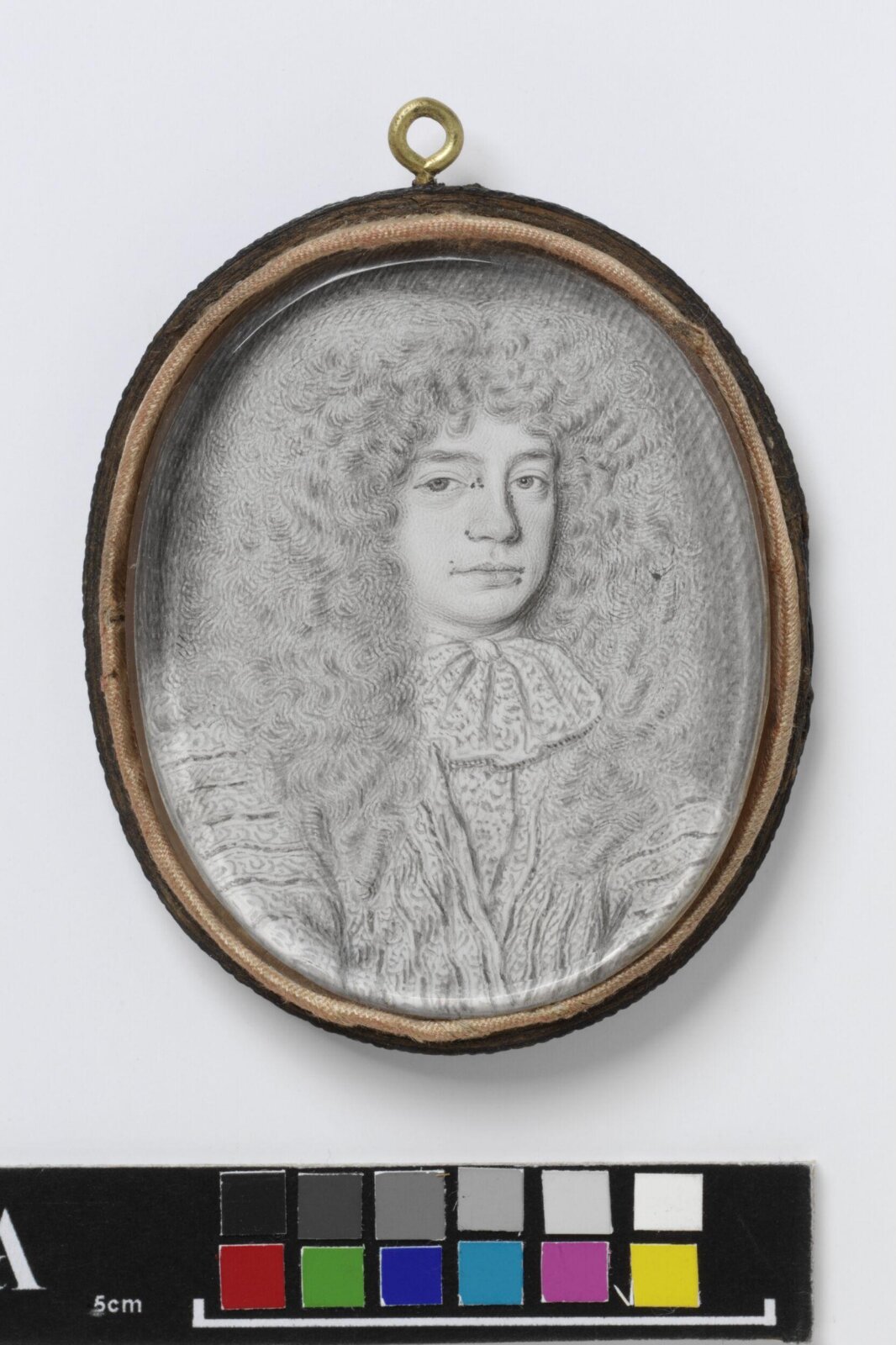
David Paton
An Unknown man
Må man se det?
Ja, det tager imod

Victoria and Albert Museum
London, Storbritannien
SalPortrait Miniatures, Room 90a, The International Music and Art Foundation Gallery
Udstillet for publikum. Hvem der står inde for det, står nedenfor.
- Kontrolleret
- for 9 dage siden
- Uændret siden
- 25. sep. 2026
- Kilde
- Museets egne samlingsdata
About the painting
In the second half of the 17th century in England there was a fashion for small black and white portraits drawn on vellum (fine animal skin). This medium is more durable than paper. Although these portraits were called 'plumbagos', meaning black lead, they were usually drawn in graphite and sometimes in ink. This portrait is done in graphite.
‘Plumbagos' developed in the Netherlands in the late 16th century within the print trade. They developed from the printmakers’ original drawings on paper, from which a print would have been engraved. 'Plumbagos' were introduced into England when the monarchy was restored in 1660, by printmakers who returned home from exile abroad. As the taste for 'plumbagos' became established, artists who were not printmakers also began to produce them.
Read on
David Paton worked in Scotland from about 1660 to 1695. Mainly he drew highly finished miniatures in 'plumbago', some of which were copied from pictures. Paton accompanied The Hon. William Tollemache, youngest son of the Duchess of Lauderdale, on the Grand Tour (a cultural tour of Europe made by young gentlemen). There are a few examples of Paton's work at the Lauderdale's home, Ham House in London.
Victoria and Albert Museum
Oplysninger
- Inventarnummer
- P.23-1930
What it shows
I kataloget
Kilder
- Victoria and Albert Museum: the museum's own open data · hentet for 9 dage siden
- Billede: Victoria and Albert Museum — © Victoria and Albert Museum, London