Mahesh
Akbar
Må man se det?
Tager ikke imod for tiden

Victoria and Albert Museum
London, Storbritannien
Det hører til samlingen, men er ikke udstillet for tiden.
- Kontrolleret
- for 8 dage siden
- Uændret siden
- 25. sep. 2026
- Kilde
- Museets egne samlingsdata
About the painting
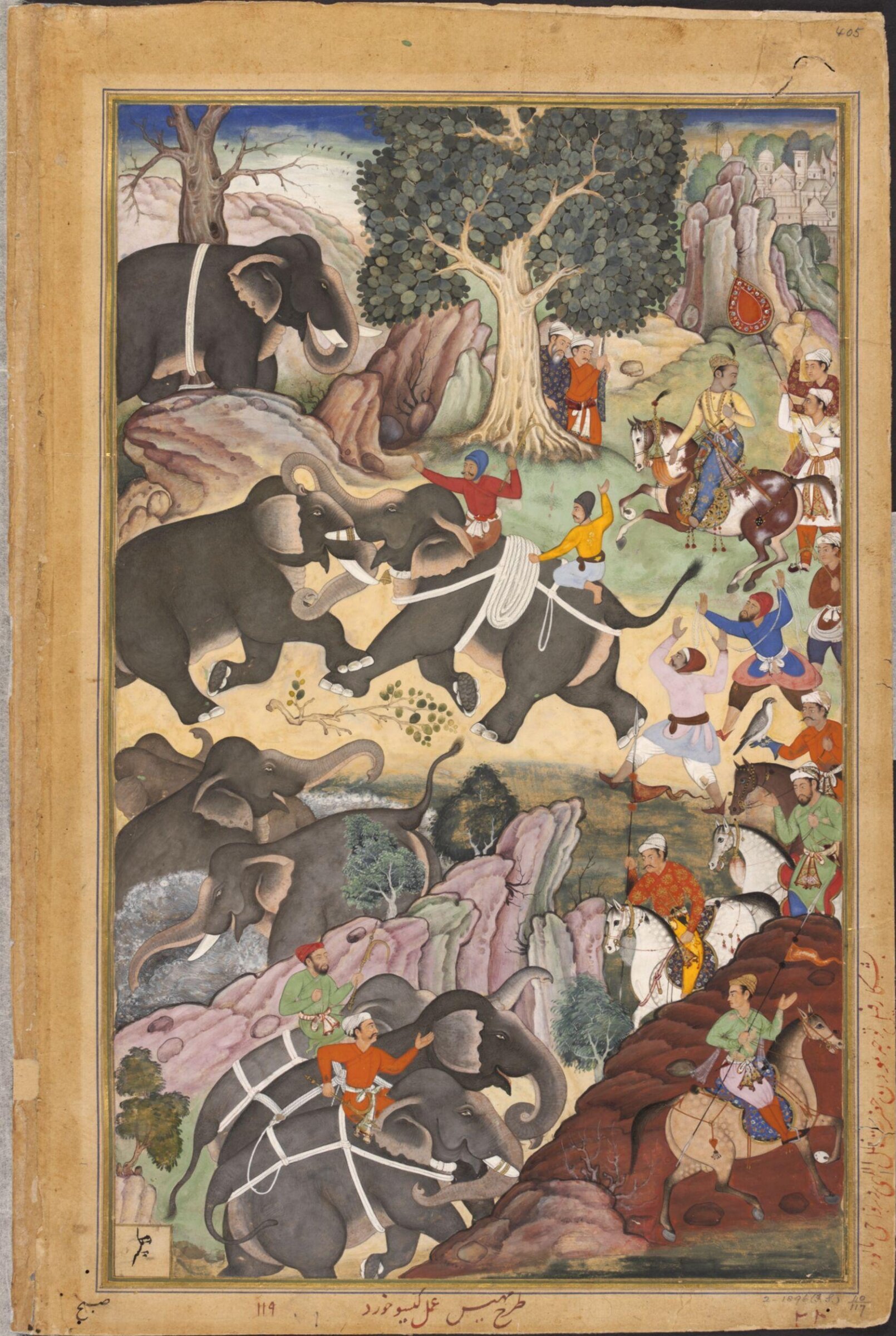
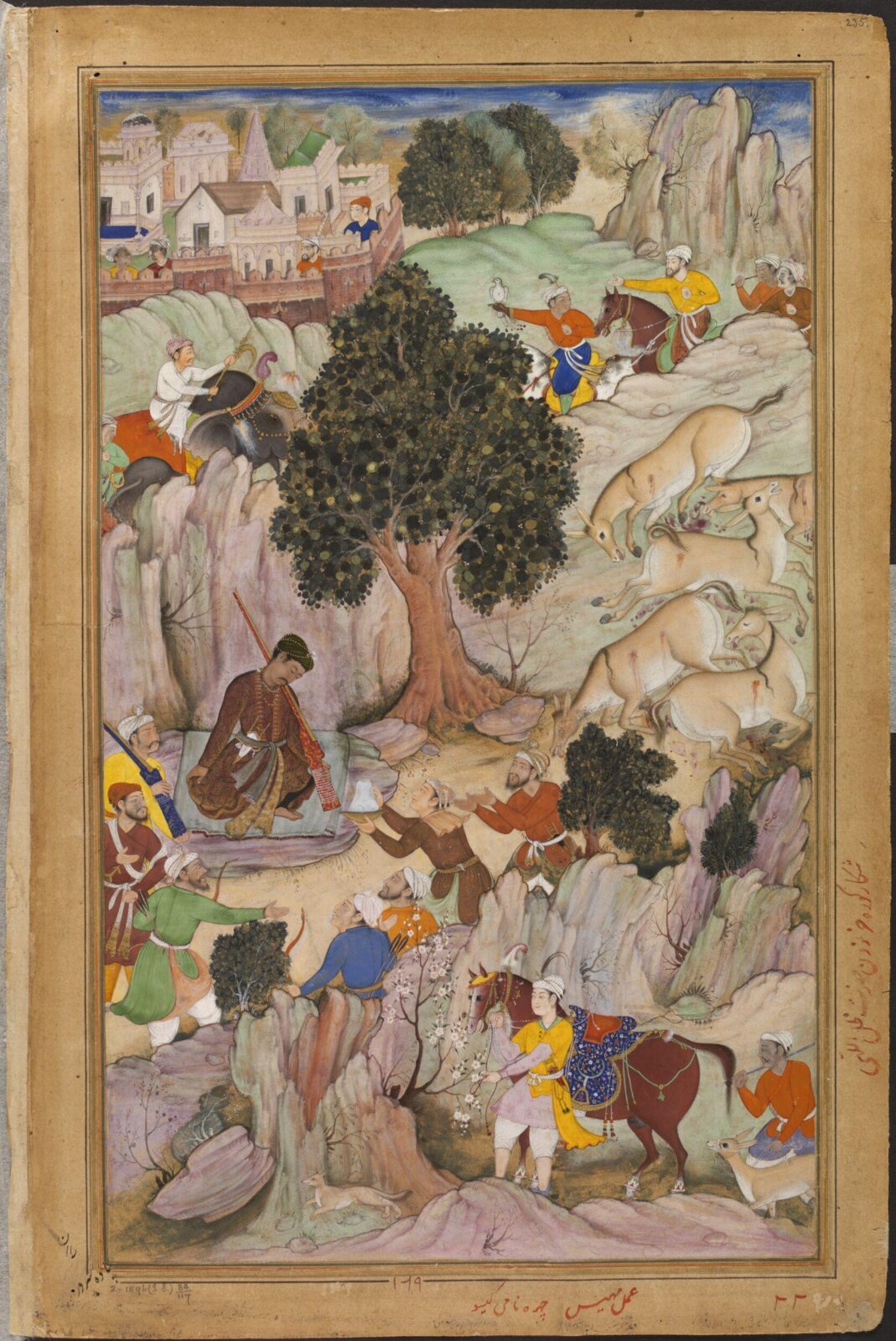
This illustration to the Akbarnama, the history of the reign of the Mughal emperor Akbar, exemplifies Akbar's increasingly spiritual preoccupations from about 1570. His historian, Abu’l Fazl, frequently refers to the disparity between the apparent frivolity of events in the material world, and the metaphysical nature of the emperor’s reflections at the same time. On this occasion he writes of Akbar: ‘in appearance his mind was taken up with the pleasure of hunting; inwardly, there was in his heart the longing to know God’. Akbar had set out with a few servants to shoot wild asses, but became separated from them when he dismounted to follow his prey. He was soon overcome by thirst and weakness in the intense heat, and entered a trance-like condition. His extremely concerned servants eventually found him slumped against his gun, unable to speak.
Read on
According to Abu’l Fazl, the emperor later felt he had been sent a divine message instructing him to take greater care of himself and to avoid such dangers because of his pre-eminent duty as the guardian of mankind. Akbar’s features have been painted by Keshav, one of a small number of artists accorded the privilege of doing portraits of the emperor and leading figures of the court, while the rest of the composition by an unknown designer has been painted by Mohesh.
[English translation Beveridge, vol. II, pp. 520-4]
The Akbarnama was commissioned by Akbar in 1589 as the official chronicle of his reign. It was written in Persian by his court historian and biographer, Abu'l Fazl, between 1590 and 1596. It was illustrated simultaneously by artists from Akbar's ketabkhana, or "House of Books", where manuscripts were stored as well as created. After Akbar's death in 1605, the manuscript remained in the library of his son, Jahangir (r. 1605-1627) and later Shah Jahan (r.1628-1658). The Victoria and Albert Museum purchased it in 1896 from Mrs Frances Clarke, the widow of Major-General John Clarke, who bought it in India while serving as Commissioner of Oudh between 1858 and 1862.
Victoria and Albert Museum
Oplysninger
- Inventarnummer
- IS.2:84-1896
What it shows
I kataloget
Kilder
- Victoria and Albert Museum: the museum's own open data · hentet for 8 dage siden
- Billede: Victoria and Albert Museum — © Victoria and Albert Museum, London