 David HockneyStorbritannien, 1937–2026
A Room in Sarastro's Palace
Kan det ses?
Nej, stjålet og eftersøgt
Hvor er »A Room in Sarastro's Palace« i dag? Nej, stjålet og eftersøgt. Kontrolleret 29. september 2026.
Opført i FBI's nationale register over stjålen kunst, nr. 00226.
- Kontrolleret
- · Indberettet
- Uændret siden
- Kilde
- Et register over stjålet kunst
Om maleriet
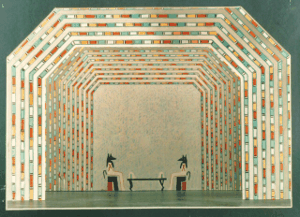
Egyptian stylized art. The work is a design rendering for a backdrop for Act I sc. 3 of the opera, "The Magic Flute." It consists of two layers of cardboard painted with gouache. The first layer is a painting of two figures seated at a table in front of a light blue background. The blue background is surrounded by a pattern of red, yellow, blue and white blocks on a grey background. The center of the second layers cut out in the same shape as the blue background of the first layer. The pattern of blocks on the grey background is continued from the first layer.
Oplysninger
I kataloget
Kilder
- FBI's register over stjålen kunst
- Billede: FBI National Stolen Art File
Imens i livet hos David Hockney
Hele livet1966–1978
Stage designer: “Ubu Roi” and the Glyndebourne operas
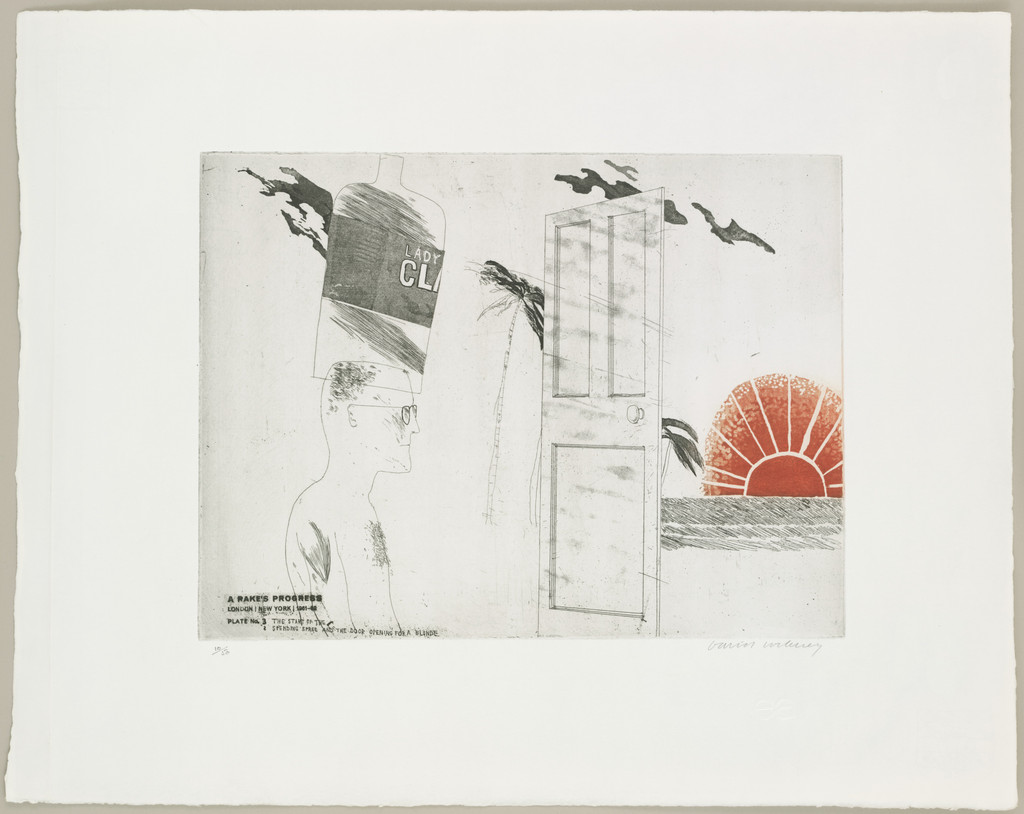
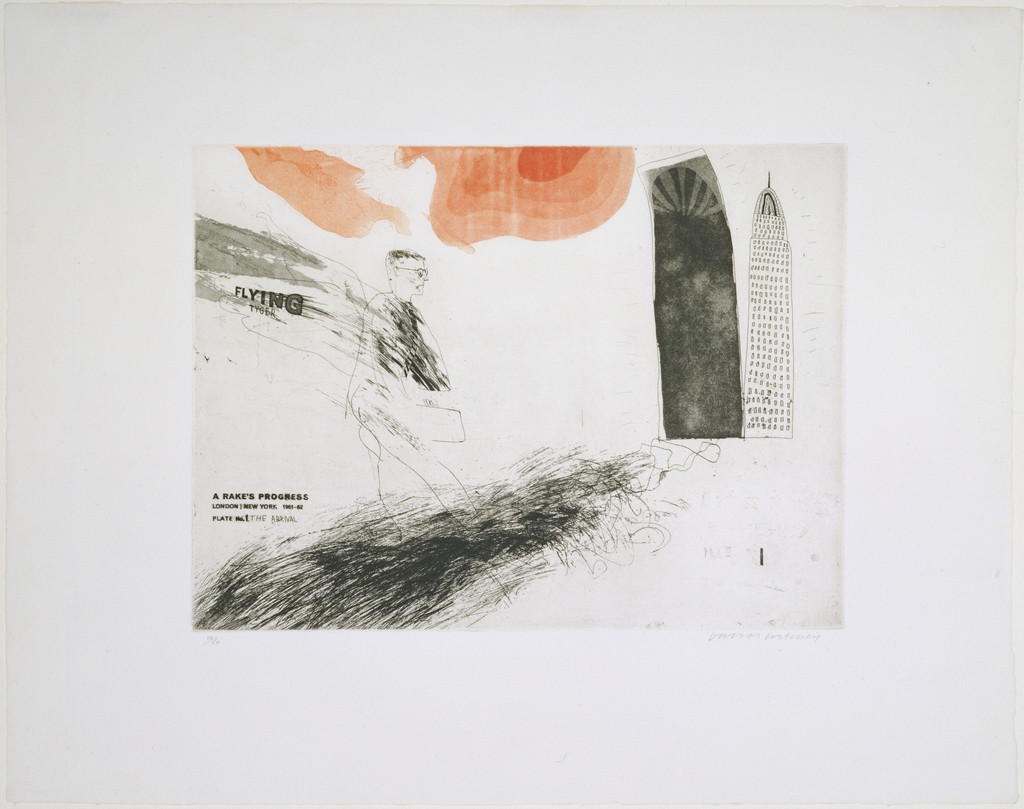
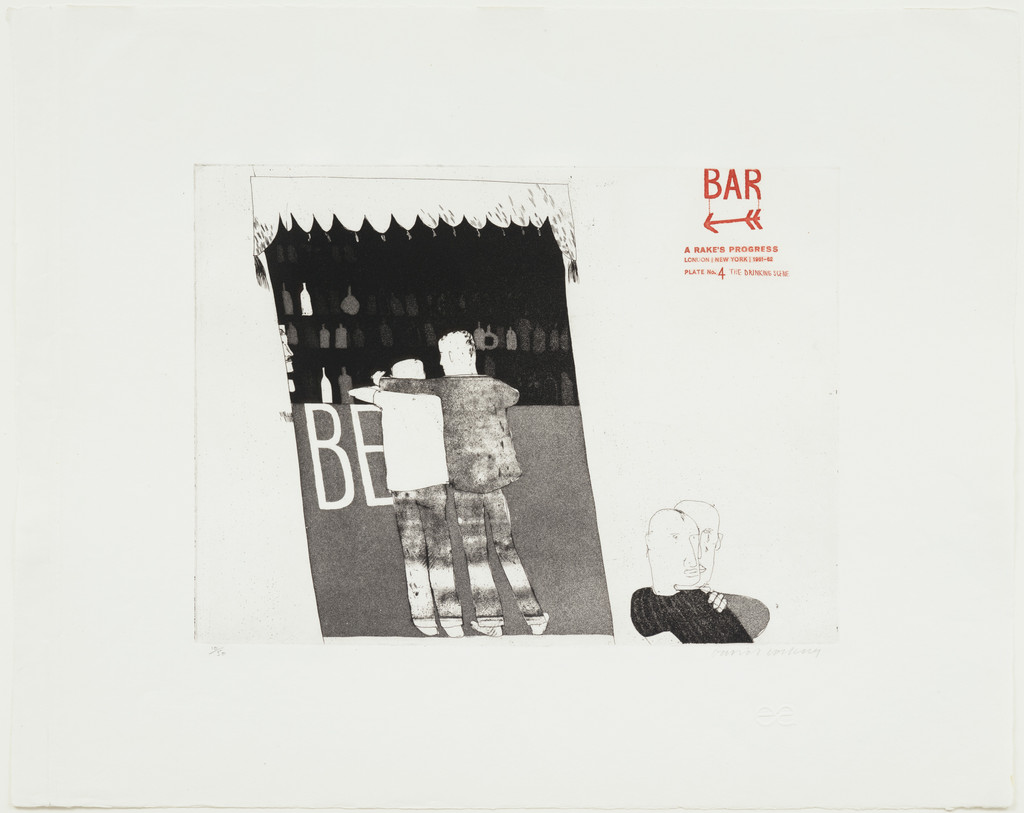
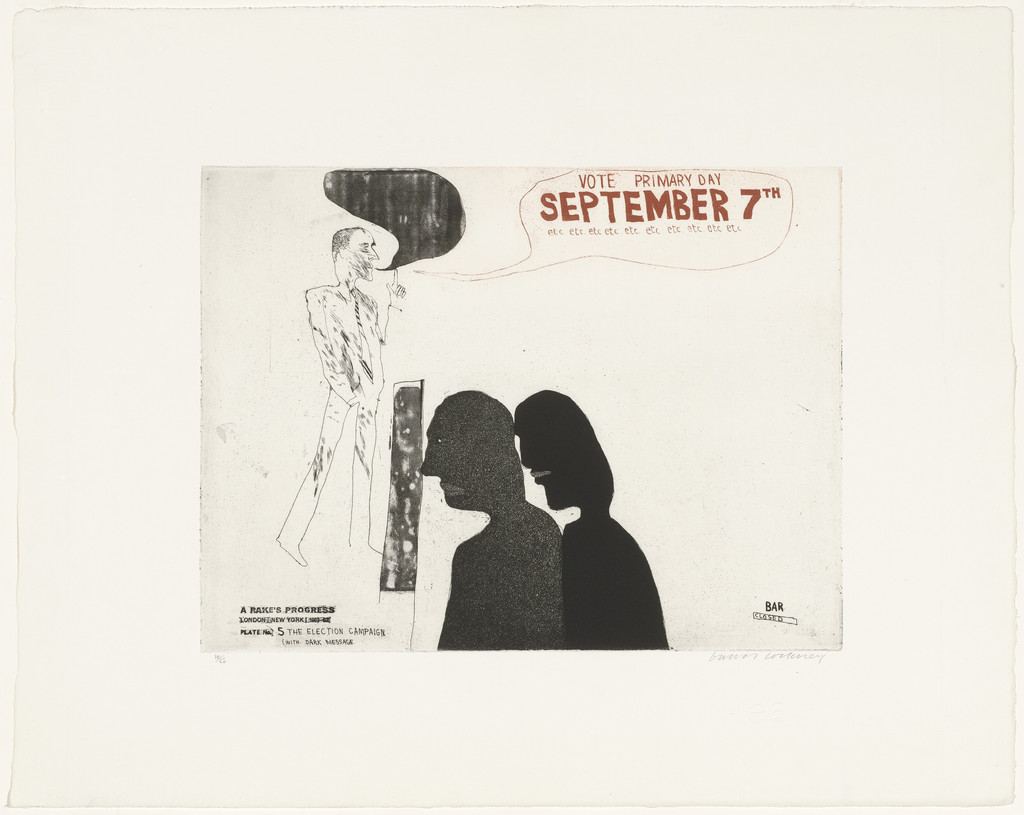
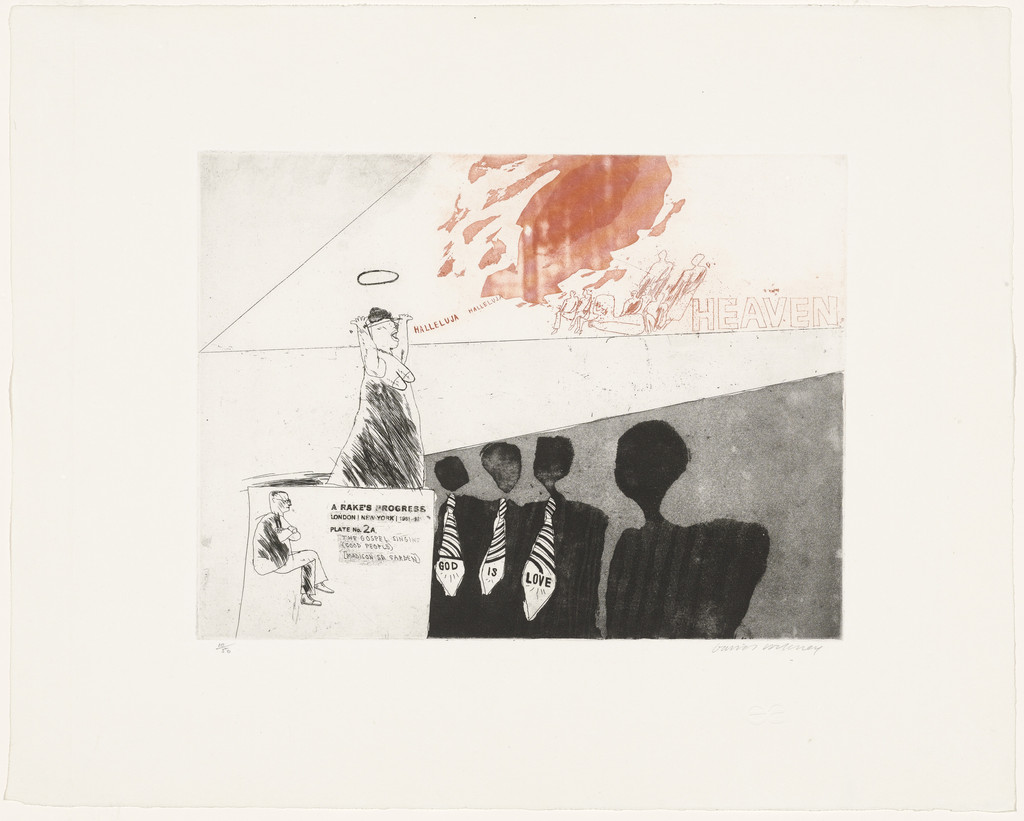
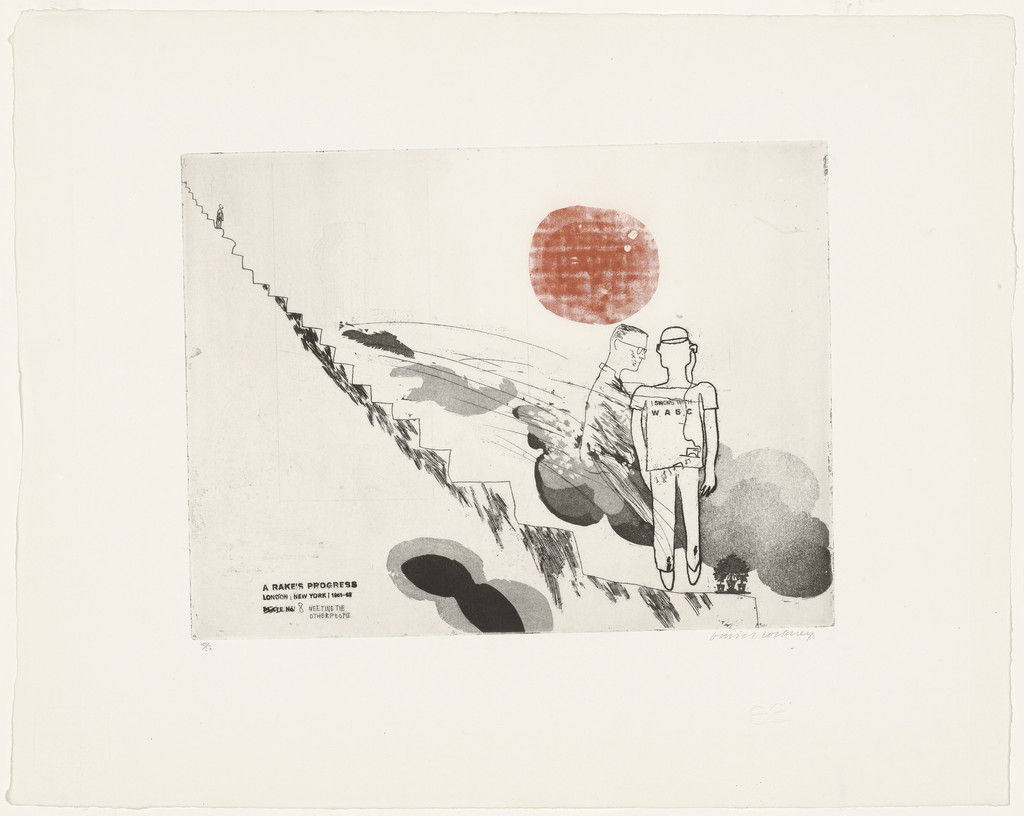
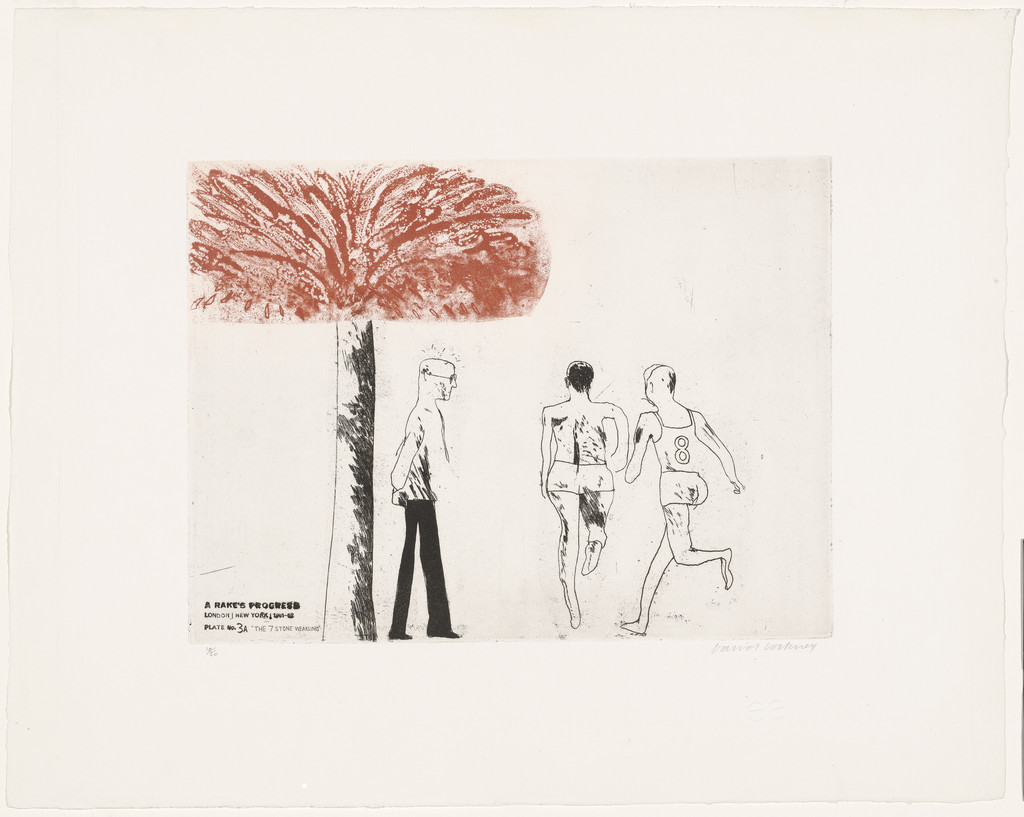
Hockney’s first stage designs are for “Ubu Roi” at London’s Royal Court Theatre (1966), followed by Stravinsky’s “The Rake’s Progress” (1975) and “The Magic Flute” (1978) for the Glyndebourne Festival Opera. It is the start of the opera work that will go on in New York, Los Angeles, Chicago and London.
24. juni 1977 – 2. oktober 1977
Exhibition: Documenta 6
1979
A founder of the Museum of Contemporary Art, Los Angeles
In 1979 Hockney is a founder of the Museum of Contemporary Art, Los Angeles.
1979
Hearing aids from 1979
Hockney’s hearing has been failing since the 1970s: he realised he was going deaf several years before he began using hearing aids in 1979. He also described synaesthetic associations between sound, colour and shape.