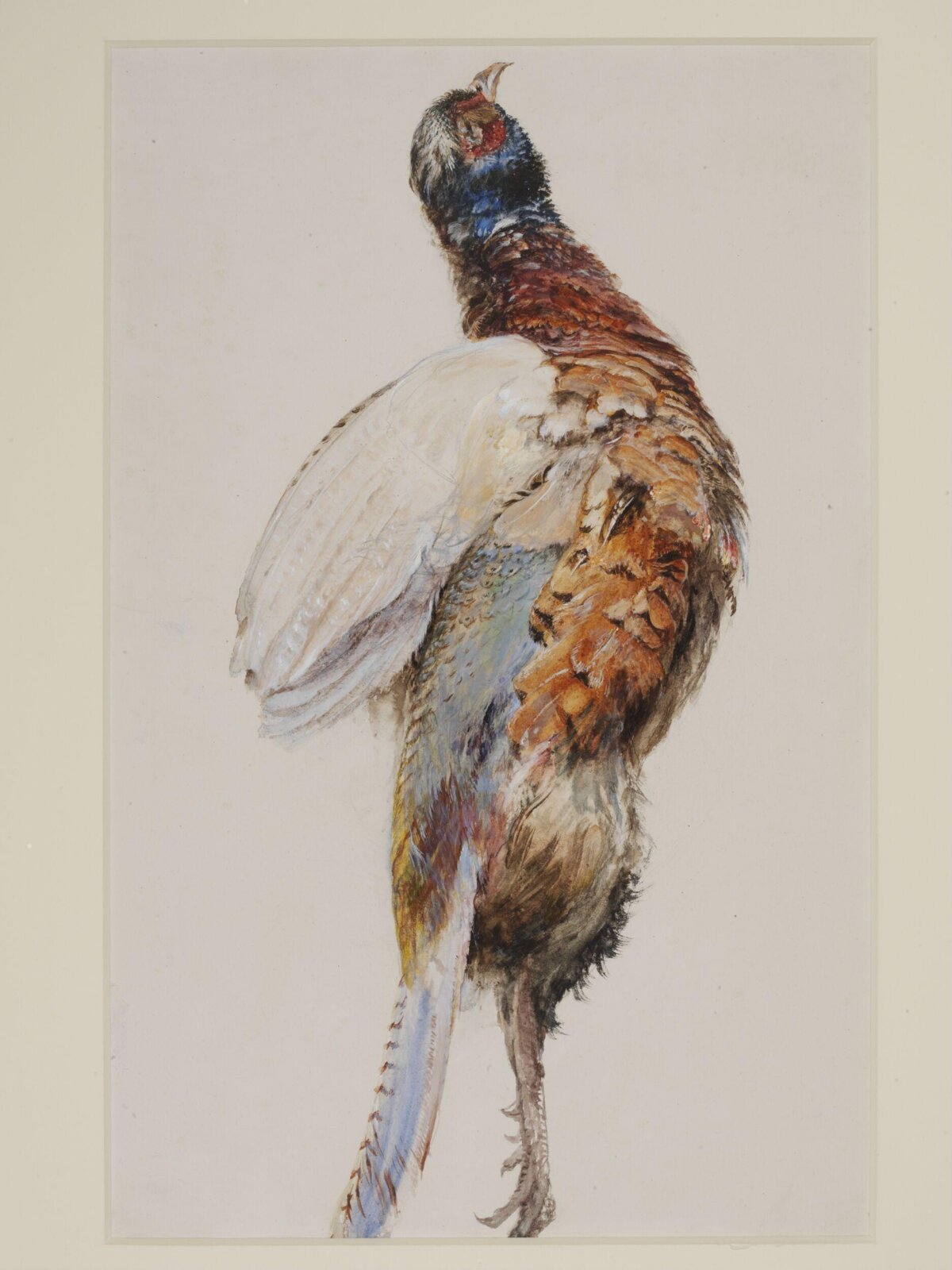
 John RuskinEngland, 1819–1900
A Dead Pheasant
Må man se det?
Tager ikke imod for tiden

Victoria and Albert Museum
London, Storbritannien
Det hører til samlingen, men er ikke udstillet for tiden.
- Kontrolleret
- for 8 dage siden
- Uændret siden
- 25. sep. 2026
- Kilde
- Museets egne samlingsdata
Oplysninger
- Inventarnummer
- D.394-1907
I kataloget
Kilder
- Victoria and Albert Museum: the museum's own open data · hentet for 8 dage siden
- Billede: Victoria and Albert Museum — © Victoria and Albert Museum, London
Imens i livet hos John Ruskin
Hele livet1834–1900 · Virkested
Great Britain
10. april 1848
Married: Effie Gray
1849
“The Seven Lamps of Architecture”, the first book to bear his name
His growing interest in Gothic architecture produces a book with fourteen plates etched by the author: seven moral categories — sacrifice, truth, power, beauty, life, memory and obedience — that Ruskin considers vital to and inseparable from all architecture. It promotes a secular and Protestant form of Gothic and challenges the Catholic influence of the architect A. W. N. Pugin.
November 1849
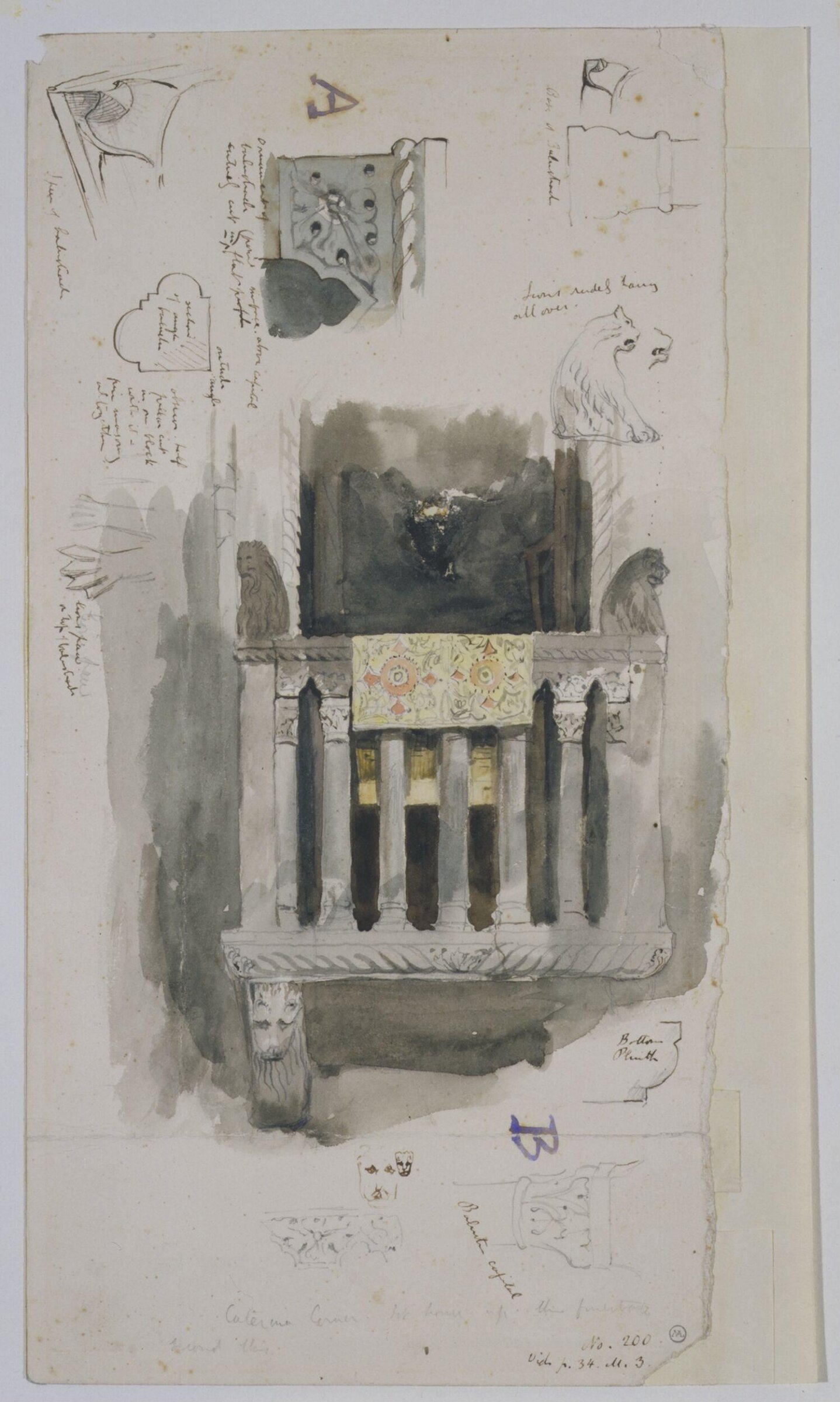
In Venice with Effie: the sketches behind “The Stones of Venice”
In November 1849 the couple stay at the Hotel Danieli: Effie looks for company, while Ruskin works alone and hurries to draw the Ca' d'Oro and the Doge's Palace, fearing that the occupying Austrian troops will destroy them. These sketches and notes will grow into “The Stones of Venice”.
May 1851
Letters to The Times defending the Pre-Raphaelites
Millais and his fellow artists approach Ruskin through their mutual friend Coventry Patmore; Millais's “Christ in the House of His Parents” (1849–50), which some considered blasphemous, at first fails to impress him, but in May 1851 he writes letters to The Times defending the Pre-Raphaelite Brotherhood.
1851–1853
The three-volume “Stones of Venice”
Growing from a technical history of Venetian architecture, from the Byzantine to the Renaissance, into a broad cultural history, the work is a warning to contemporary England about the moral and spiritual health of society: Ruskin explains the decline of Venice by the loss of true Christian faith. The chapter “The Nature of Gothic” from the second volume — a critique of the division of labour and industrial capitalism — will be published by William Morris as a separate book.