ART WIKI37 906 vystaveno
MapaSbírkaUmělciMuzeaVýstavyMagazín
Přihlásit se

ART WIKI

Kde vidět umění a kdy přijít.

Sbírky: Clevelandské muzeum umění, Cooper Hewitt, Smithsonian Design Museum, Ermitáž, Galerie umění Yaleovy univerzity, Gettyho vila, Harvard Art Museums, Hirshhorn Museum and Sculpture Garden, Institut umění v Chicagu, Louvre, Metropolitní muzeum umění, Minneapoliský institut umění, Muzeum amerického umění Whitneyové, Muzeum J. Paula Gettyho, Muzeum moderního umění, Národní galerie ve Washingtonu, Národní portrétní galerie, National Museum of Asian Art, Puškinovo muzeum, Rijksmuseum Amsterdam, Smithsonian American Art Museum, Státní muzeum umění, Státní ruské muzeum, Treťjakovská galerie, Victoria and Albert Museum, Yale Center for British Art, Státní katalog Muzejního fondu Ruska (274 muzeí), Europeana (19 muzeí), Wikidata (44 muzeí), Paris Musées (12 muzeí), Joconde, databáze muzeí francouzského ministerstva kultury (495 muzeí) a Catalogo generale dei Beni Culturali italského ministerstva kultury (74 muzeí). Práva k obrázkům náleží jejich držitelům.

Rubriky

  • Mapa
  • Hledat
  • Sbírka
  • Nejznámější díla
  • Odcizená a ztracená
  • Vložit stav díla na web
  • Právě vystaveno
  • Umělci

Další

  • Muzea a galerie
  • Výstavy
  • Magazín
  • Odkud máme údaje
  • Soukromí a cookies
  • O projektu
  • Podmínky používání
Úvodní stránkaMapaProcházet

Procházet

Lept

134 099 děl z 168 muzeí138 právě vystavenoZrušit vše

/
Technika
  • Vše
  • Lept134 099
  • Litografie89 670
  • Rytina65 311
  • Dřevořez56 703
  • Sítotisk9 592
  • Suchá jehla9 308
  • Akvatinta7 452
  • Fotomechanický tisk6 933
  • Mezzotinta6 751
  • Linoryt2 658
The Theatre of Marcellus (Teatro di Marcello), from "Vedute di Roma", Giovanni Battista Piranesi, ca. 1757Giovanni Battista PiranesiThe Theatre of Marcellus (Teatro di Marcello), from "Vedute di Roma"ca. 1757Metropolitní muzeum umění
The Tomb of Nero, from "Grotteschi" (Grotesques), Giovanni Battista Piranesi, ca. 1748Giovanni Battista PiranesiThe Tomb of Nero, from "Grotteschi" (Grotesques)ca. 1748Metropolitní muzeum umění
Los Novios (The Lovers) from Teatro Infantil: colección de comedias para representarse por niños o titeres (Children's Theater: A Collection of Comedies to be Performed by Children or Puppets), José Guadalupe Posada, c. 1906, published 1918José Guadalupe PosadaLos Novios (The Lovers) from Teatro Infantil: colección de comedias para representarse por niños o titeres (Children's Theater: A Collection of Comedies to be Performed by Children or Puppets)c. 1906, published 1918Muzeum moderního umění
View of the Fountainhead of the Acqua Paola on Monte Aureo, from Vedute di Roma (Roman Views), Giovanni Battista Piranesi, ca. 1751Giovanni Battista PiranesiView of the Fountainhead of the Acqua Paola on Monte Aureo, from Vedute di Roma (Roman Views)ca. 1751Metropolitní muzeum umění
The Devil's Tail (La Cola del diablo), José Guadalupe Posada, after 1891, reprinted 1918José Guadalupe PosadaThe Devil's Tail (La Cola del diablo)after 1891, reprinted 1918Muzeum moderního umění
Plate 1: Part of the Forum of Nerva (Parte del Foro di Nerva), from "Antichità Romane de' Tempi della Repubblica, e de' primi Imperatori", Giovanni Battista Piranesi, ca. 1748Giovanni Battista PiranesiPlate 1: Part of the Forum of Nerva (Parte del Foro di Nerva), from "Antichità Romane de' Tempi della Repubblica, e de' primi Imperatori"ca. 1748Metropolitní muzeum umění
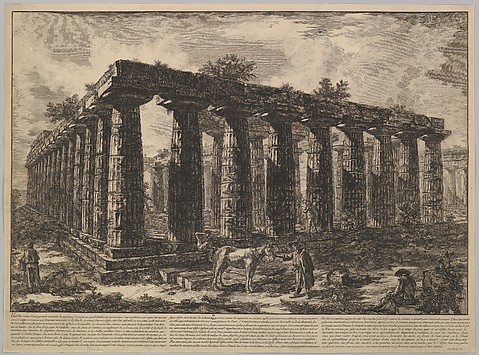
View showing the remains of a large enclosure of columns..., from Différentes vues de quelques Restes de trois grands Edifices qui subsistent encore dans le milieu de l'ancienne Ville de Pesto autrement Posidonia qui est située dans la Lucanie (Different views of some of the remains of three great edifces that still exist at teh center of the ancient city of Pesto, or Posidonia [Paestum], which is siutated in Lucania), Giovanni Battista Piranesi, ca. 1748Giovanni Battista PiranesiView showing the remains of a large enclosure of columns..., from Différentes vues de quelques Restes de trois grands Edifices qui subsistent encore dans le milieu de l'ancienne Ville de Pesto autrement Posidonia qui est située dans la Lucanie (Different views of some of the remains of three great edifces that still exist at teh center of the ancient city of Pesto, or Posidonia [Paestum], which is siutated in Lucania)ca. 1748Metropolitní muzeum umění
Parte di ampio magnifico Porto all'uso degli antichi Romani, ove si scuopre l'interno della gran Piazza pel Comercio... (Part of a spacious and magnificent Harbor for the use of the ancient Romans opening onto a large market square...), from "Opere Varie di Archiettura, prospettive, grotteschi, antichità; inventate, ed incise da Giambattista Piranesi Architetto Veneziano" (Various Works of Architecture, perspectives, grotesques, and antiquities; designed and etched by Giambattista Piranesi, Venetian Architect), Giovanni Battista Piranesi, ca. 1749–50Giovanni Battista PiranesiParte di ampio magnifico Porto all'uso degli antichi Romani, ove si scuopre l'interno della gran Piazza pel Comercio... (Part of a spacious and magnificent Harbor for the use of the ancient Romans opening onto a large market square...), from "Opere Varie di Archiettura, prospettive, grotteschi, antichità; inventate, ed incise da Giambattista Piranesi Architetto Veneziano" (Various Works of Architecture, perspectives, grotesques, and antiquities; designed and etched by Giambattista Piranesi, Venetian Architect)ca. 1749–50Metropolitní muzeum umění
Plate 3: Inscriptions on Antiquities outside Rome with Index of Plates, from "Antichità Romane de' Tempi della Repubblica, e de' primi Imperatori", Giovanni Battista Piranesi, ca. 1748Giovanni Battista PiranesiPlate 3: Inscriptions on Antiquities outside Rome with Index of Plates, from "Antichità Romane de' Tempi della Repubblica, e de' primi Imperatori"ca. 1748Metropolitní muzeum umění
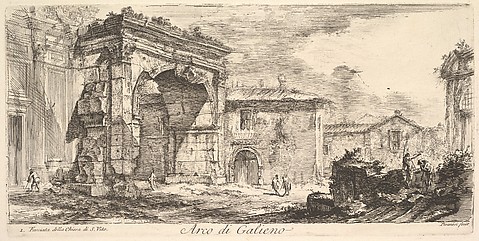
Arch of Galienus. 1. Façade od the Church of S. Vito (Arco di Galieno. 1. Facciata della Chiesa di S. Vito), from "Alcune Vedute di Archi Trionfali ed altri monumenti inalzati da Romani parte di quali se veggono in Roma e parte per l'Italia", Giovanni Battista Piranesi, ca. 1748Giovanni Battista PiranesiArch of Galienus. 1. Façade od the Church of S. Vito (Arco di Galieno. 1. Facciata della Chiesa di S. Vito), from "Alcune Vedute di Archi Trionfali ed altri monumenti inalzati da Romani parte di quali se veggono in Roma e parte per l'Italia"ca. 1748Metropolitní muzeum umění
Plate 20: Tomb of Caecilia Metella called the Capo di Bove (Ox Head) (Sepolcro di Metela detto Capo di Bove), from "Alcune Vedute di Archi Trionfali ed altri monumenti inalzati da Romani parte di quali se veggono in Roma e parte per l'Italia" (Some Views of Triumphal Arches and other monuments erected by the Romans, some of which are in Rome and some elsewhere in Italy), Giovanni Battista Piranesi, ca. 1748Giovanni Battista PiranesiPlate 20: Tomb of Caecilia Metella called the Capo di Bove (Ox Head) (Sepolcro di Metela detto Capo di Bove), from "Alcune Vedute di Archi Trionfali ed altri monumenti inalzati da Romani parte di quali se veggono in Roma e parte per l'Italia" (Some Views of Triumphal Arches and other monuments erected by the Romans, some of which are in Rome and some elsewhere in Italy)ca. 1748Metropolitní muzeum umění
Section of column base from the Temple of Fortuna Virilis (Tempio della Fortuna Virile), from "Le Antichità Romane", Giovanni Battista Piranesi, 1756Giovanni Battista PiranesiSection of column base from the Temple of Fortuna Virilis (Tempio della Fortuna Virile), from "Le Antichità Romane"1756Metropolitní muzeum umění
Calavera of Francisco Madero, from Calavera Maderista, José Guadalupe Posada, 1944 (printed)José Guadalupe PosadaCalavera of Francisco Madero, from Calavera Maderista1944 (printed)Národní galerie ve Washingtonu
Plate 10: Ruins of the Temple of Jupiter Stator (Jupiter the Supporter). 1. Temple of Antoninus and Faustina. 2. Temple of Peace. (Vestigi del Tempio di Giove Statore. 1. Tempio d'Antonino e Faustina. 2. Tempio della Pace.), from "Antichità Romane de' Tempi della Repubblica, e de' primi Imperatori", Giovanni Battista Piranesi, ca. 1748Giovanni Battista PiranesiPlate 10: Ruins of the Temple of Jupiter Stator (Jupiter the Supporter). 1. Temple of Antoninus and Faustina. 2. Temple of Peace. (Vestigi del Tempio di Giove Statore. 1. Tempio d'Antonino e Faustina. 2. Tempio della Pace.), from "Antichità Romane de' Tempi della Repubblica, e de' primi Imperatori"ca. 1748Metropolitní muzeum umění
Plate 23: Amphitheater of Pola in Istria near the sea (Anfiteatro di Pola in Istria vicino al mare), from "Alcune Vedute di Archi Trionfali ed altri monumenti inalzati da Romani parte di quali se veggono in Roma e parte per l'Italia" (Some Views of Triumphal Arches and other monuments erected by the Romans, some of which are in Rome and some elsewhere in Italy), Giovanni Battista Piranesi, ca. 1748Giovanni Battista PiranesiPlate 23: Amphitheater of Pola in Istria near the sea (Anfiteatro di Pola in Istria vicino al mare), from "Alcune Vedute di Archi Trionfali ed altri monumenti inalzati da Romani parte di quali se veggono in Roma e parte per l'Italia" (Some Views of Triumphal Arches and other monuments erected by the Romans, some of which are in Rome and some elsewhere in Italy)ca. 1748Metropolitní muzeum umění
Ancient Altar on which sacrifices were performed in antiquity, surrounded by other ruins (Ara antica sopra la quale si facevano anticamente i sagrifizi, con altre ruine all'intorno), from "Prima Parte di Architettura, e Prospettive", Giovanni Battista Piranesi, ca. 1750Giovanni Battista PiranesiAncient Altar on which sacrifices were performed in antiquity, surrounded by other ruins (Ara antica sopra la quale si facevano anticamente i sagrifizi, con altre ruine all'intorno), from "Prima Parte di Architettura, e Prospettive"ca. 1750Metropolitní muzeum umění
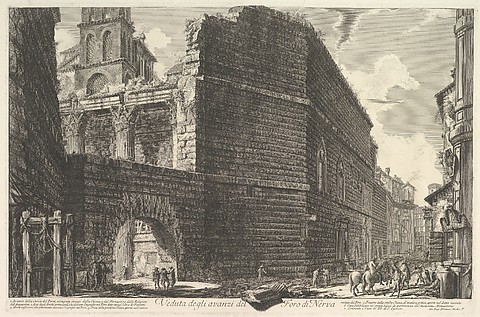
Veduta degli avanzi del Foro di Nerva, l'arcade et la muraille (The Forum of Augustus [erroneously called the Forum of Nerva]), Giovanni Battista Piranesi, 1757Giovanni Battista PiranesiVeduta degli avanzi del Foro di Nerva, l'arcade et la muraille (The Forum of Augustus [erroneously called the Forum of Nerva])1757Metropolitní muzeum umění
View of a courtyard with a loggia, fountains, statues, and other ornaments (Prospetto d'un regio Cortile nel cui mezzo vi stà una Loggia...), from "Prima Parte di Architettura, e Prospettive", Giovanni Battista Piranesi, ca. 1750Giovanni Battista PiranesiView of a courtyard with a loggia, fountains, statues, and other ornaments (Prospetto d'un regio Cortile nel cui mezzo vi stà una Loggia...), from "Prima Parte di Architettura, e Prospettive"ca. 1750Metropolitní muzeum umění
The Piazza della Rotonda, with the Pantheon and Obelisk (Veduta della Piazza della Rotonda), from "Vedute di Roma", Giovanni Battista Piranesi, ca. 1751Giovanni Battista PiranesiThe Piazza della Rotonda, with the Pantheon and Obelisk (Veduta della Piazza della Rotonda), from "Vedute di Roma"ca. 1751Metropolitní muzeum umění
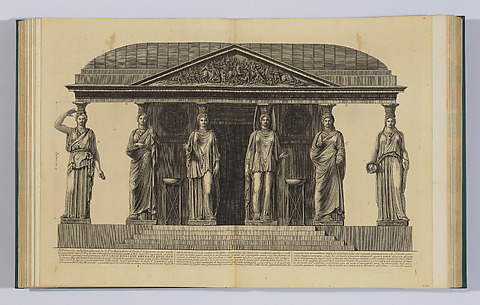
Group of caryatids, from "Vasi, candelabri, cippi, sarcofagi, tripodi, lucerne, ed ornamenti antichi disegnati ed incisi dal Cav. Gio. Batt. Piranesi, Vol. II" (Vases, candelabra, grave stones, sarcophagi, tripods, lamps, and ornaments designed and etched by Cavalieri Giovanni Battista Piranesi), Giovanni Battista Piranesi, 1778–80Giovanni Battista PiranesiGroup of caryatids, from "Vasi, candelabri, cippi, sarcofagi, tripodi, lucerne, ed ornamenti antichi disegnati ed incisi dal Cav. Gio. Batt. Piranesi, Vol. II" (Vases, candelabra, grave stones, sarcophagi, tripods, lamps, and ornaments designed and etched by Cavalieri Giovanni Battista Piranesi)1778–80Metropolitní muzeum umění
View of the Campo Vaccino (Roman Forum with the Temple of Castor and Pollux to right), from "Vedute di Roma" (Roman Views), part II, Giovanni Battista Piranesi, ca. 1750–78Giovanni Battista PiranesiView of the Campo Vaccino (Roman Forum with the Temple of Castor and Pollux to right), from "Vedute di Roma" (Roman Views), part IIca. 1750–78Metropolitní muzeum umění
Frontispiece from "Vedute di Roma", Giovanni Battista Piranesi, 1748Giovanni Battista PiranesiFrontispiece from "Vedute di Roma"1748Metropolitní muzeum umění
View of the Flavian Amphitheater, called the Colosseum, from "Vedute di Roma" (Roman Views), part II, Giovanni Battista Piranesi, ca. 1750–78Giovanni Battista PiranesiView of the Flavian Amphitheater, called the Colosseum, from "Vedute di Roma" (Roman Views), part IIca. 1750–78Metropolitní muzeum umění
Interior view of St. Peter's Basilica in the Vatican, from "Vedute di Roma" (Roman Views), Giovanni Battista Piranesi, ca. 1748Giovanni Battista PiranesiInterior view of St. Peter's Basilica in the Vatican, from "Vedute di Roma" (Roman Views)ca. 1748Metropolitní muzeum umění
Remains of the Temple of Castor and Pollux . . . ( Avanzo del Tempio di Castore e Polluce . . .), Giovanni Battista Piranesi, 18th centuryGiovanni Battista PiranesiRemains of the Temple of Castor and Pollux . . . ( Avanzo del Tempio di Castore e Polluce . . .)18th centuryMetropolitní muzeum umění
Don Chepito, José Guadalupe Posada, 1891-1899José Guadalupe PosadaDon Chepito1891-1899Národní galerie ve Washingtonu
Interior view of St. Peter's Basilica in the Vatican, from "Vedute di Roma" (Roman Views), Giovanni Battista Piranesi, ca. 1748Giovanni Battista PiranesiInterior view of St. Peter's Basilica in the Vatican, from "Vedute di Roma" (Roman Views)ca. 1748Metropolitní muzeum umění
The Gothic Arch, from "Carceri d'invenzione" (Imaginary Prisons), Giovanni Battista Piranesi, ca. 1749–50Giovanni Battista PiranesiThe Gothic Arch, from "Carceri d'invenzione" (Imaginary Prisons)ca. 1749–50Metropolitní muzeum umění
Plate 11: Temple of Janus (Tempio di Giano), from "Antichità Romane de' Tempi della Repubblica, e de' primi Imperatori", Giovanni Battista Piranesi, ca. 1748Giovanni Battista PiranesiPlate 11: Temple of Janus (Tempio di Giano), from "Antichità Romane de' Tempi della Repubblica, e de' primi Imperatori"ca. 1748Metropolitní muzeum umění
Hadrian's Villa: The Piazza d'Oro (Piazza of Gold) (Veduta degli Avanzi della Circonferenza delle antiche Fabbriche di una delle Piazze della Villa Adriana oggidi chiamata Piazza d'oro), Giovanni Battista Piranesi, ca. 1776Giovanni Battista PiranesiHadrian's Villa: The Piazza d'Oro (Piazza of Gold) (Veduta degli Avanzi della Circonferenza delle antiche Fabbriche di una delle Piazze della Villa Adriana oggidi chiamata Piazza d'oro)ca. 1776Metropolitní muzeum umění
Chimneypiece: Affronted griffons on the lintel and candelabra on the jambs (Ch. accompagnée de son plan et décorée d'une frise de griffons), from Diverse Maniere d'adornare i cammini ed ogni altra parte degli edifizi...(Different Ways of ornamenting chimneypieces and all other parts of houses), Giovanni Battista Piranesi, ca. 1769Giovanni Battista PiranesiChimneypiece: Affronted griffons on the lintel and candelabra on the jambs (Ch. accompagnée de son plan et décorée d'une frise de griffons), from Diverse Maniere d'adornare i cammini ed ogni altra parte degli edifizi...(Different Ways of ornamenting chimneypieces and all other parts of houses)ca. 1769Metropolitní muzeum umění
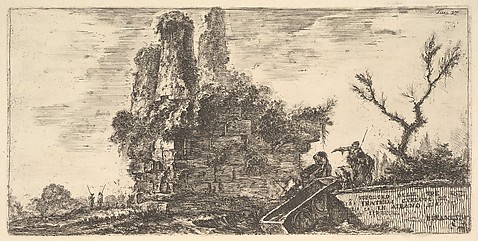
Plate 27: Tomb of the three Curiatii brothers in Albano (Sepolcro delle tre fratelli Curiati in Albano), from "Alcune Vedute di Archi Trionfali ed altri monumenti inalzati da Romani parte di quali se veggono in Roma e parte per l'Italia" (Some Views of Triumphal Arches and other monuments erected by the Romans, some of which are in Rome and some elsewhere in Italy), Giovanni Battista Piranesi, ca. 1748Giovanni Battista PiranesiPlate 27: Tomb of the three Curiatii brothers in Albano (Sepolcro delle tre fratelli Curiati in Albano), from "Alcune Vedute di Archi Trionfali ed altri monumenti inalzati da Romani parte di quali se veggono in Roma e parte per l'Italia" (Some Views of Triumphal Arches and other monuments erected by the Romans, some of which are in Rome and some elsewhere in Italy)ca. 1748Metropolitní muzeum umění
The Arch of Titus (Veduta dell'Arco di Tito), Giovanni Battista Piranesi, ca. 1760Giovanni Battista PiranesiThe Arch of Titus (Veduta dell'Arco di Tito)ca. 1760Metropolitní muzeum umění
The Fontana dell'Aqua Giulia (Vedute dell avanzo del Castello del'Aqua Giulia), Giovanni Battista Piranesi, ca. 1753Giovanni Battista PiranesiThe Fontana dell'Aqua Giulia (Vedute dell avanzo del Castello del'Aqua Giulia)ca. 1753Metropolitní muzeum umění
The so-called Temple of Fortuna Virilis (now Church of  S. Maria Egizziaca) (Veduta del Tempio della Fortuna Virile), Giovanni Battista Piranesi, ca. 1758Giovanni Battista PiranesiThe so-called Temple of Fortuna Virilis (now Church of S. Maria Egizziaca) (Veduta del Tempio della Fortuna Virile)ca. 1758Metropolitní muzeum umění
Plan and façade of the Temple of Fortuna Virilis (Tempio della Fortuna Virile), from "Le Antichità Romane", Giovanni Battista Piranesi, 1756Giovanni Battista PiranesiPlan and façade of the Temple of Fortuna Virilis (Tempio della Fortuna Virile), from "Le Antichità Romane"1756Metropolitní muzeum umění
Plate 3: Ancient mausoleum erected for the ashes of a Roman emperor (Mausoleo antico eretto per le ceneri d'un imperadore romano), from "Part one of architecture and perspectives: drawn and etched by Gio. Batt'a Piranesi, Venetian Architect: dedicated to Nicola Giobbe" (Prima parte di Architetture, e prospettive inventate, ed incise da Gio. Batt'a Piranesi Architetto Veneziano dedicate al Sig. Nicola Giobbe), Giovanni Battista Piranesi, 1743Giovanni Battista PiranesiPlate 3: Ancient mausoleum erected for the ashes of a Roman emperor (Mausoleo antico eretto per le ceneri d'un imperadore romano), from "Part one of architecture and perspectives: drawn and etched by Gio. Batt'a Piranesi, Venetian Architect: dedicated to Nicola Giobbe" (Prima parte di Architetture, e prospettive inventate, ed incise da Gio. Batt'a Piranesi Architetto Veneziano dedicate al Sig. Nicola Giobbe)1743Metropolitní muzeum umění
Title page: Volume IV, "The Antiquities of Rome by Giambatista Piranesi, Venetian Architect (...), from "Roman Antiquities" (Le Antichità Romane), Giovanni Battista Piranesi, 1756Giovanni Battista PiranesiTitle page: Volume IV, "The Antiquities of Rome by Giambatista Piranesi, Venetian Architect (...), from "Roman Antiquities" (Le Antichità Romane)1756Metropolitní muzeum umění
The smaller harbor, called the Porto di Ripetta (Veduta del Porto di Ripetta), Giovanni Battista Piranesi, ca. 1753Giovanni Battista PiranesiThe smaller harbor, called the Porto di Ripetta (Veduta del Porto di Ripetta)ca. 1753Metropolitní muzeum umění
Assault on the Train from Cuernavaca by those execrable bandit Zapatistas (Asalto al tren de Cuernavaca por los excecrables bandidos Zapatistas), José Guadalupe Posada, printed 1910José Guadalupe PosadaAssault on the Train from Cuernavaca by those execrable bandit Zapatistas (Asalto al tren de Cuernavaca por los excecrables bandidos Zapatistas)printed 1910Muzeum moderního umění
Ancient school built according to the Egyptian and Greek manners (Scuola antica architettata all'Egiziana e alla Greca), Giovanni Battista Piranesi, 1750Giovanni Battista PiranesiAncient school built according to the Egyptian and Greek manners (Scuola antica architettata all'Egiziana e alla Greca)1750Metropolitní muzeum umění
The Band (La Banda) from 25 Prints of José Guadalupe Posada, José Guadalupe Posada, published 1942José Guadalupe PosadaThe Band (La Banda) from 25 Prints of José Guadalupe Posadapublished 1942Muzeum moderního umění
El Jorobado - Segunda Parte (The Hunchback - Part Two) from Teatro Infantil: colección de comedias para representarse por niños o titeres (Children's Theater: A Collection of Comedies to be Performed by Children or Puppets), José Guadalupe Posada, published 1918José Guadalupe PosadaEl Jorobado - Segunda Parte (The Hunchback - Part Two) from Teatro Infantil: colección de comedias para representarse por niños o titeres (Children's Theater: A Collection of Comedies to be Performed by Children or Puppets)published 1918Muzeum moderního umění
The Medical Consultation (El Consultorio Medical) from 25 Prints of José Guadalupe Posada, José Guadalupe Posada, published 1942José Guadalupe PosadaThe Medical Consultation (El Consultorio Medical) from 25 Prints of José Guadalupe Posadapublished 1942Muzeum moderního umění
La Rosa Encantada - Primera Parte (The Enchanted Rose - Part One) from Teatro Infantil: colección de comedias para representarse por niños o titeres (Children's Theater: A Collection of Comedies to be Performed by Children or Puppets), José Guadalupe Posada, c. 1906, published 1918José Guadalupe PosadaLa Rosa Encantada - Primera Parte (The Enchanted Rose - Part One) from Teatro Infantil: colección de comedias para representarse por niños o titeres (Children's Theater: A Collection of Comedies to be Performed by Children or Puppets)c. 1906, published 1918Muzeum moderního umění
Conversation of the Good Calaveras (Coloquio de buenas calaveras), José Guadalupe PosadaJosé Guadalupe PosadaConversation of the Good Calaveras (Coloquio de buenas calaveras)Muzeum moderního umění
Calavera of the Press (Calavera de la prensa), José Guadalupe Posada, published 1919José Guadalupe PosadaCalavera of the Press (Calavera de la prensa)published 1919Muzeum moderního umění
How to Scare Ghosts (Por Finjir Espantos) from 25 Prints of José Guadalupe Posada, José Guadalupe Posada, plate c. 1890-1910, published 1942José Guadalupe PosadaHow to Scare Ghosts (Por Finjir Espantos) from 25 Prints of José Guadalupe Posadaplate c. 1890-1910, published 1942Muzeum moderního umění
139