Claude LorrainFrancie, 1600–1682
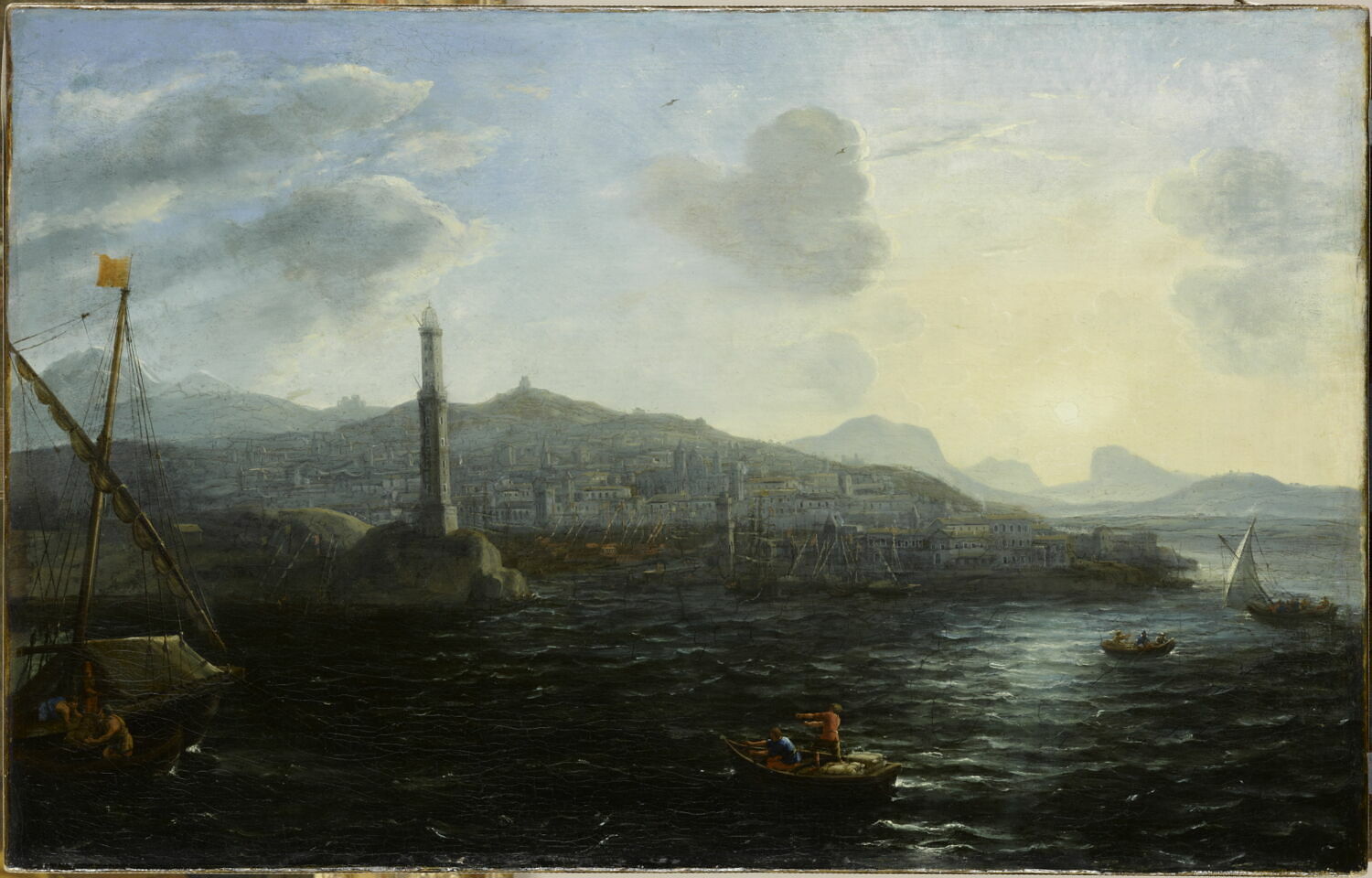
Morning in the Harbour
Je k vidění?
Momentálně není vystaveno
Kde je teď „Morning in the Harbour“? Sbírka: Ermitáž, Petrohrad. Momentálně není vystaveno. Ověřeno 29. srpna 2026.

Petrohrad, Rusko
Patří do sbírky, ale momentálně není vystaveno.
- Ověřeno
- Tento stav platí od
- Zdroj
- Muzeum
O obrazu
Claude Lorrain painted Morning in the Harbour in the 1630s; it is in the Hermitage, Saint Petersburg. The canvas repeats his 1637 Seaport composition with changes to boats, figures and architectural detail. A simplified Roman arch and portico stand before medieval towers and an Egyptian pyramid, mixing imagined buildings with actual ruins. Soft handling marks the painting's early place in his career. Light reflected from the architecture returns to the water. Lorrain made another version in 1674, now in Munich's Alte Pinakothek.
Text muzea v jazyce ruština
Картина является авторским повторением знаменитой "Морской гавани", исполненной в 1637 г. (Королевское собрание, Лондон). Полотну свойственна мягкость живописной манеры, характерная для первой половины творчества Лоррена. При одинаковой композиции произведения различаются в деталях (иное расположение и количество судов, разный стаффаж и т. п.). Арка - один из главных элементов изображения - значительно упрощена, что мастер часто делал, повторяя свои более ранние пейзажи. В марине соединены архитектурные фантазии и реальные руины: римская арка и портик, за ними - средневековые башни, а еще дальше - египетская пирамида. Но строения лишь оттеняют главную тему - моря и солнечного света, который, отражаясь от великолепного архитектурного декора, возвращается на водную гладь. Ещё одно повторение было написано Лорреном в 1674 г. (Старая Пинакотека, Мюнхен).
Ermitáž
Podrobnosti
- Inventární číslo
- ГЭ-1782
V katalogu
Zdroje
- Ermitáž
- Obrázek: Ermitáž — Museum open access
V životě: Claude Lorrain
Celý životopis1620s
Stops in Marseille, Genoa and Venice
On his travels Claude stayed briefly in Marseille, Genoa and Venice and had the opportunity to study nature in France, Italy and Bavaria.
late 1620s
Meets Joachim von Sandrart
In the late 1620s Claude met Joachim von Sandrart, who would write one of his early biographies and lived with him for a while; Sandrart reported that Claude already had a habit of sketching outdoors, particularly at dawn and dusk, and of making oil studies on the spot.
1633–1635
Growing fame: commissions from the French ambassador and Philip IV
Claude’s growing reputation was shown by commissions from the French ambassador in Rome (1633) and from Philip IV of Spain (1634–35).
1634
Admitted to the Academy of Saint Luke
In 1634 Claude was admitted to the Academy of Saint Luke.
1635–1638
Pope Urban VIII commissions four paintings
According to Baldinucci, Cardinal Guido Bentivoglio, impressed by the two landscapes Claude painted for him, recommended the artist to Pope Urban VIII; four paintings were made for the Pope in 1635–38, two large and two small on copper.
1639
Philip IV commissions seven paintings
In 1639 Philip IV of Spain commissioned seven paintings from Claude, now in the Prado, among them two landscapes with hermits.