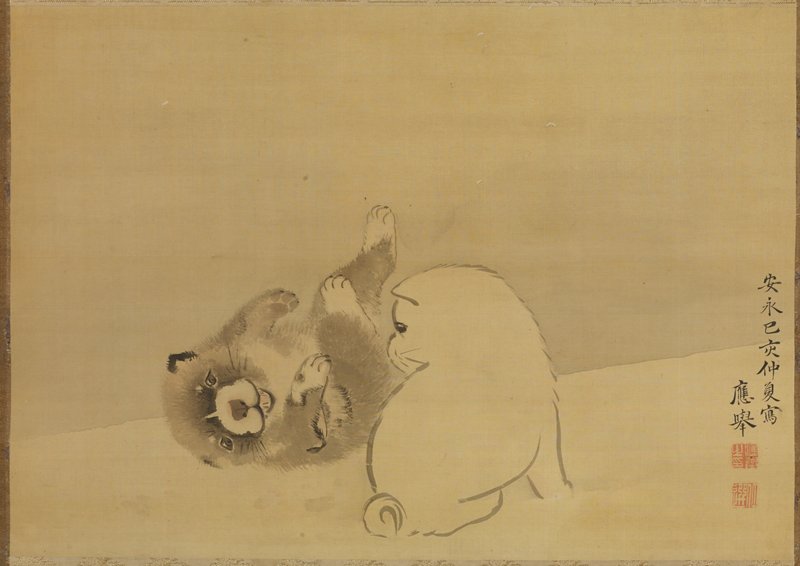
 Maruyama ŌkyoJaponsko, 1733–1795
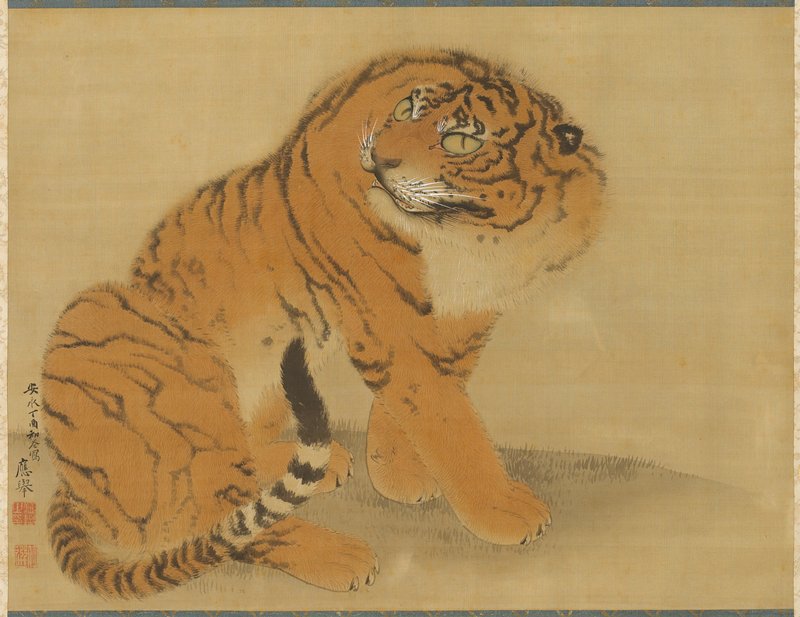
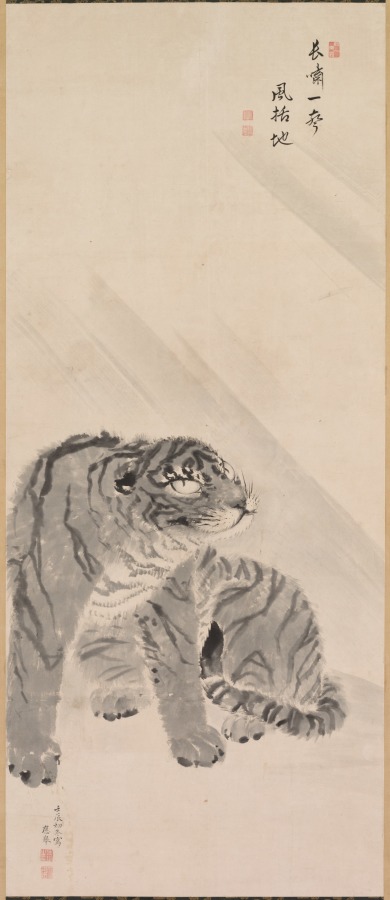
Tiger in Wind
Je k vidění?
Momentálně není vystaveno
Kde je teď „Tiger in Wind“? Sbírka: Clevelandské muzeum umění, Cleveland. Momentálně není vystaveno. Ověřeno 9. listopadu 2026.

Cleveland, Spojené státy americké
Patří do sbírky, ale momentálně není vystaveno.
- Ověřeno
- Tento stav platí od
- Zdroj
- Muzeum
O obrazu
Tiger in Wind bears a signature claiming Maruyama Ōkyo and the year 1772, but this nineteenth-century painting at the Cleveland Museum of Art in Cleveland appears to imagine his relationship with patron Yūjō. Seals imply that the inscription is by the imperial prince and Buddhist abbot, who died in 1773. Its borrowed poetic line describes violent wind lashing the earth, associated with a tiger’s roar. Yūjō commissioned works from Ōkyo, but this picture seems to reconstruct their collaboration rather than preserve an authentic example.
Slovy muzea
The seals appended to the inscription on this painting suggest that the text was brushed by Yūjō (1723–1773), an imperial prince who became a Buddhist monk and was abbot of Enman'in at Miidera. The line is from a poem attributed to a Yuan dynasty poet, Yu Ruyu (dates unknown), and describes the sound of a fierce wind lashing the ground. Wind is associated with the roar of the tiger. Yūjō was Maruyama Ōkyo's most important patron as a young artist, and this painting has a signature asserting that Ōkyo created it in 1772, the year before Yūjō's death. While Yūjō produced a preface for a now famous set of handscrolls he commissioned Ōkyo to paint, and a number of Ōkyo's compositions for Enman'in survive, this work would appear to be one imagining their relationship, as opposed to a genuine piece.
Clevelandské muzeum umění
Podrobnosti
- Inventární číslo
- 1971.232
V katalogu
Zdroje
- Clevelandské muzeum umění
- Obrázek: Clevelandské muzeum umění — Museum open access