 Albrecht DürerNěmecko, 1471–1528
The Holy Trinity
Je k vidění?
Momentálně není vystaveno
Kde je teď „The Holy Trinity“? Sbírka: Clevelandské muzeum umění, Cleveland. Momentálně není vystaveno. Ověřeno 9. listopadu 2026.

Cleveland, Spojené státy americké
Patří do sbírky, ale momentálně není vystaveno.
- Ověřeno
- Tento stav platí od
- Zdroj
- Muzeum
O díle
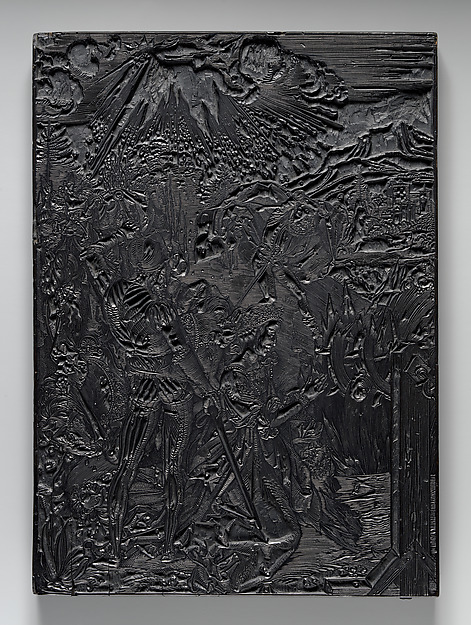
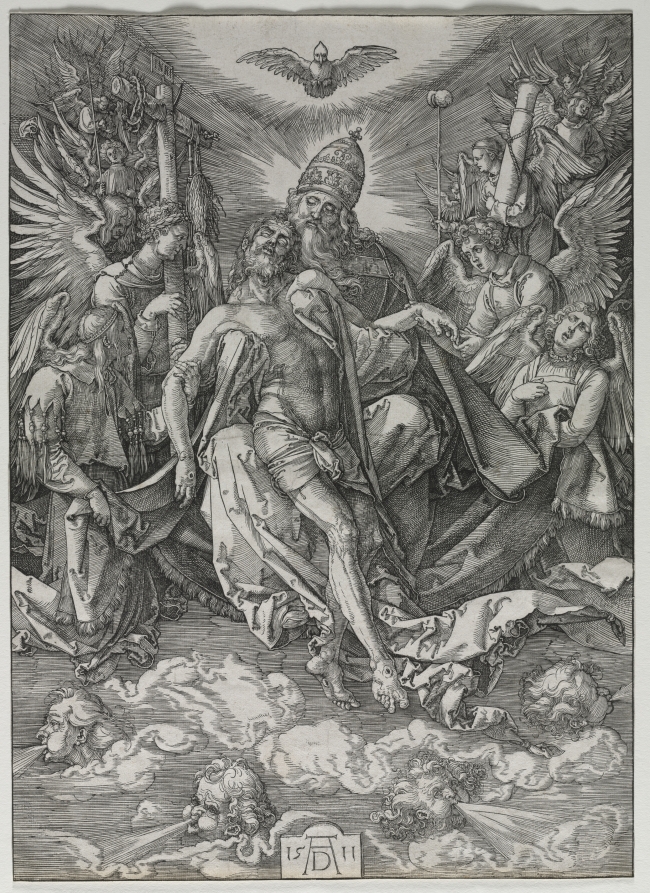
Albrecht Dürer's Holy Trinity, a woodcut made in 1511, is in the Cleveland Museum of Art, Cleveland. Parallel strokes, intersecting hatching and short marks are packed at different densities to produce many shades of tone. Their arrangement describes solid forms and depth within the scene. Dürer also leaves parts of the paper unprinted, using their white surface to brighten selected passages. These contrasts lend drama to the composition, while the changing spacing of the marks allows the woodcut to suggest gradual tonal transitions.
Slovy muzea
The Holy Trinity represents the pinnacle of Dürer's achievement in woodcut. Using a system of parallel lines, crosshatching, and dashes of varying densities, he attained a wide range of tone and an extremely subtle representation of three-dimensional forms and spatial depth. In addition, he utilized white areas of the paper to heighten parts of the composition for an intensely dramatic effect.
Clevelandské muzeum umění
Podrobnosti
- Inventární číslo
- 1926.106
V katalogu
Zdroje
- Clevelandské muzeum umění
- Obrázek: Clevelandské muzeum umění — Museum open access
V životě: Albrecht Dürer
Celý životopis1507–1528 · Působiště
Nuremberg
1509
Elected to Nuremberg's Greater Council
Dürer was elected a nominated member of Nuremberg's Greater Council; in that role he may have taken part in the city's artistic projects.
1509
Buys a large house in Nuremberg
Dürer bought a large house from the heirs of the astronomer Bernhard Walther; it housed his workshop, and his widow lived there after his death until 1539.
1511
Publishes the Great Passion and the Life of the Virgin
Dürer published two woodcut series as books, the Great Passion and the Life of the Virgin, with a second edition of the Apocalypse and the 37 woodcuts of the Little Passion. His post-Venetian woodcuts developed chiaroscuro modelling.
1512
Emperor Maximilian I becomes his chief patron
From 1512 Emperor Maximilian I was Dürer's chief patron. For him Dürer and his workshop produced the Triumphal Arch, a giant woodcut 295 × 357 cm printed from 192 blocks and modelled on the triumphal arches of ancient Rome.
3 January 1512
Nuremberg's privilege against forgeries
Nuremberg's city council granted Dürer a privilege for the sale of his prints, with penalties for anyone who forged them.