Frank StellaSpojené státy americké, 1936–2024
Sunapee
Je k vidění?
Momentálně není vystaveno
Kde je teď „Sunapee“? Sbírka: Národní galerie ve Washingtonu, Washington, D.C. Momentálně není vystaveno. Ověřeno 2. listopadu 2026.

Washington, D.C., Spojené státy americké
Patří do sbírky, ale momentálně není vystaveno.
- Ověřeno
- Tento stav platí od
- Zdroj
- Muzeum
Podrobnosti
- Inventární číslo
- 1981.5.263
Co zobrazuje
V katalogu
Zdroje
- Národní galerie ve Washingtonu
- Obrázek: Národní galerie ve Washingtonu — © the artist or rights holder
V životě: Frank Stella
Celý životopis1960s
Travels in the Middle East
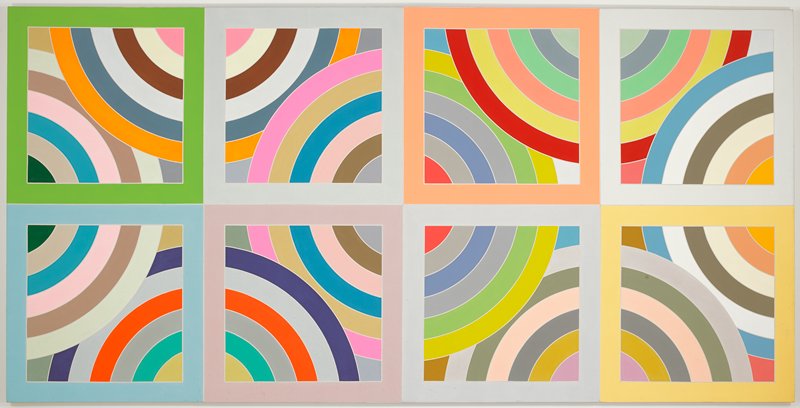
He visits circular-plan cities in the Middle East and is especially intrigued by the arches and decorative patterns he sees in the architecture and art of Iran; these cities will later give their names to works of the Protractor series.
27. června 1968 – 6. října 1968
Exhibition: 4. documenta
1970
Retrospective at the Museum of Modern Art
The Museum of Modern Art in New York presents a retrospective of Stella's work, making him the youngest artist to receive one.
1970
Boycott of the American Pavilion in Venice
Invited to the 35th Venice Biennale, Stella joins a boycott by artists opposed to the US wars in Vietnam and Cambodia and withdraws his works from display at the American Pavilion.
1970s
Introduces relief: “maximalist” painting
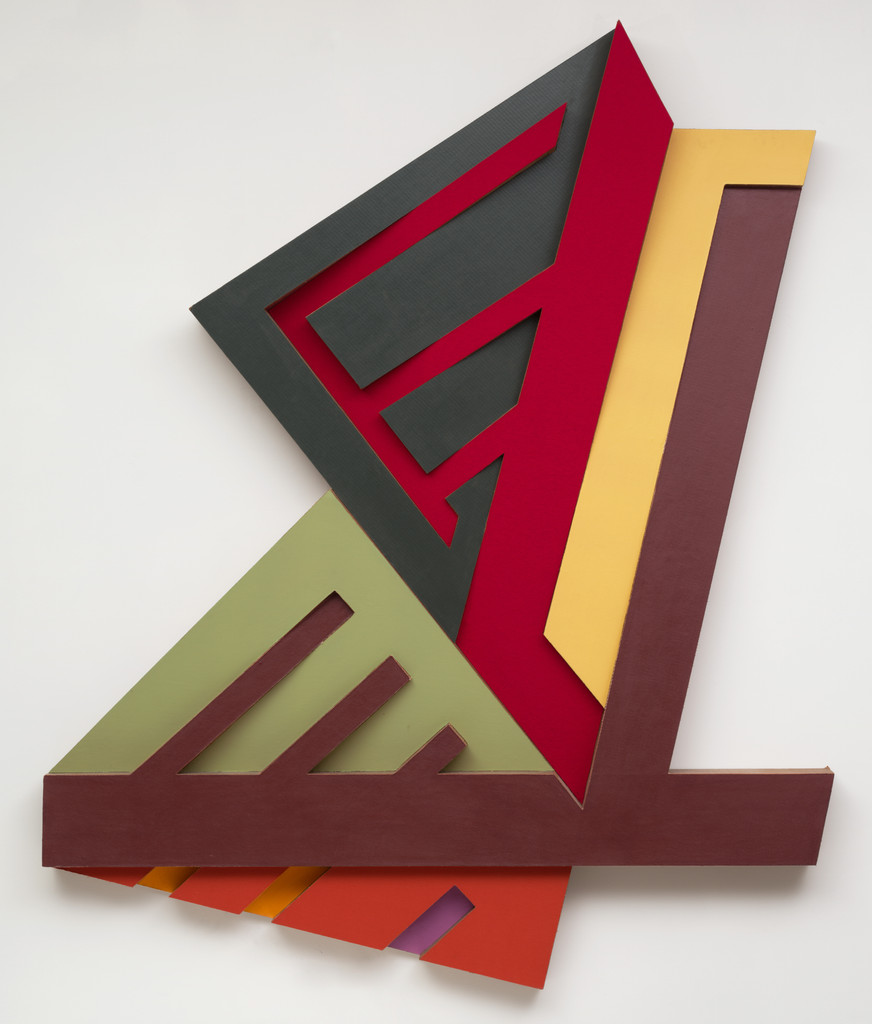
He brings relief into his work and calls such painting “maximalist” for its sculptural qualities; in the Eccentric Polygon series the shaped canvases take on still less regular forms and collage elements appear, such as pieces of canvas glued to plywood, and aluminum then becomes the main support of his paintings.
mid-1970s
Abandons rational structures
In the mid-1970s Stella abandons rational structures and explores new, individualistic paths: solid planes give way to squiggles, lattices and swirls of color, composite elements project from his canvases in all directions, and his wall-mounted paintings evolve into outlandish sculptures. Through the 1970s and 1980s his minimalism becomes baroque.