Snyders, FransVlámsko, 1579–1657
Still Life with Grapes and Game
Je k vidění?
Ano, právě vystaveno
Kde je teď „Still Life with Grapes and Game“? Národní galerie ve Washingtonu, Sál 44 · Západní budova, hlavní podlaží, Washington, D.C. Ano, právě vystaveno. Ověřeno 2. listopadu 2026.

Washington, D.C., Spojené státy americké
SálSál 44 · Západní budova, hlavní podlaží
Právě otevřeno· do 17:00
Veřejně vystaveno.
- Ověřeno
- Tento stav platí od
- Zdroj
- Muzeum
O obrazu
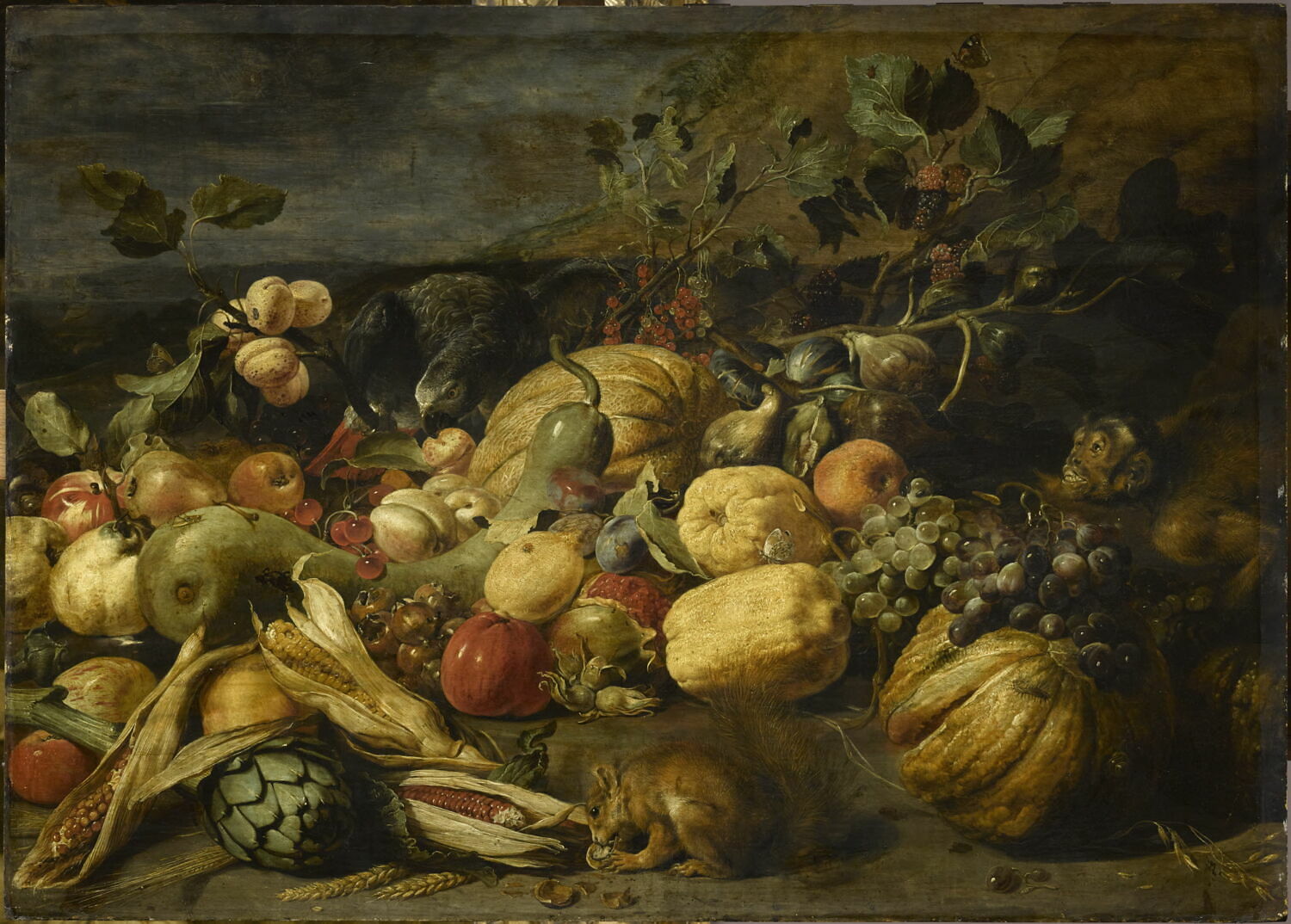
Frans Snyders painted Still Life with Grapes and Game around 1630; it is in Washington's National Gallery of Art. A basket of grapes occupies the centre of a red-covered table. Figs fill a raised dish, while dead birds crowd the right side. A row of finches is held between split sticks projecting beyond the table edge. On view in gallery M-044.
Podrobnosti
- Inventární číslo
- 2006.22.1
Co zobrazuje
V katalogu
Zdroje
- Národní galerie ve Washingtonu
- Obrázek: Národní galerie ve Washingtonu — Museum open access
V životě: Snyders, Frans
Celý životopis1609–1657 · Působiště
Antwerp
1610–1640
A close collaboration with Rubens
From the 1610s Snyders works with Rubens, who admires his ability to render the textures of fur and skin and often has him paint animals, fruit and still life in his own pictures; the collaboration is particularly close between 1610 and 1640. At first Rubens himself sketches the whole composition in oils and marks the place for Snyders’s contribution (“The Recognition of Philopoemen”, regarded as the first Baroque still life with figures), while in “Prometheus Bound” it is the reverse: Snyders makes the sketch, leaving space for Rubens’s figure. Contemporaries had difficulty telling their hands apart in joint works, and after Rubens’s death Snyders was one of the appraisers of the inventory of his collection.
1628
Becomes dean of the Guild of St Luke
In 1628 Snyders becomes dean of the Antwerp Guild of St Luke, which he had joined as a master in 1602.
1629
Jan Fyt joins as pupil, later assistant
From 1629 Jan Fyt studies with Snyders and then serves as his assistant. The master’s pupils are believed also to include Nicasius Bernaerts, Peter van Boucle (no written confirmation of his apprenticeship in Antwerp exists), Juriaen Jacobsze, Jan Roos and Paul de Vos.