 George BellowsSpojené státy americké, 1882–1925
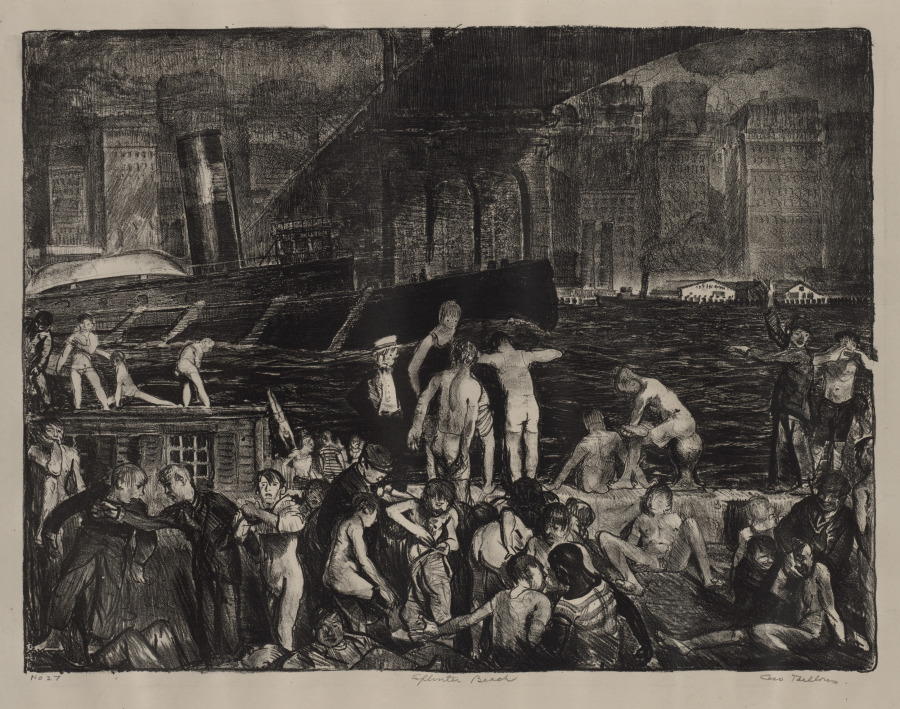
Splinter Beach
Je k vidění?
Momentálně není vystaveno
Kde je teď „Splinter Beach “? Sbírka: Clevelandské muzeum umění, Cleveland. Momentálně není vystaveno. Ověřeno 2. listopadu 2026.

Cleveland, Spojené státy americké
Patří do sbírky, ale momentálně není vystaveno.
- Ověřeno
- Tento stav platí od
- Zdroj
- Muzeum
O díle
George Bellows made Splinter Beach in 1916; the print is in the Cleveland Museum of Art, Cleveland. East River docks provided unofficial recreation grounds for children from New York tenements. Bellows shows naked children without idealizing their circumstances. Fully dressed adults watch them, and the image includes disturbing sexual contact. Newspapers of his early New York years treated poor neighbourhoods as places lacking cleanliness and order. His treatment of sexual impropriety also reflects the coarse humour used in contemporary fictional portrayals of urban poverty.
Slovy muzea
During George Bellows’s first decade in New York City, starting in 1904, newspapers ran many stories about the “social problem” of the urban poor, reporting that the city’s tenement district lacked cleanliness and order. Drawn to this unvarnished side of city life, Bellows made several images of the public docks along the East River that were unofficial places of recreation for the city’s tenement children. Both Splinter Beach and River-Front feature, without sentimentality, children that display their nakedness unabashedly. Disturbingly, both images feature fully clothed adults observing or even touching children, as well as other sexual touching. Portrayals of sexual indecency in Bellows’s work aligned with the off-color humor often found in fictional representations of the urban poor of the time.
Clevelandské muzeum umění
Podrobnosti
- Inventární číslo
- 1936.582
V katalogu
Zdroje
- Clevelandské muzeum umění
- Obrázek: Clevelandské muzeum umění — Museum open access
V životě: George Bellows
Celý životopis23. dubna 1915
Daughter born: Jean Bellows
1916
A lithography press in his studio
He installs a lithography press in his studio and makes a significant contribution to establishing lithography as a fine art in the United States.
1918
The quarrel with Pennell: who may paint a war
The artist Joseph Pennell argues that, since Bellows did not witness the events he painted, he has no right to paint them; Bellows replies that he had not known Leonardo da Vinci “had a ticket to paint the Last Supper”.