Jackson PollockSpojené státy americké, 1912–1956
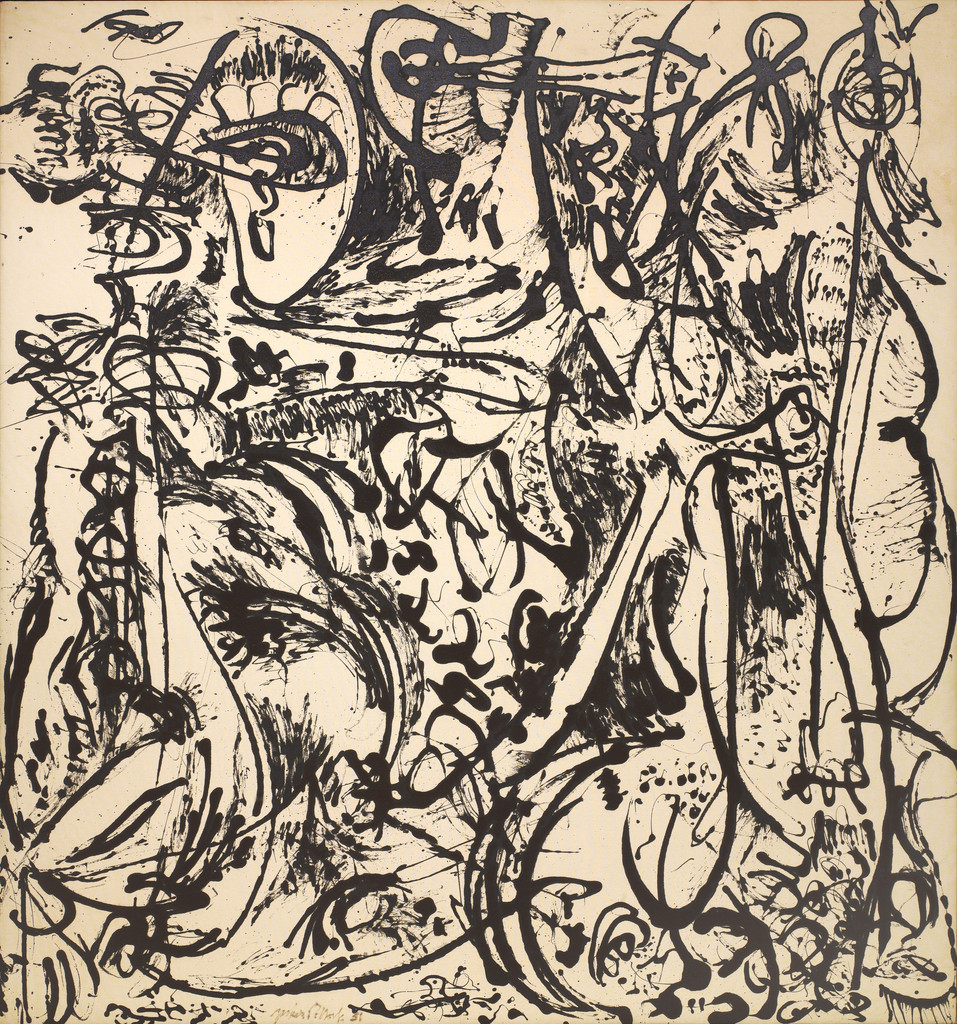
Number 14: Gray
Je k vidění?
Nevíme
Kde je teď „Number 14: Gray“? Sbírka: Galerie umění Yaleovy univerzity, New Haven. Zda je dnes vystaveno, nevíme.
New Haven, Spojené státy americké
Vlastník je znám, dnešní vystavení nikoli.
- Tento stav platí od
- Zdroj
- Muzeum
O díle
Jackson Pollock's classic poured paintings, made from 1947 to 1950, include several works in enamel on gesso-covered paper, of which Number 14: Gray is a particularly striking example. Pollock dripped the black enamel paint onto the surface while the gesso was still wet so that the paint bled into the chalky white ground, creating a silver-gray halo around the lines and pools of black. Pollock's pouring method was a breakthrough in his quest to avoid the illusionist space of traditional painting and create a total visual effect. Number 14 epitomizes Pollock's new working method; the paint literally merges with the ground where enamel and gesso meet. In this period, Pollock strove to free line from the representational image and make it a function of pure movement.
Galerie umění Yaleovy univerzity
Podrobnosti
- Inventární číslo
- 1980.13.74
V katalogu
Zdroje
- Galerie umění Yaleovy univerzity
- Obrázek: Galerie umění Yaleovy univerzity — Image: Yale University Art Gallery · In Copyright
V životě: Jackson Pollock
Celý životopis1946
Sees the work of Janet Sobel
In 1946 Pollock and the critic Clement Greenberg saw Janet Sobel's paintings at Guggenheim's gallery Art of This Century. Greenberg later wrote that Pollock admitted these pictures had made an impression on him.
1947
The start of “drip painting”
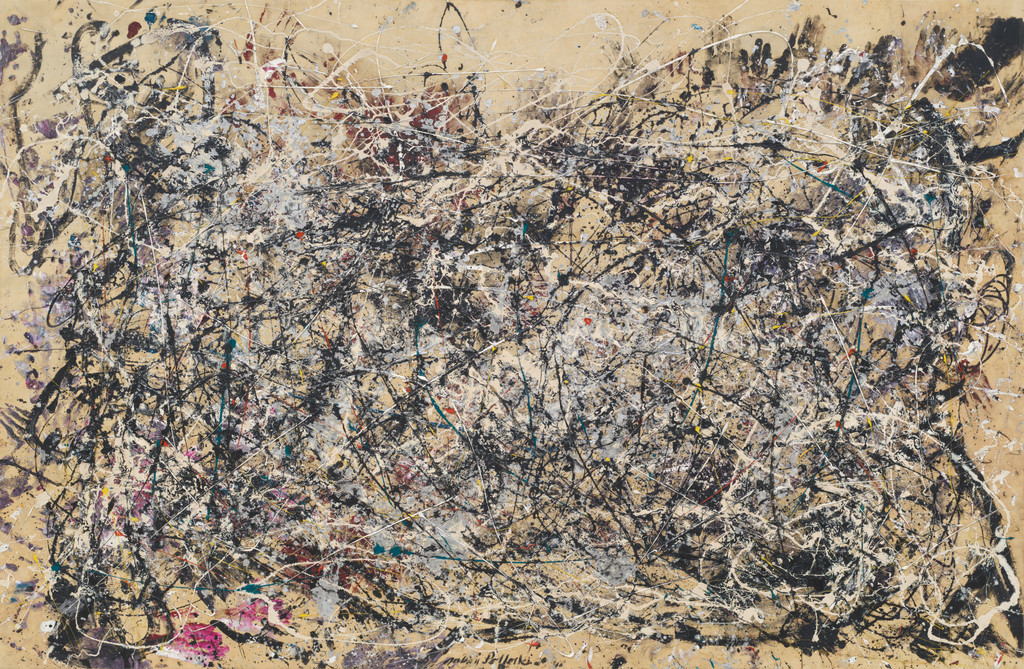
In 1947 Pollock began working on huge canvases laid out on the floor, splashing paint from brushes without touching the surface. He himself preferred the term “pouring technique”.
1948
A sensational show at Betty Parsons
Pollock's 1948 exhibition at the Betty Parsons Gallery was a sensation and a financial success. He was then able to get a larger studio.
8 August 1949
Life asks if he is the greatest living US painter
On 8 August 1949 Life published an article on Pollock under a headline asking whether he was the greatest living painter in the United States.
1950
Hans Namuth photographs and films Pollock at work
In 1950 the young photographer Hans Namuth photographed and filmed Pollock at work. Pollock had promised to start a new painting for the session but said it was already finished — then, as if realising it was not, he flung paint onto the canvas for about half an hour in an almost dancelike movement.
1950
“No. 12, 1949” at the Venice Biennale
Pollock's “No. 12, 1949”, a medium-sized drip painting, was shown in the United States Pavilion at the 1950 Venice Biennale.