ParmigianinoItálie, 1503–1540
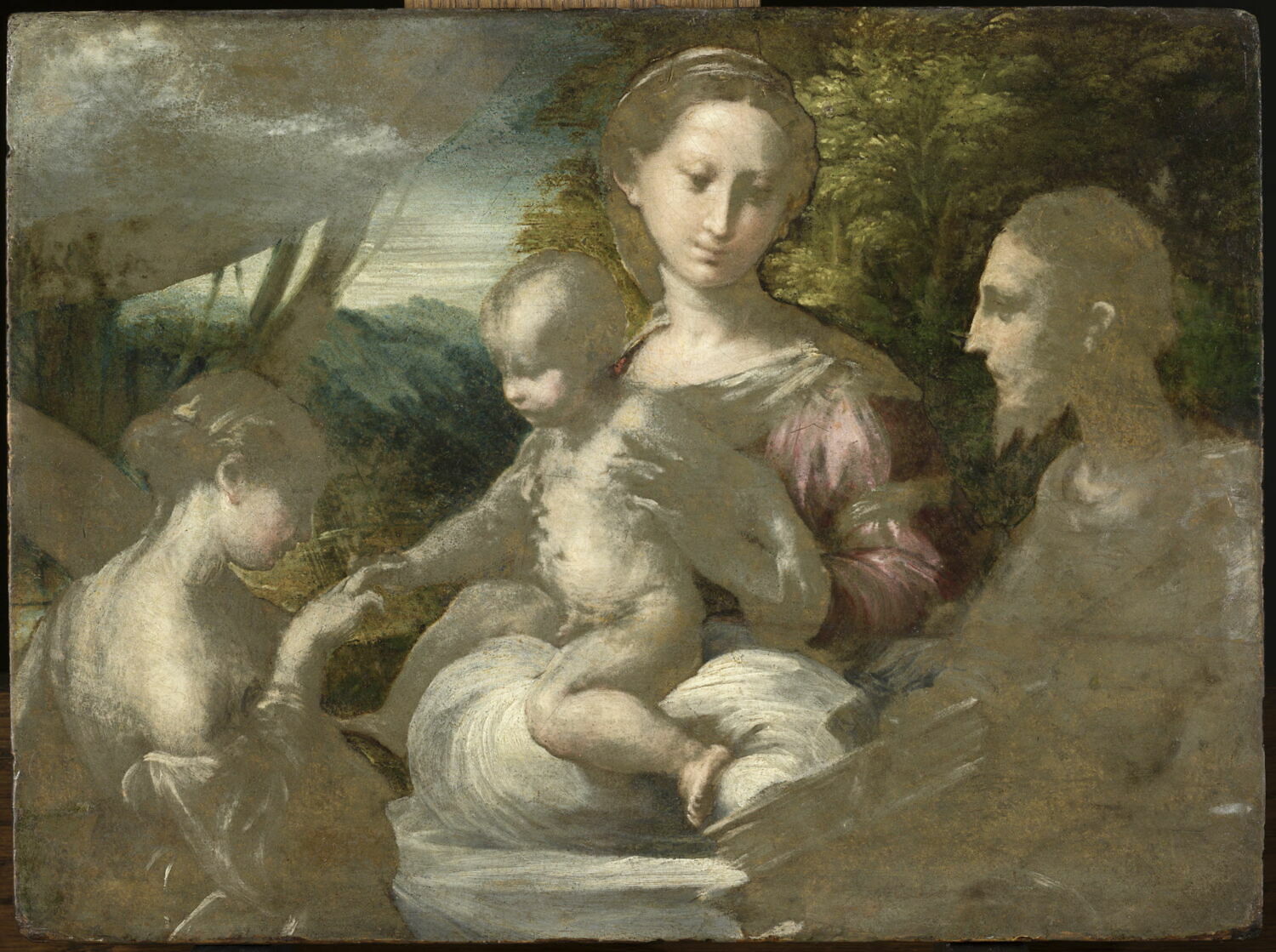
Nativity
Je k vidění?
Ano, právě vystaveno
Kde je teď „Nativity“? Courtauld Gallery, The Courtauld Gallery, Westminster. Ano, právě vystaveno. Ověřeno 23. listopadu 2026.
Zavřeno· otevírá v 10:00
Veřejně vystaveno.
- Ověřeno
- Tento stav platí od
- Zdroj
- Web muzea
O obrazu
Nativity or Rest on the Flight into Egypt is a c.1521–1522 oil on panel painting by Parmigianino, now in the Courtauld Gallery in London.
Its attribution as a youthful work by Parmigianino has not always been unanimous, being supported by Sydney Freedberg (1950), Ghidiglia Quintavalle (1963, 1968) and Di Giampaolo (1991) and opposed by Bernard Berenson (1907), Venturi (1926), Fröhlich-Bum (1921) and Copertini (1932, assigning it instead to Bertoia). Recent scholarship has tended to accept it by comparison with other early works such as Adoration of the Shepherds, with the exception of Rossi (1980), who according to Di Giampaolo argued it was a copy.
Číst dál
It passed through several famous collections such as Count Moritz von Fries's collection in Vienna, before being acquired by the English painter Thomas Lawrence in 1830. It was later acquired by the Cook collection in Richmond-upon-Thames, from which it was bought at auction at Christie's on 25 November 1966 by Count Antoine Seilern, who bequeathed it and the same artist's Virgin and Child to its present owner in 1978.
Podrobnosti
- Inventární číslo
- P.1978.PG.308
V katalogu
Historie vystavení
Vystaveno · The Courtauld Gallery
Courtauld Gallery · 23. 11. 2026 — nyní · Ověřeno
Zda bylo vystaveno, není známo
Courtauld Gallery · 13. 10. 2026 — 23. 11. 2026 · Nepotvrzeno
Zdroje
- Wikidata
- Obrázek: Courtauld Gallery — Parmigianino · Public domain · Wikimedia Commons
V životě: Parmigianino
Celý životopis1521
Sent to Viadana to escape the war
To keep him safe from the war between the French, Imperial and papal armies, Francesco was sent to Viadana together with the painter Girolamo Bedoli, who would later marry his cousin. There he painted two tempera panels: “Saint Francis” for the church of the Frati de' Zoccoli and “The Mystical Marriage of Saint Catherine” for San Pietro.
21 November 1522
Works alongside Correggio at San Giovanni Evangelista
From at least 21 November 1522 Parmigianino is documented at the church of San Giovanni Evangelista in Parma together with Correggio, Francesco Maria Rondani and Michelangelo Anselmi. In the dome he painted at least one putto, livelier and more impetuous than Correggio's, and around 1522–1523 he frescoed two side chapels.
summer 1524
Travels to Rome with his uncles
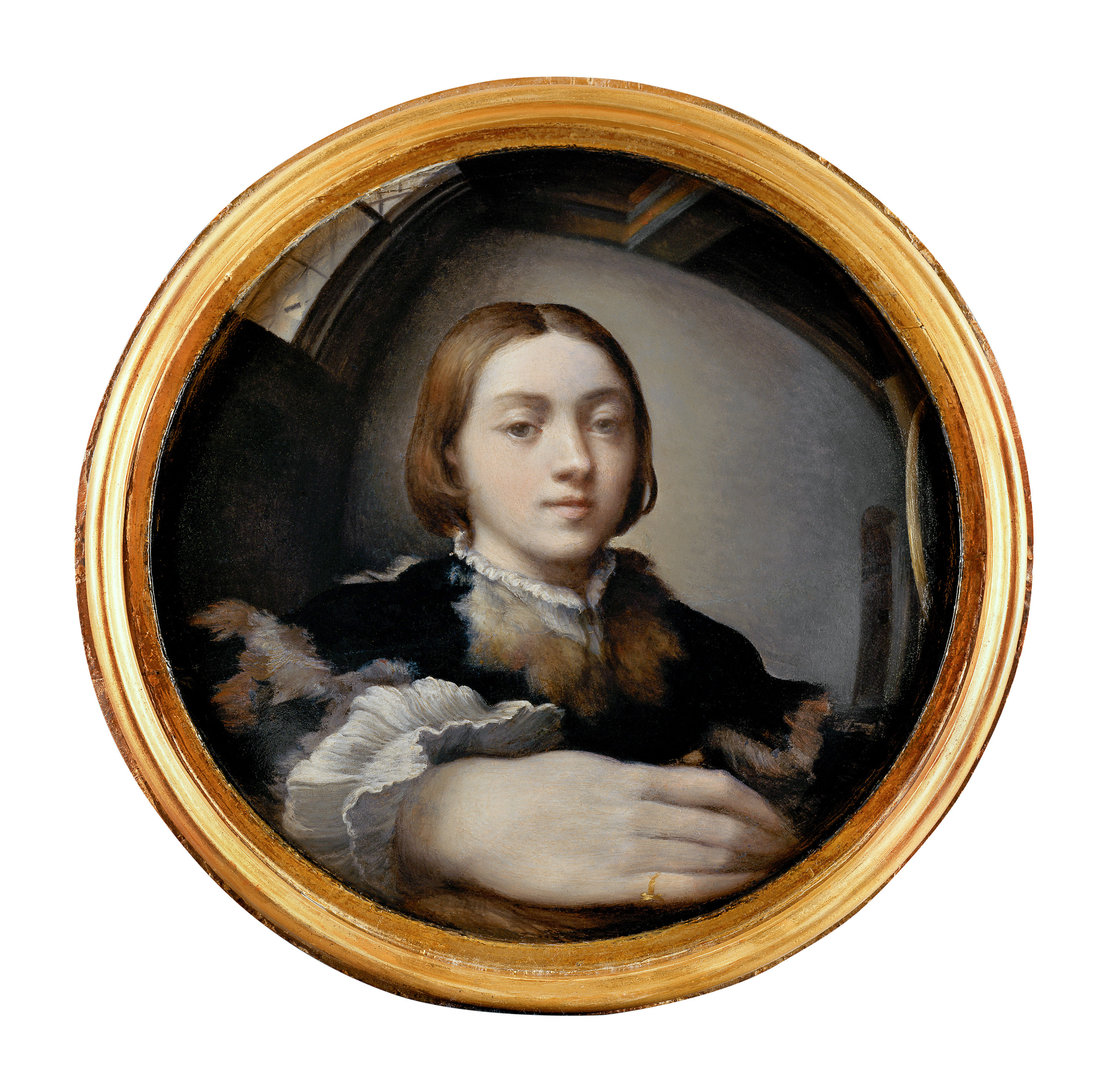
According to Vasari, on hearing Raphael and Michelangelo praised, Francesco longed to see Rome; his uncles approved and advised him to take some of his works to open doors to the lords and artists there. They arrived in Rome in the summer of 1524, and Parmigianino presented several paintings to Pope Clement VII, among them the “Self-Portrait in a Convex Mirror” painted on a wooden hemisphere.
1524–1527
Joins the circle of Raphael's pupils
In Rome Parmigianino grew close to Raphael's pupils working in the Vatican — Perino del Vaga, Baldassarre Peruzzi and Polidoro da Caravaggio — as well as Sebastiano del Piombo and Rosso Fiorentino; he copied the frescoes of Raphael's Stanze and the tapestry cartoons made for the Sistine Chapel. Vasari records that in Rome he was celebrated as “a Raphael reborn”.
1527
The Sack of Rome finds him at work
During the Sack of Rome by the landsknechts of Emperor Charles V, soldiers burst into the studio where Parmigianino was painting “The Vision of Saint Jerome” but harmed neither the pictures nor the artist. Soon, however, he had to abandon his lodgings and Rome, and he left the altarpiece with the church of Santa Maria della Pace.
1531
Commissioned to decorate Santa Maria della Steccata
In May 1531 Parmigianino was commissioned to fresco the church of Santa Maria della Steccata in praise of the Virgin, with the Coronation as the main scene, and undertook to finish within eighteen months; the work stalled again and again over irregular supplies and the church administration's dislike of his unusual design. Other accounts say the commission was for two altarpieces, of Saint Joseph and Saint John the Baptist. The confraternity advanced him a salary.