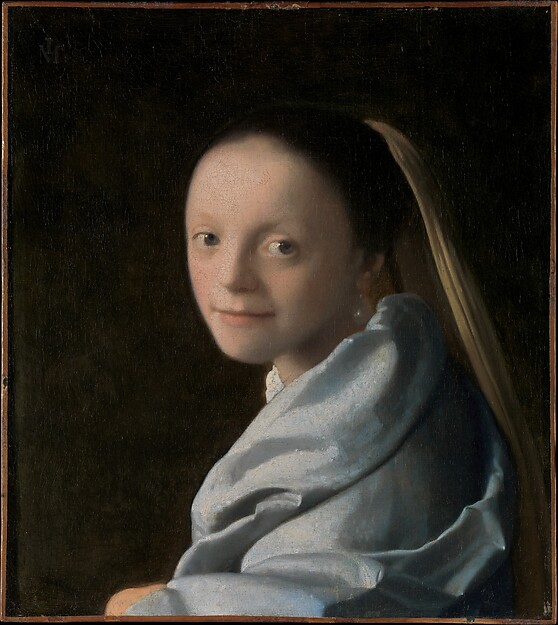
George Frederic WattsSpojené království, 1817–1904
Head of a Young Woman
Je k vidění?
Momentálně není vystaveno
Kde je teď „Head of a Young Woman“? Sbírka: Národní galerie ve Washingtonu, Washington, D.C. Momentálně není vystaveno. Ověřeno 2. listopadu 2026.

Washington, D.C., Spojené státy americké
Patří do sbírky, ale momentálně není vystaveno.
- Ověřeno
- Tento stav platí od
- Zdroj
- Muzeum
Podrobnosti
- Inventární číslo
- 1995.52.193
Co zobrazuje
V katalogu
Zdroje
- Národní galerie ve Washingtonu
- Obrázek: Národní galerie ve Washingtonu — Museum open access
V životě: George Frederic Watts
Celý životopis1850–1871
Lives with the Prinseps at Little Holland House
After meeting Henry Thoby Prinsep and his wife Sara in his studio, Watts enters the Prinseps’ bohemian circle, which includes Sara’s sisters and Julia Margaret Cameron; in 1850 he helps them take a 21-year lease on Little Holland House and lives there with them and their salon for those years. Of pupils he accepted only two — the hosts’ son Valentine Cameron Prinsep and John Roddam Spencer Stanhope; both remained friends, but neither became a major artist.
20. února 1864
Married: Ellen Terry
1864–1865
Separation from Ellen Terry
Introduced to Ellen Terry by their mutual friend Tom Taylor, Watts marries the actress, thirty years his junior, seven days before her seventeenth birthday; within a year they separate. He does not divorce her at once and makes her allowance, paid to her father, conditional on her never returning to the stage.
1867
Elected a Royal Academician
Watts once left the Royal Academy Schools soon after entering them, but in 1867 the Academy finally elects him a member — an Academician.
early 1870s
Buys a house at Freshwater on the Isle of Wight
Watts acquires a house at Freshwater on the Isle of Wight, where his friends Julia Margaret Cameron and Lord Tennyson already have homes. To keep up his friendship with the Prinsep family as their children begin to leave home, he builds The Briary for them nearby and adopts their relative Blanche Clogstoun.
1870s
A revised “House of Life” under Max Müller’s influence
The “House of Life” — a planned epic symbolic cycle in which the emotions and aspirations of life are expressed in one universal symbolic language — receives a revised version in the 1870s. Watts’s association with Rossetti and the Aesthetic movement changes: he combines the Classical tradition with a deliberately agitated, troubled surface, draws on the ideas of Max Müller, the founder of comparative religion, and hopes to trace the evolving mythologies of the world’s peoples, fusing spiritual ideas with modern science, above all Darwinian evolution.