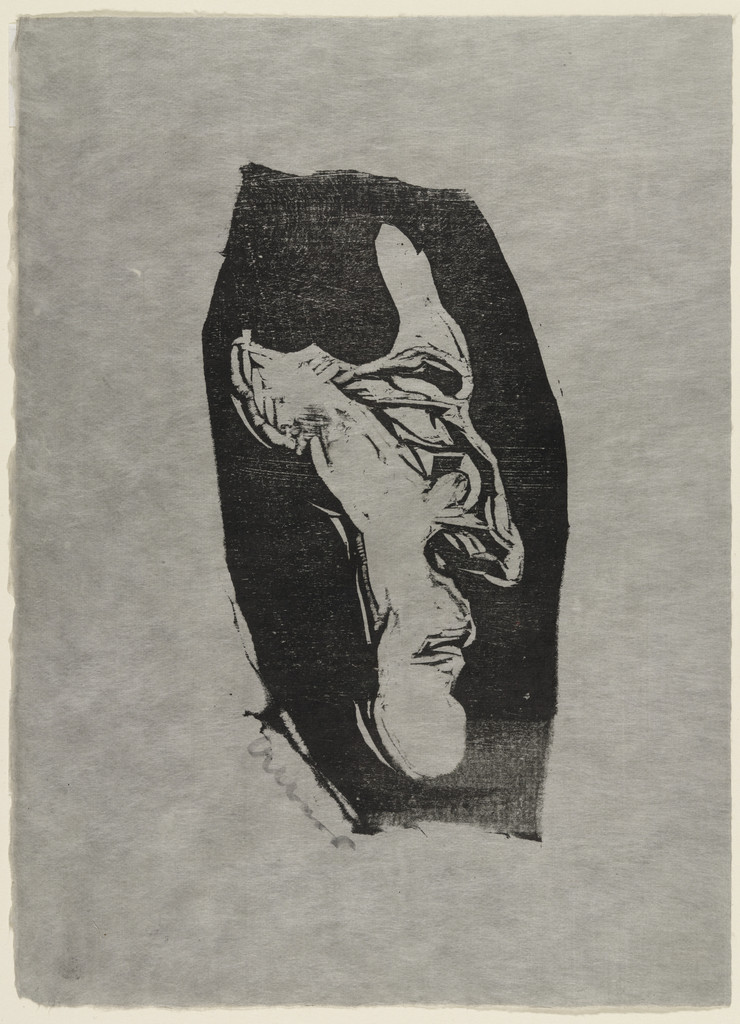
Josef AlbersSpojené státy americké, 1888–1976
Gate
Je k vidění?
Momentálně není vystaveno
Kde je teď „Gate“? Sbírka: Galerie umění Yaleovy univerzity, New Haven. Momentálně není vystaveno. Ověřeno 19. října 2026.
New Haven, Spojené státy americké
Patří do sbírky, ale momentálně není vystaveno.
- Ověřeno
- Tento stav platí od
- Zdroj
- Muzeum
O obrazu
Josef Albers—who, along with his wife, Anni, a textile artist, studied and taught at the progressive Bauhaus school in Germany before it closed due to Nazi pressure—immigrated to the United States in 1933 to teach at Black Mountain College in North Carolina. In his new homeland, Albers turned to oil painting, a medium he had explored only rarely before. In Gate, incised white lines create twisted rectangular shapes and overlapping planes, which contradict the flatness of the support. Exploration of spatial relationships and perception of color was a leitmotif in Albers’s paintings and prints, and this work anticipates his famous Homage to the Square series that he began in 1950.
Galerie umění Yaleovy univerzity
Podrobnosti
- Inventární číslo
- 1941.325
V katalogu
Zdroje
- Galerie umění Yaleovy univerzity
- Obrázek: Galerie umění Yaleovy univerzity — Image: Yale University Art Gallery · In Copyright
V životě: Josef Albers
Celý životopis1933–1949
Black Mountain summer seminars and famous pupils
To Black Mountain's summer seminars Albers invited leading American artists to teach — Willem de Kooning, the choreographer Merce Cunningham, the Harlem Renaissance painter Jacob Lawrence. His students included Ruth Asawa, Ray Johnson, Robert Rauschenberg, Cy Twombly and Susan Weil; Rauschenberg, despite their often combative relationship, later named Albers his most important teacher. In these years Albers made many woodcuts and leaf studies.
1933–1949
Employed by: Black Mountain College
1936
First solo show in New York
Albers had his first solo show in Manhattan at J. B. Neumann's New Art Circle.