ParmigianinoItálie, 1503–1540
Figure Study
Je k vidění?
Momentálně není vystaveno
Kde je teď „Figure Study“? Sbírka: Muzeum J. Paula Gettyho, Los Angeles. Momentálně není vystaveno. Ověřeno 7. října 2026.
Los Angeles, Spojené státy americké
Patří do sbírky, ale momentálně není vystaveno.
- Ověřeno
- Tento stav platí od
- Zdroj
- Muzeum
O díle
Parmigianino made Figure Study in 1526–1527 for his Vision of Saint Jerome; the drawing is in the J. Paul Getty Museum, Los Angeles. The sleeping nude and his swelling blanket seem charged with movement. Fluid pen lines combine with brush-modulated wash and sparing white accents. Ancient sculpture and Michelangelo informed the figure's broad, muscular build. In the finished altarpiece Jerome became older and less forceful. A later owner may have trimmed the upper edge, removing portions of the head and arms.
Slovy muzea
Even as he sleeps, this naked Saint Jerome ripples with energy, as does his billowing blanket. Coupled with his quick, fertile imagination, Parmigianino's mastery of pen, ink, wash, and heightening gives this rendering a refreshing spontaneity. The artist crafted the dynamic composition from lively, fluid, yet never superfluous lines and modulated the wash with the touch of a brush for lighter or darker tones. He used white heightening, which can easily overpower a drawing, in a precise, economical, and balanced manner. Parmigianino made this drawing in preparation for an altarpiece, *The Vision of Saint Jerome* , of about 1526, now in London's National Gallery, but the painted figure ended up less powerful and older than this vigorous creature. His study of monumental ancient sculpture and Michelangelo's art led to this figure's expansiveness and muscularity. A later collector may have cut the sheet at the top, eliminating parts of the head and arms.
Muzeum J. Paula Gettyho
Podrobnosti
- Inventární číslo
- 84.GA.9
V katalogu
Zdroje
- Muzeum J. Paula Gettyho
- Obrázek: Muzeum J. Paula Gettyho — Open Content
V životě: Parmigianino
Celý životopissummer 1524
Travels to Rome with his uncles
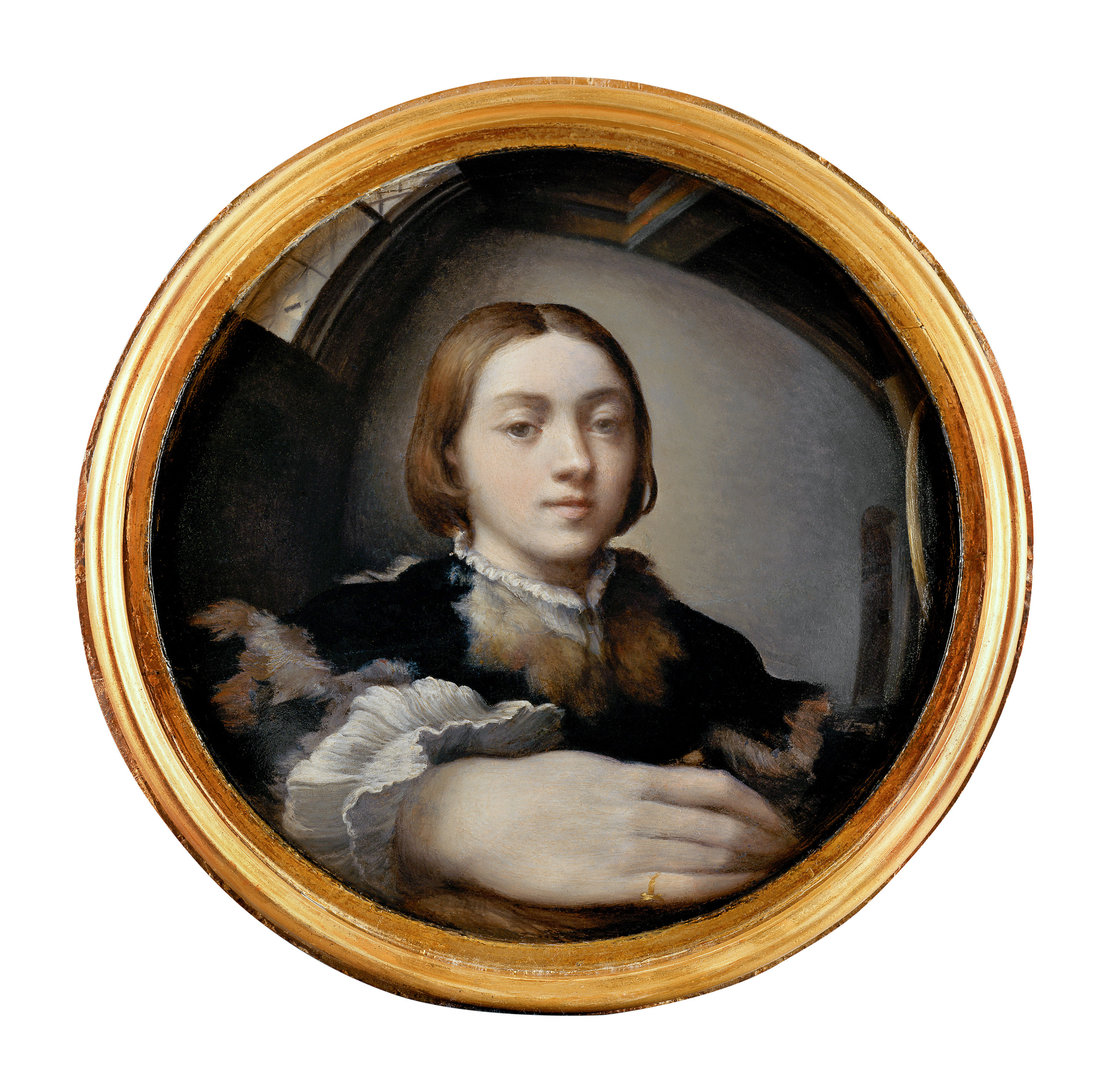
According to Vasari, on hearing Raphael and Michelangelo praised, Francesco longed to see Rome; his uncles approved and advised him to take some of his works to open doors to the lords and artists there. They arrived in Rome in the summer of 1524, and Parmigianino presented several paintings to Pope Clement VII, among them the “Self-Portrait in a Convex Mirror” painted on a wooden hemisphere.
1524–1527
Joins the circle of Raphael's pupils
In Rome Parmigianino grew close to Raphael's pupils working in the Vatican — Perino del Vaga, Baldassarre Peruzzi and Polidoro da Caravaggio — as well as Sebastiano del Piombo and Rosso Fiorentino; he copied the frescoes of Raphael's Stanze and the tapestry cartoons made for the Sistine Chapel. Vasari records that in Rome he was celebrated as “a Raphael reborn”.
1527
The Sack of Rome finds him at work
During the Sack of Rome by the landsknechts of Emperor Charles V, soldiers burst into the studio where Parmigianino was painting “The Vision of Saint Jerome” but harmed neither the pictures nor the artist. Soon, however, he had to abandon his lodgings and Rome, and he left the altarpiece with the church of Santa Maria della Pace.
1527
Flees ravaged Rome for Bologna
After the Sack of Rome Parmigianino moved to Bologna, where he spent four years by some accounts, nearly three by others. His first Bolognese work was “Saint Roch with a Donor” for the basilica of San Petronio, and here his palette grew cooler.