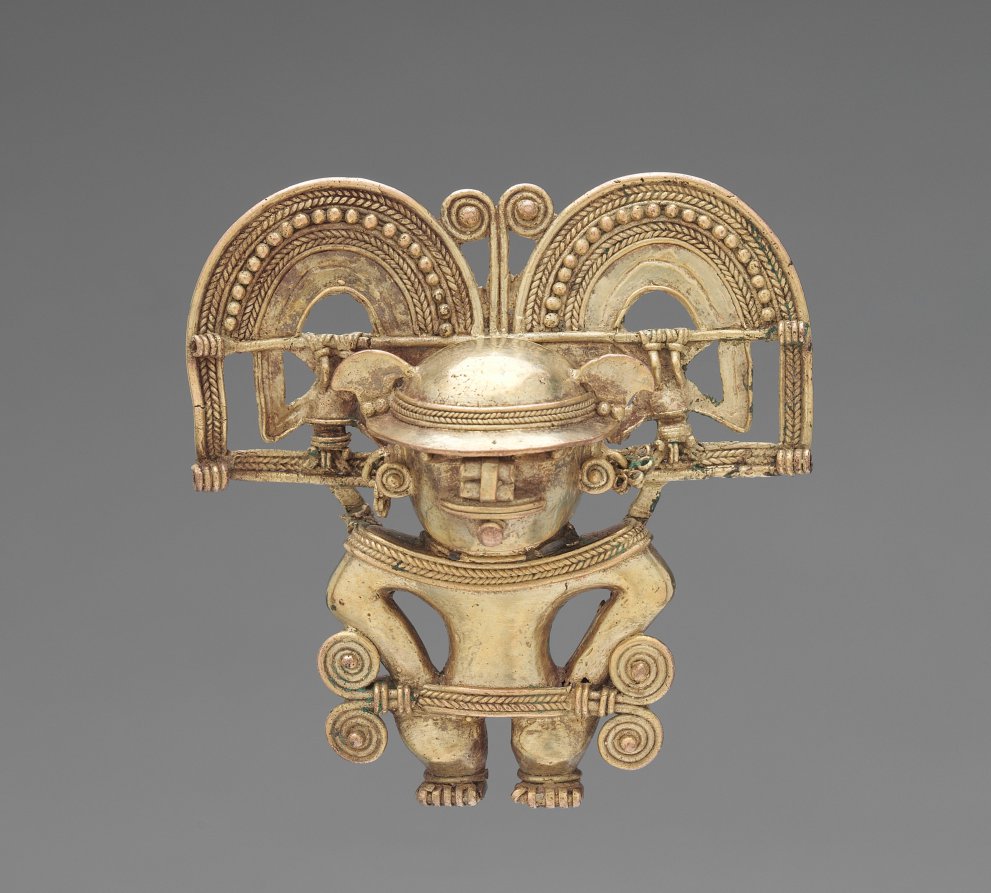
Figure Pendant
Je k vidění?
Ano, právě vystaveno
Kde je teď „Figure Pendant“? Clevelandské muzeum umění, 233 Mesoamerican and Intermediate Region, Cleveland. Ano, právě vystaveno. Ověřeno 9. listopadu 2026.

Cleveland, Spojené státy americké
Sál233 Mesoamerican and Intermediate Region
Veřejně vystaveno.
- Ověřeno
- Tento stav platí od
- Zdroj
- Muzeum
O soše
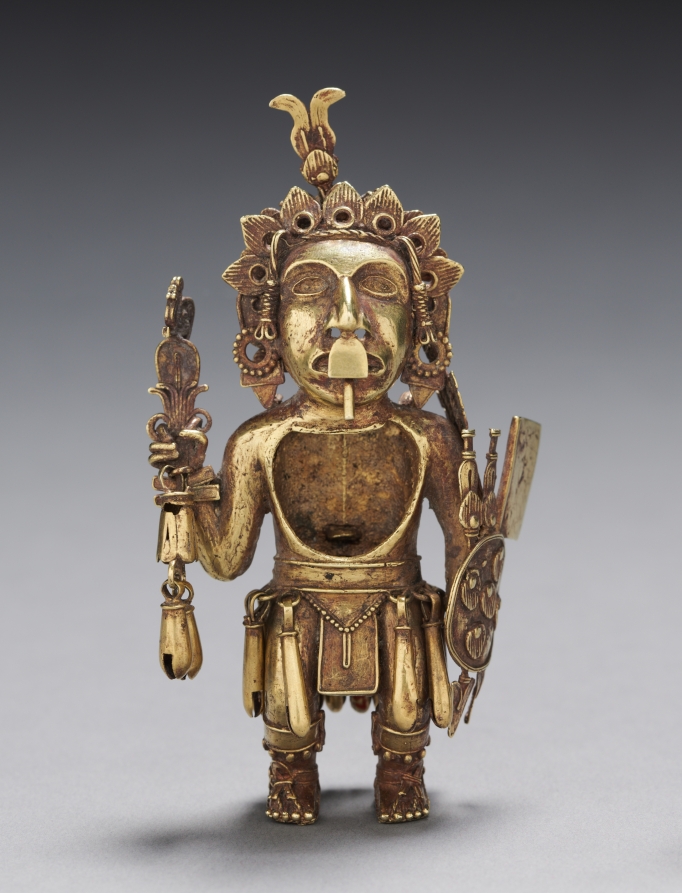
Figure Pendant, made in 900–1550 in the Tairona manner, is in the Cleveland Museum of Art, Cleveland. Two bats hang with their heads downward inside the figure's elaborate headdress, while an ornament is fitted to the lower lip. The process of casting with a wax model allowed goldworkers to reproduce such fine details. Figures of this type have been called caciques, meaning chieftains, and interpreted as portraits of rulers. The name is established, but their actual meaning remains poorly understood. On view in gallery 233.
Slovy muzea
Tairona-style pendants are among the most spectacular of all ancient American gold ornaments, in part because of the detail achieved with lost-wax casting. The traits of the figure pendant include a lower lip ornament and a headdress in which two bats hang upside down. Although called caciques (chieftains)-that is, ruler portraits-the meaning of such figures is not well understood. Bird imagery was important in the isthmian region in ancient times and remains so today. For instance, among the modern Bribri of Costa Rica, the principal creator deity (Sibo) takes the form of a buzzard or kite who wears a collar. Collars are standard features of ancient bird pendants, like the one shown here.
Clevelandské muzeum umění
Podrobnosti
- Inventární číslo
- 1998.3
V katalogu
Zdroje
- Clevelandské muzeum umění
- Obrázek: Clevelandské muzeum umění — Museum open access