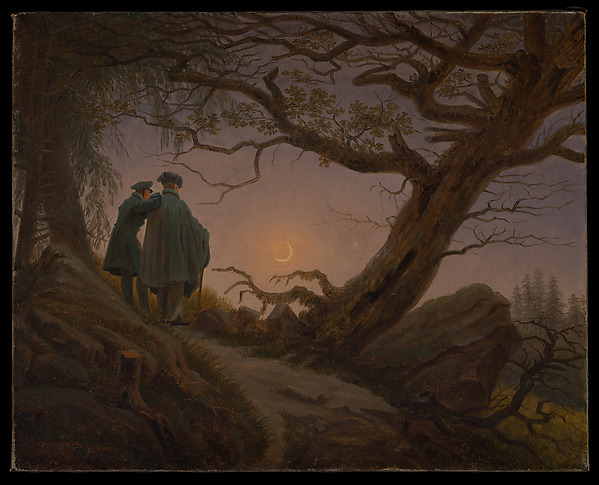
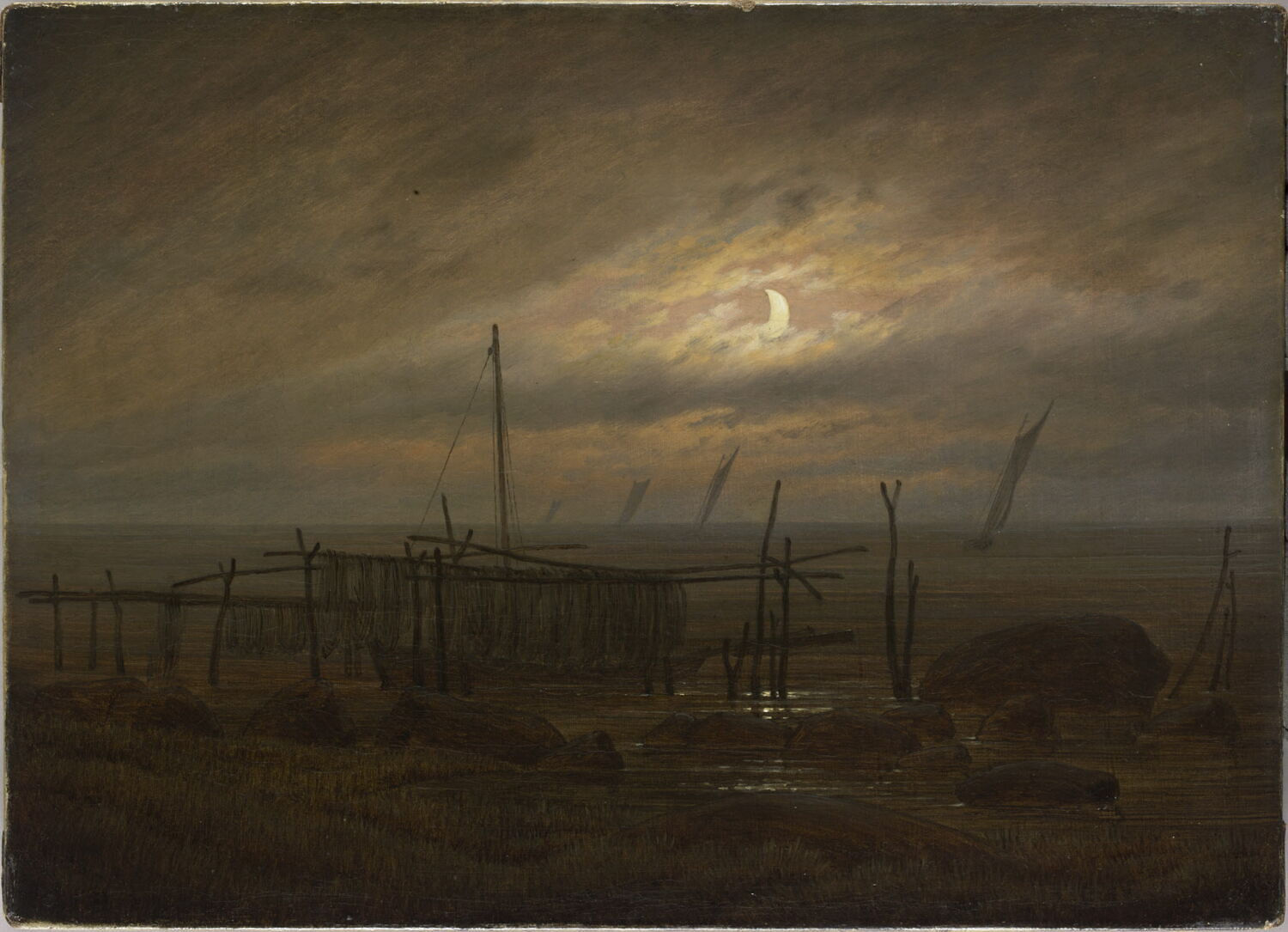
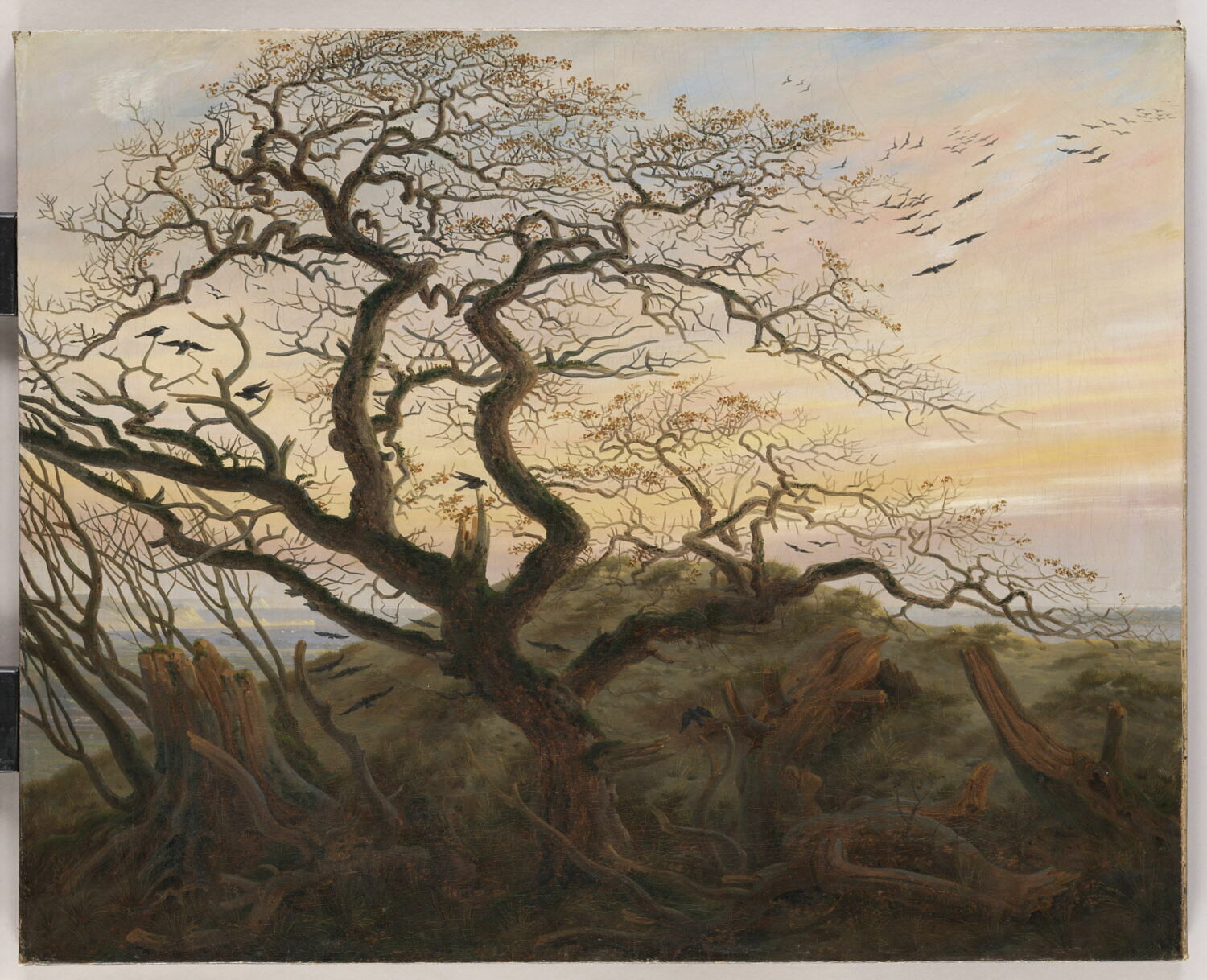
Caspar David FriedrichNěmecko, 1774–1840
Drifting Clouds
Je k vidění?
Nevíme
Kde je teď „Drifting Clouds“? Sbírka: Hamburger Kunsthalle, Hamburk. Zda je dnes vystaveno, nevíme.
Hamburk, Německo
Vlastník je znám, dnešní vystavení nikoli.
- Tento stav platí od
- Zdroj
- Muzeum
Podrobnosti
- Inventární číslo
- 1058
V katalogu
Zdroje
- Wikidata
- Obrázek: Hamburger Kunsthalle — Caspar David Friedrich · Public domain · Wikimedia Commons
V životě: Caspar David Friedrich
Celý životopis1818
The Saxon Academy — but no professorship
In 1818 Friedrich becomes a member of the Saxon Academy with a yearly dividend of 150 thalers. He had hoped for a full professorship, but it is never awarded: his painting is felt to be too personal, and his point of view too individual, to serve as a fruitful example to students.
21 January 1818
Marries Caroline Bommer
Friedrich marries Caroline Bommer, the twenty-five-year-old daughter of a Dresden dyer. According to Carl Gustav Carus the marriage did not significantly change his life or personality, yet the canvases of this period, including “Chalk Cliffs on Rügen”, painted after his honeymoon, show a new levity and a brighter palette, and human figures appear ever more often.
1820
Grand Duke Nikolai Pavlovich in his studio
At the behest of his wife Alexandra Feodorovna, Grand Duke Nikolai Pavlovich visits Friedrich’s studio and returns to Saint Petersburg with a number of paintings, beginning a patronage that continues for many years.
1821
Meets Zhukovsky
In 1821 the Romantic poet Vasily Zhukovsky, an admirer of his work, visits Friedrich’s studio: he buys several paintings and keeps them all his life. The friendship that begins lasts until the artist’s death, and thanks to Zhukovsky Friedrich becomes popular in Russia — today Russian museums hold 17 of his paintings, 15 of them in the Hermitage.
1824–1826
Depression and darker motifs
A new bout of depression — earlier ones came in 1799, 1803–1805, around 1813 and in 1816 — brings vultures, owls, graveyards and ruins into his work. From 1826 these motifs become a permanent feature of his output, and his colours grow darker and more muted.
1825–1840
The fading of his fame
Over the last fifteen years of his life Friedrich’s reputation steadily declines: as the ideals of early Romanticism go out of fashion he comes to be seen as an eccentric and melancholy figure out of touch with the times, and his patrons gradually fall away. Towards the end he lives in relative poverty and spends long periods, often beginning before sunrise, walking alone through woods and fields.