Crows and Cryptomeria
Je k vidění?
Ano, právě vystaveno
Kde je teď „Crows and Cryptomeria“? Minneapoliský institut umění, G221, Minneapolis. Ano, právě vystaveno. Ověřeno 16. listopadu 2026.

Minneapolis, Spojené státy americké
Zavřeno· otevírá zítra v 10:00
Veřejně vystaveno.
- Ověřeno
- Tento stav platí od
- Zdroj
- Muzeum
O obrazu
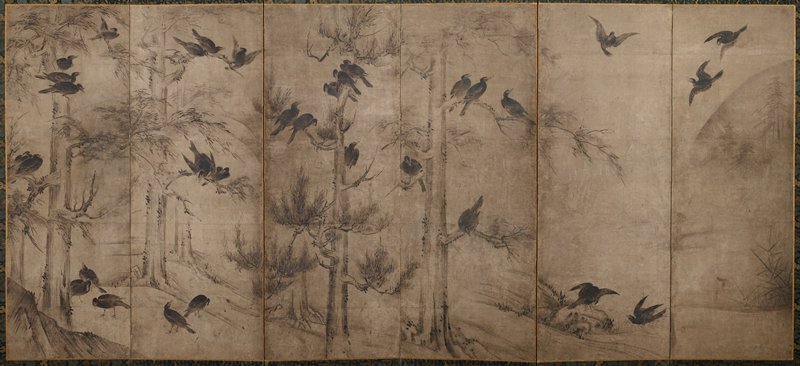
Loosely brushed branches distinguish Crows and Cryptomeria, a late sixteenth-century screen in the Minneapolis Institute of Art, Minneapolis. This handling of ink was a specialty of the Hasegawa school. Crows became common in Japanese painting from the sixteenth century, although their calls were considered unlucky in Japan and China. Imported Chinese pictures of mynas may have prompted painters to substitute the local crow. Screens often paired noisy black crows with quiet white egrets, using the birds' different colors to strengthen the contrast. On view in gallery G221.
Slovy muzea
A crow’s cry is considered an ill omen in China and Japan, yet crows became a standard theme among Japanese artists from the 16th century onward. They may have been inspired by imported Chinese paintings of myna birds, which are not native to Japan, substituting the native species of crow instead. Painters of folding screens (which usually come in pairs) often combined a scene of raucous black crows with a quiet image of white egrets—the contrast heightened by the birds’ coloration. Artists of the Hasegawa school, which originated with the celebrated painter Hasegawa Tōhaku (1539–1610), specialized in the impressionistic handling of ink brushwork seen here in the sketchily rendered branches.
Minneapoliský institut umění
Podrobnosti
- Inventární číslo
- 96.146.11
V katalogu
Zdroje
- Minneapoliský institut umění
- Obrázek: Minneapoliský institut umění — public domain